The Proactive Routing Protocols Literature Review

The proactive routing protocols

Basically the proactive or else the table driven protocols are having the spontaneous and convenient routing entry to the target which is diagonally towards the routing table of different types of the nodes. Even though there is no necessity these specific protocols will always hold the static route towards the destination and then the sufficient quantity of the control is been maintained by these protocols. There are two different types of the protocols such as the DSDV-destination sequence distance vector as well as the OLSR- optimized link state routing which belongs to the table driven protocols.

  • The destination sequence distance vector routing (DSDV)
  • The optimized link state routing protocol (OLSR)

The Routing Protocols of MANET Literature Review

The routing protocols of MANET

Now a day’s the mobile technologies have gained more importance and for this reason the different types of the applications related to the mobile computing are been utilized all over the world. Generally there are more possibilities for the process of developing the current technologies which are having more demand. The mobile Ad Hoc networks are considered as the best one among the existing mobile technologies because it is having one of the major benefit that there is no necessity architecture and this specific networks are capable of functioning themselves which are referred to as the autonomous systems.

The typical MANET major function is to manage the routers as well as the wireless links among them. The routers are made up of the mobility nature and for this reason they are capable of moving from one specific location to the other location diagonally towards the virtual graph which is been created through the routers as well as the wireless links.

Because of the presence of the individual nature and the few infrastructure operations the MANET will be able to attached or connected to any kind of the internet as well as it could even be functioned and controlled in a separate manner . It is already been proved that the mobility is considered as the general nature of the MANET and then there are more possibilities of happening of the issues for the route or the link stability, and then there is a necessity of the appropriate routing protocols in order to assure the routing stability towards the MANETS. In general there are two different types of the routing protocols such as the proactive routing protocols( table driven) as well as the reactive routing protocols(on demand).

How to improve the security for the wireless LAN network

Improving the security for the wireless LAN network is the key study area in this paper and to achieve this two scenarios are created using the OPNET modeler simulation tool. First scenario deals with the default wireless LAN configuration and the second scenario deals with the secure wireless LAN configuration. A MANET is simulated for these purposed and 10 wireless LAN mobile nodes are used and a single wireless LAN server is created to support these nodes.

OLSR routing protocol is used for routing purpose and three applications are created in these scenarios to generate the traffic and they are video, voice and FTP and they generate the CBR and TCP traffic respectively. When the two scenarios are created they are simulated and the results are analyzed and from the analysis few observations are derived and they are as given below 

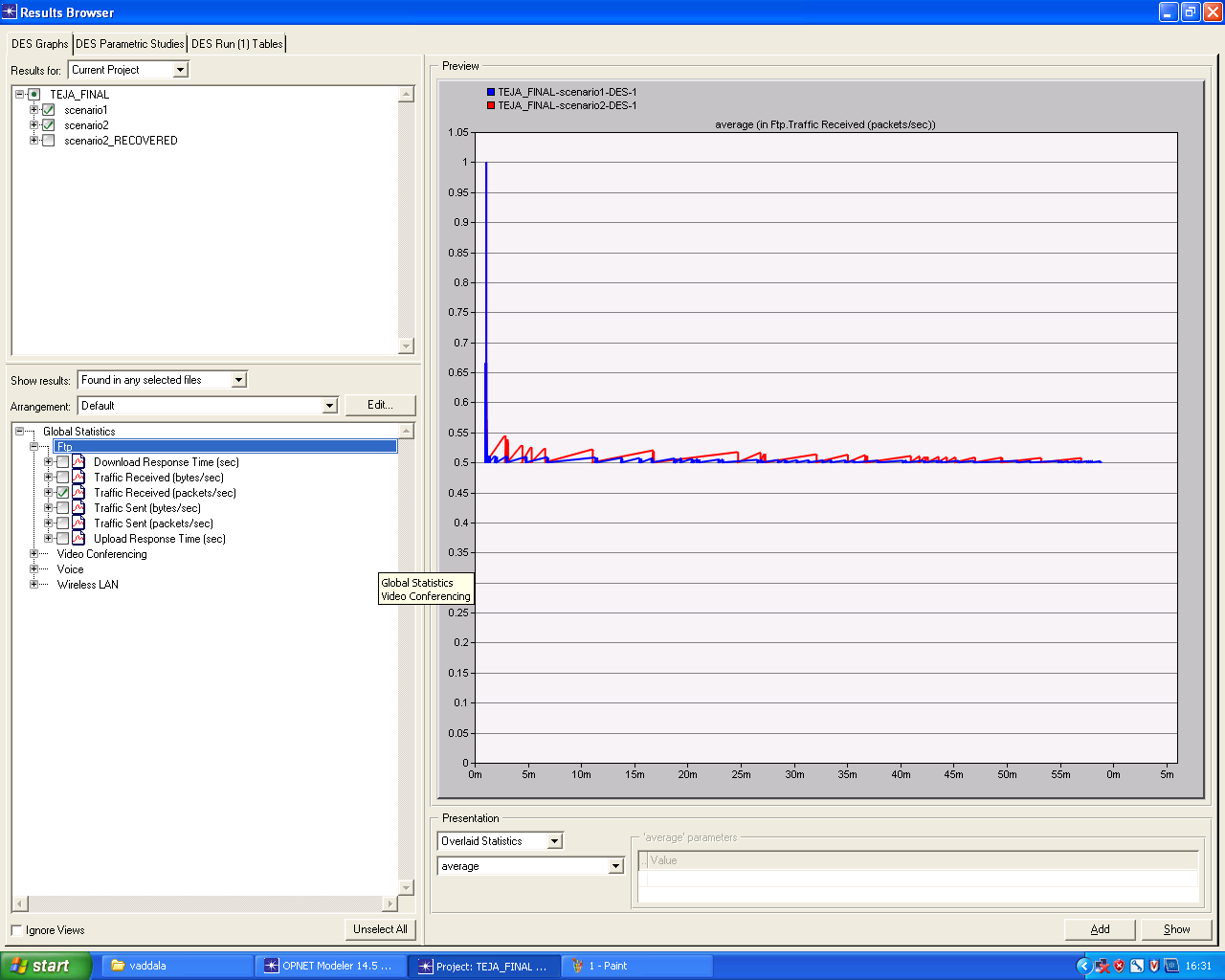
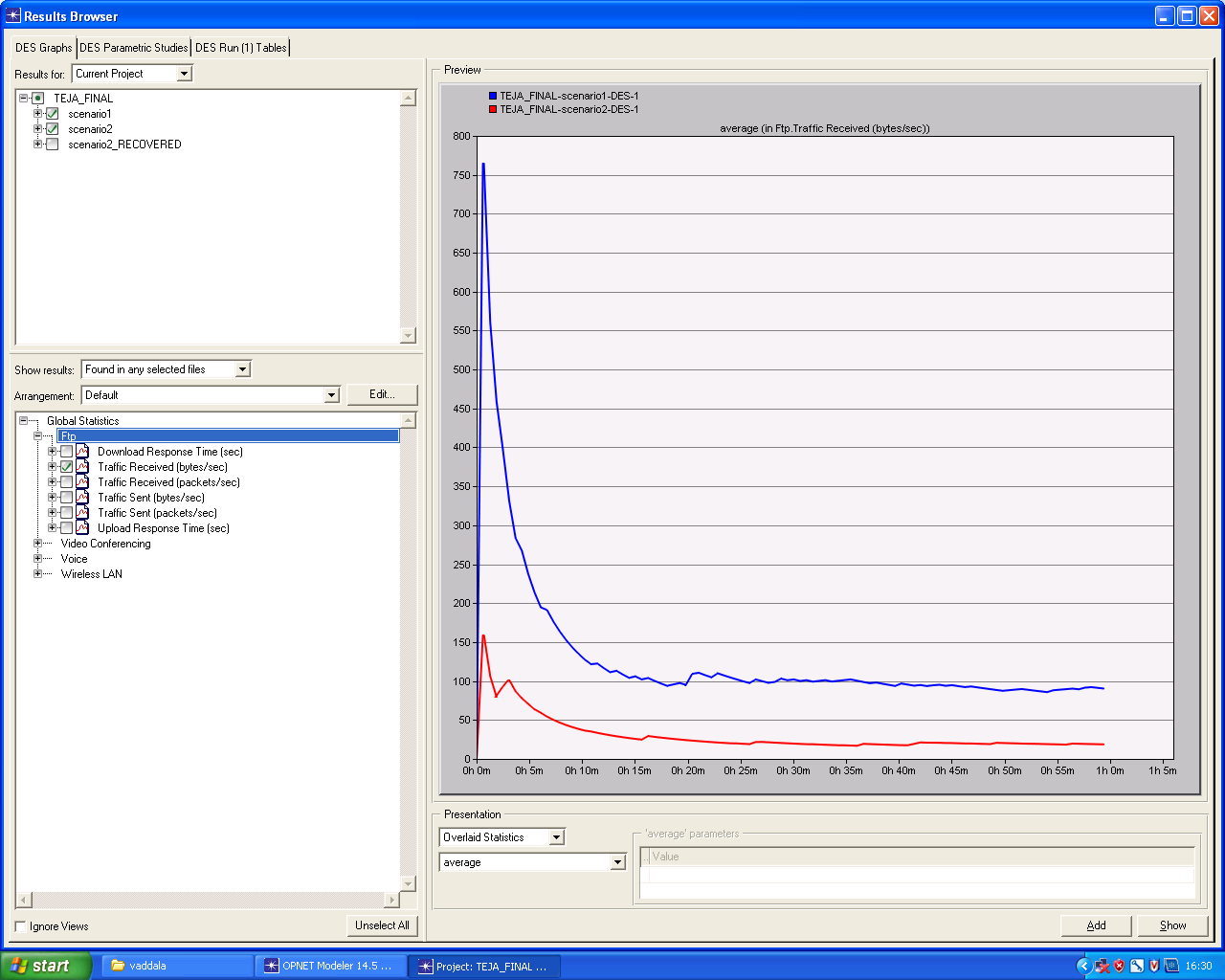
When all the scenarios are compared against the performance metrics used, it is observed the performance of the secure wireless LAN is high when compared to the normal wireless LAN configuration. Key aspects like FTP, Voice, Video and Wireless LAN metrics are compared against the scenarios and across all the comparison process the secure wireless LAN parameters has imposed an optimal conditions on the network in terms of routing, traffic sent, traffic received, jitter, load and delay.

From this indication it is understood that if the parameters of the wireless LAN are changes to ensure the safety across the network then the overall performance of the network is improved a lot across any application used in the network. Secure wireless LAN settings has ensured a optimal packet delivery ratio, reduced the congestion on the network by minimizing the traffic sent and received across the nodes and thus it is proved that wireless LAN performance is optimized with the required security considerations.

New Trends in the Communication through Wireless Networks

Wireless Networks Project background

Wireless networking has changed the communication patterns being followed traditionally across the world and always the increase in technology leads to improve the communication all the time. Day by day the usage of these wireless networks are increased and many number of applications are also invented in this context and these applications uses the best features of the wireless networking to make available to the end users at the optimal conditions.

In general wireless networks are popular due their seamless operation node and they can be deployed across any conditions without any specific infrastructure requirements. There are different categories to be considered across the wireless networks and the most popular among them are wireless local area networks (WLAN), where the introduction of WLAN technology has taken new trends in the communication thru wireless networks. In general this wireless LAN can be considered as the best choice of networking when there are few resources available against the networking operations.

There are different nodes and servers against the wireless LAN’s and these nodes will act as the source and the servers will act as the destination in  most of the cases and the communication among the nodes and server is purely a wireless based and there are some access points as well in this technology. This access point plays the key role in completing the communication mechanism across the network and they act as the center points in the network. The parameters that make the wireless LAN to work are the actual application being used across the wireless LAN and the nature of the traffic being generated. 

In general the wireless LAN contains mobile nodes and fixed nodes and the mobile nodes are flexible enough to move randomly to the desired position across the network and thus they have some topological problems as well. Apart from the advantages with the wireless LAN there are some basic issues and the most important among them is the security. Wireless LAN networks are prone to node level and network level attacks and they are feasible enough to encourage the attacks on the network. Mobility is the major nature of the wireless LAN that makes it to open for the security issues and these issues can be of different types like packet flooding and Dos attacks.

Wireless networking

The behavior of the wireless LAN is completely changed due to these attacks and they can’t support the nodes anymore during the communication process and thus a perfect security model is required always and in this process there are many security models introduced and most of them are proved to helpful in identifying and preventing the corresponding security threats. In this project the simple wireless LAN topology is considered and the basic security requirements are analyzed and the impact of the security against the overall performance of the network is also studied. Importance of security for the wireless LANs is the main point considered in this research and it is improved across the simulation done in this project and the actual problem identified is given in the next section along with the proposed solution.

Paper Written and Submitted By Teja.V

Security across the Wireless LAN Networks and Simulate the Proposed Security Model Using OPNET Modeler

Problem definition in Wireless LAN Networks

The actual problem identified in this project is that the importance of wireless LAN security to improve the overall performance of the network and also how the security can be incorporated on the network at the simulation level. OPNET modeler is used as the simulation tool and the basic network selected for the simulation of this project is Mobile Adhoc Network (MANET).

Campus is selected as the network area required for the simulation and 1000 X 1000 square meters is taken as the size of the network and therefore the creation of a fresh scale of network is done and when once all these settings are done, then the network is said to be prepared for using. OLSR routing protocol is considered as the required routing protocol and this protocol is applied for 10 mobile nodes, where these nodes are the wireless LAN mobile workstations and a single wireless LAN server is used.

In this particular scenario three applications are used for the generation of the traffic needed. The three applications used are the FTP, voice and video conferencing and these are used for the generation of TCP traffic across the MANET. Two scenarios are created and the first scenario is used at the default settings for the wireless LAN and the second scenario is improved in terms of security and the wireless LAN metrics are changed to improve the overall application and network security of the network.

security across the wireless LAN networks

Performance metrics of voice, video, FTP and Wireless LAN are considered and the overall performance of both the scenarios is analyzed against the comparison graphs to understand the behavior of the network at normal conditions and secure conditions that were imposed at the second scenario. Following are the actual aims and objective of the project and they are as given below 

Aims and Objectives

Following are the aims and objectives of this project

Aim: To evaluate the importance of security across the wireless LAN networks and simulate the proposed security model using OPNET modeler.

Following are the key objectives of this work

  • To review the importance of security across the wireless LAN and understand the impact of security on the performance of the network
  • To design the simulation scenarios to simulate the security model in OPNET
  • To create two scenarios and the first scenario to deploy the normal conditions and the second scenario to implement the proposed security model
  • To simulate the scenarios and achieve the results
  • To evaluate the results against the chosen performance metrics and understand the working nature of the proposed security model
  • To conclude the results and suggest the future recommendations
Paper Written and Submitted By Teja.V

Blu-Ray Technology Seminar

Introduction to Blu-Ray Technology Seminar:

BLU-RAY Features:

Blu-Ray has large storing capacity with a minimum of 24GB. The optical disc recording is protected by optical disc cartridge. These discs have a high data transfer speed of 36Mbps. The disc supports MPEG-2 technology for audio and video streams. Also, the Blu-Ray driver is capable of reading DVDs. Blu-Ray discs are available under read-only, writeable and re-writeable types.

BLU-RAYS and DVD’s:

DVD’s are capable of storing 5-7 times more than a CD and a Blu-ray is capable of storing 5-7 times more than a DVD. This makes a Blu-Ray disc a very high storage disc. Blu-rays use blue laser with shorter wavelength than red which is used to read DVD’s. Thus a smaller focus beam reads the ‘pits’ on a Blu-Ray disc. Pits are closely packed in a Blu-Ray disc which increases the storage space and speed along with precision.

ADVANTAGES and APPLICATIONS OF BLU-RAY:

Blu-Ray has large storage capacity with very high data transfer speeds which is available as read only, writable and re-writable. The disc is protected against dust and fingerprints and an encrypted algorithm protects the content of the disc. The disc has a large life span of 10-15 years. Re-writing operation does not cause any trouble to the disc unlike DVD’s and CD’s. Blu-ray also supports HD recording and transmitting. HDTV recordings are common these days which is possible only because of Blu-Ray technology. Though the cost of Blu-Ray is high at the moment, the wide set of applications would lead to decrease in the price of the discs. Thus, the technology holds a wide scope of development and its use would gradually increase with time.

Download Blu-Ray Technology Seminar.  

Seminar Report on Blu-Ray Technology

Introduction to Blu-Ray Technology Seminar Topic:

Blu-Ray disc is the optical disc storage format which offers higher data capacity and quality compared to any other formats available today. The Blu Ray disc technology was developed by the BluRay Disc Association (BDA), a body constituting the leading consumer electronics and computer companies including Apple, Dell Inc., Sony, L.G, Samsung, Disney pictures etc. BluRay was first introduced in market in 2003.

Structure of the disc

BluRay disc consists of 3 layers:

  1. Transparent cover: 0.1 mm transparent layer made of spin coated UV resin sandwiched between a bonding layer and protective coating.
  2. High speed recording material : A recording layer made of Ag, In, Sb, Te, Ge has high re-crystallization speed to enable recording at high linear speeds
  3. Super advanced rapid cooling structure: AlN is used in layer to makes it a heat sink

BluRay discs come in single layer and dual layer variants.

The BluRay technology:

Although BluRay is same in size as its predecessors (CD and DVD), it offers 25GB of storage on a single layered disc and 50GB storage on dual layered disc. BluRay technology accomplishes this by using a blue-violet (405 nm) laser light instead of red (650nm) lasers used in CDs. The surface of an optical disc consists of a large number of “pits” on which the data is written with the help of lasers. Thus by using a ray of shorter wavelength, the size of pits can be reduced and their number can be increased facilitating the writing of large amounts of data onto the Blu-Ray disc. This makes endless applications for the technology which has led to initiation of various researches in different fields. 

Download Seminar Report on Blu-Ray Technology.  

Project Report on Audio Watermarking

Introduction to Audio Watermarking Project:

Audio water marking technical white paper is a presentation in engineering seminar showing the needs of audio water marking in this present day situation.

Digital data is of audio or video and it is represented by 0 or 1 of binary bits.

The data can be stored for long period without damage. Because of public exposure, the property of data can be loss by the number of ways such as mp3 compression, low pass filtering and amplitude scaling.

Audio watermarking is a new technique which protects the audio data, the data will not be lost.

The features of audio water marking are transparent, robust, efficient and independent. They are of two types.

One is temporal water marking and the other is special water marking. In temporal water marking, the water marks are hidden directly into the digital audio signals in the time domain.

Where as in special water marking, it applies the transfer of frequency such as FFT, SCT and DW and the water marked information is veiled under the transformed data.

Audio watermarking can be applied by DC level shifting in which watermark is embedded by shifting the DC level of the audio signal. And this DC level of audio signal does not need the original signal and the water mark and there is no robustness to filtering as water mark is embedded to all frequency bands.

Brand division scheme (BDS) and Spread Spectrum scheme (SSS) can provide protection against the mp3 compression. It is conclude in the seminar that water mark can be embed in an audio signal without detection and being perceived as required. It is extracted without the original signal. The water mark is known as blind otherwise public audio water marking.

Download Project Report on Audio Watermarking . 

Latest CSE Seminar Ideas on CDPD technology in Mobile computing

Introduction to  CDPD technology in Mobile computing :

Mobile computing is a computer interaction in which the data is transmitted via computer. Mobile computing involves mobile communication, mobile hardware as well as mobile software .The mobile computing principle is to send and receive the data across the cellular networks.

Mobile data communication it allows the user to transmit data from remote location to other remote location (or) fixed location .This is the biggest problem for the business people. The mobile data communication is dominated by the technology called CDPD.

CDPD networks allow the mobile users to connect to the network across a fixed link and a packet switched system.

CDPD has a sleep mode which allows the device to save the power when not in use.

Existing cellular network architecture:

A cellular network consists of mobile units linked together to switching equipment, which inter connect the different parts of the networks and allow access to the fixed public switched telephone network (PSTN). The tech is hidden from view, it is incorporated in a number of transceivers called base station (BS).

Existing cellular networks based on circuit- switching consists of base station (BS), base station controllers, switching centers, gateways etc. In this base station the physical transmission with fast power control & wireless scheduling and the base station controllers most of the radio resource management. So, when mobile terminal moves to another cell it needs another base station.

 Data communication: (DC)

 Exchange of data from one system to other system it has wide range of applications including file transfer, inter connection between wide area networks, facsimile (fax) electronic mail, access to the internet. The network used in DC is PSTN, leased-lines and ISDN (integrated services date network) and ATM (Asynchronous Transfer mode). These networks are analogy digital using tech such as circuit- switching packet-switching etc.

CDPD technology:

The mobile data communication market is dominated by a technology called CDPD. Its principle lies the usage of the idle time in between existing voice signals that are being sent across the cellular network.

The advantage of this system is that the idle time is very helpful for the business people.

Download Latest CSE Seminar Ideas on CDPD technology in Mobile computing .

Online Examination Project Documentation

Introduction to Online Examination Project:

What are the users bemoan storable needs

User needs a web-based system. In this system if the user is facing a problem it will remove and .

Web-based system reduce the paper work and it provider easy of work to do.

How can the problem be redefined?

The problems of existing system can be slowed by marking a layout of the system on paper. We will see the problem and needs of the existing system and requirements the problems. Also, it has factors such as cost, effort, time, labor

Specification Report;

System interface It will not access the data from any other application it is self contained system.

User Interface;

Application will be accessed through the Browser interface. The s/w would be fully compatible with Microsoft interface Explorer for version 6 without logging the system no user can access the application.

Communication interface;

The system should be accessed over LAN/WAN. FOR clients the n/w should be accessed TCP/IP protocol.

Operations;

Client side: interactive operations using options provided in the application.

Server side: Database backup should be restored.

User characteristic:

The end user of s/w can be divided into 2 Administrator and operator.

Bottlenecks Identified in existing system;

In existing system maintain education related information is shared in the form of documents and hard copies. This method causes waste of paper in order to overcome this problem we use online database for storing files and data ,hard-copied documents leads the following problem. Such as lack of space, filling poses as problem, filleting is not easy, Reviewing becomes time consuming

Need for the new system:

A computerized system is required to solve the problems and handles the works.

A web based application is required for providing a working environment that is flexible and easy to working environment that is flexible and easy to work and rebuke the time.

Aims and Objectives:

The purpose of the proposed system is to provide comprehensive computerized system. Which will collect, capture and analyze the data from the impact of the program. 

Download Online Examination Project Documentation.