Interferon metric Modular Display IMOD

Introduction to  3-Dimensional Virtual Reality in Urban Management Seminar Topic:

This white paper is about 3D Virtual reality (VR) in urban management, also discussed about its drawbacks and future improvements. This paper is explaining about the construction of houses in urban areas based on 3D virtual reality technology. 

Applications of 3D Virtual Reality in Urban Management:

The following are some of the 3D Virtual Reality – application areas: 

  1. 3D allows public participation, and provides access to the comprehensible information. 3D virtual reality systems are more comprehensible when compared to 2D architectural plans.
  2. Virtual reality has ability to create virtual environments and visualize the same new design ideas to engineers for best output. Innovative solutions provided by Virtual reality are very helpful to housing for the 21st century.
  3.  Residential development quality can be evaluated by using Virtual reality. Now-a-days, developers are interested to go through new technology or internet for innovative design ideas rather than following a traditional paper based approach.
  4. Applications in cadastral systems are slowly recognizing by 3D VR systems.
  5. Without violating construction regulations, we have utility lines, 3D VR systems introduced utility lines in a simulation exercises without hitting into other lines and as per applicable regulations. 

Limitations of VR: 

The following are limitations of VR systems:

  1. The present software available is not suitable for design at an urban scale.
  2.  Most of the times Virtual Environments are quite problematic in implementation as there is a requirements of more resources than expected.
  3. The data about data models to be used is fully depends on what model used during designing. But there is an issue in VR systems in processing speed of this data.

But proper designed Virtual Environment with innovative ideas will be more useful. 

Conclusions: 

Many housing developers now focused on internet or VR systems for design, planning and also for marketing purpose. 3D Virtual Reality technology helps to housing developers to evaluate new housing schemes in an urban context. VR urban model standards are still in developing stage.

 Download Interferon metric Modular Display IMOD.

Seminar Report on Holographic Versatile Disc

Introduction to Holographic Versatile Disc Seminar Topic:

This presentation is about a “Holographic Versatile Disc”, which is an optical disc technology and which has capability of holding 3.9Tb of data.

HVD Structure:

HVD uses a technique where green and red laser of length 532nm and 650nm respectively are collimated in a single beam. HVD provides a high-capacity data storage. Servo information is used to monitor the position of the read head, track and sector information on a conventional hard disk drive. 

HVD write system:

HVD write system consists of Blue or green laser, beam splitter merger, mirrors, Spatial light modulator (SLM), CMOS sensor and Polymer recording medium. Data written on HVD will get encoded into binary data, which will get stored in SLM. This data turned into 0’s and 1’s on a page, where page is the image that the information beam is passing through. 

HVD read system:

Data from HVD can be read by retrieving the light pattern stored in the hologram.

Advantages of using HVD:

HVD advantages are listed below:

ü  HVD has 300GB of initial storage capacity.

ü  Holographic memory systems offer far more storage capacity than CDs, DVDs and Blue-ray Discs. Entire page of data can be retrieved quickly and at one time by using this memory system.

ü  HVD helps user to store large amount of data

ü  HVD is helpful to record one program simultaneously watching another program on the disc.

ü  HVD has a capability of searching empty space on the disc automatically to avoid the occurrence of overlapping of recording one program over the other.

ü  The transfer rates of HVD i.e., both read and write speed is up to 1GB per second and it is backward compatible too. 

Conclusion:

HVD is a popular technology in high-capacity, optical storage media.  HVD supported by more than 170 of the world’s leading consumer electronics recording media, video game and music companies.

 Download Seminar Report on Holographic Versatile Disc .

Seminar Topic on Wi-Max with Seminar Report

Introduction to Wi-Max Seminar Topic:

The need of the hour is high speed internet provided by both broadband and wireless. Wi-Max technology paves way for wireless access to broadband internet. Because of broadband being expensive and limited to certain areas and Wi-Fi’s small hot spots technocrats are moving to Wi-Max in a big way.

Wi-Max stands for Worldwide Interoperability for Microwave Access and IEEE standardized it by 801.16. Unlike Wi-Fi the Wi-Max covers an area up to 50 Km. It can provide data rate of 70 Mbps which can service few hundred homes with broadband internet. Just like migrated from landlines to mobiles it’s a matter of time people migrates from cable, DSL internet to Wi-Max. Wi-Max provides universal internet access because its architecture of point to multipoint way can reach to places where wired internet cannot. It can be bridged with wireless LAN.

Wi-Max system is made of two important parts Wi-Max Tower and Wi-Max Receiver. Wi-Max tower is just like a mobile tower which covers around 80 Sq.Km. Wi-Max receiver is just like a Wi-Fi access point.

Working: – A Wi-Max tower can be directly connected to high bandwidth internet using T3 line and two Wi-Max towers can be connected using line of sight microwave link. Each tower can cover an area of 30 Sq.miles and provide broadband connectivity. A receiver can be connected to the tower using non-line of sight similar to Wi-Fi sort of service that can be operated at lower frequencies or through a line of sight where higher speeds can be achieved because its operated at higher frequencies.

IEEE 802.16 specifications are range of 30 miles from tower, speed of 70 Mbps, non line of sight connectivity, dual frequency bands of w-11 Ghz and 10 to 66 Ghz, both MAC and PHY layers are defined and permits multiple PHY layer specifications. 

 Download Seminar Topic on Wi-Max with Seminar Report .

Project Report on Web Mining

Introduction to Web Mining Project:

World Wide Web (WWW) is a made of millions of websites of multiple genre incorporated with trillions of tetra bytes of data on their web pages. There is will be common data within few web pages and when we want to search for required information on web at times it will be difficult. The process of extracting required information from web is called as data mining. Similarly finding required web sites or web pages from WWW is called as web mining. Web mining helps in finding text documents, multimedia files, images and other types of resources from web pages.

The areas of web mining applications are E-Commerce, Information filtering, Fraud detection and Education and research.

The algorithms and techniques used for data mining can be applied in web mining because it is just an extension of data mining. The tasks involved in web mining are retrieving of documents then extraction of information from the documents using Web miner software and finding similar patterns in web sites and finally validating the extracted information.

Some of the issues that come into play with web mining are saving of a page in a web site or saving entire web site by downloading it in to desktop. This helps in analyzing the visitors to a web site.

Some of the important web mining software’s are Sinope Summarizer, Teleport Pro, and Click Tracks.

In order to analyze online web content web mining software should navige between many web sites and during this process two important categories of web mining comes up, they are web content mining and web usage mining.

There are few disadvantages in web mining such as long time to explore large volume of data, loss of communication link, and dynamic nature of web data, interconnection of web pages by hyperlinks may lead to infinite loop and hidden web data cannot be located.

 Download Project Report on Web Mining .

Seminar Report on Wearable Computers

Introduction ot Wearable Computers Seminar Topic:

Cellonics Technology Modems

All communications such as LAN, WAN, wired Internet, wireless internet, telecommunications work using modems. Modem is basically a device which modulates and demodulates carrier signal with digital information. The speed of data transfer depends on the speed of modem capacity. Hence there is a need to develop high speed modems to cater for present days technologies where millions of terra bytes of data will be transferred every second. Cellonics is the technology which will solve our problems.

Cellonics technology modems are based on biological cell communication system which is 1000 times faster than traditional modems. This technology is simple, robust and user friendly.

As this technology is based on human cell behavior it is studied that human cells generates a waveform in response to actions these wave forms are serial pulses separated by periodic silence. Cellonics technology duplicates the same process and applies to communications.

Working of Cellonics: – this element takes slow analog signal as input and in gives predictable, fast pulse as output thereby encoding digital information and transferring it over communication channels. In building Cellonics Nonlinear Dynamical Systems (NDS) employs mathematical formulations which are needed to simulate the cell responses. Being nonlinear system the performance exceeds the normal limits and simultaneously simplifies implementation process. Cellonics technology is mostly used in service industry of telecommunications.

There are many advantages in using Cellonics in communication systems. It saves chip/PCB real estate there by simplifies receiver implementation by 4 times. Savings on power by 3 times because of using few components that are passive and consumes less power. Savings on implementation time is possible because of elimination of many sub components such as amplifier, mixer, PLL, oscillator, filter, crystal quartz, etc. in order to build your product which is small, powerful, long on power and low cost employing or using Cellonics technology is ideal.

 Download Seminar Report on Wearable Computers  .

Seminar Report on Wireless Application Protocol

Introduction to Wireless Application Protocol seminar Topic:

Imagine if we can access the content of web based applications from mobile handsets with same ease but without any restrictions. This can be done using Wireless Application Protocol (WAP) which is basically an open source global standard application that helps any user to access information via internet using the mobile handsets.

In 1997 four companies developed and deployed WAP they are Motorola, Nokia, Ericson and US software company phone.com. WAP helps in smooth filtering of internet content on to mobile devices for faster access.

WAP gives a scope to revolutionize few business segments where customer interaction is important for their business. It opens gate for new ways of delivering services to its customers and can have WAP based workforce anywhere and anytime.  For wireless operators WAP gives a chance to decrease operational costs, reduce churn and increase customer base while improving existing services.

In order to make a web application WAP standard the application should be written in wireless markup language (WML) which is a subset of extended markup language (XML). All applications of web are basically written in internet standards HTML, HTTP, TLS and TCP but these languages based web applications cannot be used on mobiles or handheld devices because of small screen size and lower bandwidth of mobile networks. Hence data has to be compressed and optimized for longer latency in low bandwidth, to achieve this WAP uses binary transmission technique. (WML) wireless markup language script is used to create WAP content.  

For working on WAP we need a WAP gateway, WAP server and end user terminal. WAP programming model is based on client, Gateway and server. The main features of WAP are language, operating system and a network that supports WAP. The main applications of WAP are wireless internet access from mobile phones and wireless access to extranets and corporate systems and records also for intelligent telephonic services. 

Download Seminar Report on Wireless Application Protocol .

Watermarking Digital Audio PPT

Introduction to Watermarking digital audio paper presentation:

We are living in a world where information is wealth hence safeguarding of copyright information such as audio, video, text, programming and imaging is very essential to sustain in business. With the advent of computer technology any data is copied and manipulated. Watermarking is a technology using which we can protect the copyright data, data authentication and is possible to trace illegal copies etc.

If we apply watermarking to audio signals that it is called as Audio Watermarking. Psychoacoustics plays important role and is mainly concerned is spread spectrum type of audio watermarking which is a popular technique.

The main characteristics that an ideal watermarking (WM) system should have are

  1. WM should be embedded into main audio signal itself so that it cannot be removed at syntax level.
  2. There should not be any deterioration in WM signal from the main audio signal.
  3. Compatibility with all audio players.
  4. No false alarms when detected for a specific watermarking signal.
  5. The robustness of WM signal should be applicable for all signal processing operations. 

There are different methods of watermarking such as Echo Hiding, Index modulation through quantization, Feature based, Spread Spectrum based watermarking.

In Spread Spectrum based watermarking the psychoacoustic properties are used effectively. These properties are absolute threshold of hearing, critical bands, masking, simultaneous masking and temporal masking.

The watermark embedding scheme has operations such as temporal analysis of the audio signal, M sequence generation, shaping of the m sequence, cyclic shifting and inclusion of the information payload, and watermark embedding

The main applications of watermarking are for copyrighting, data authentication, tracking piracy copies and also in finding tampered data. 

Download Watermarking Digital Audio PPT.  

ADOV Routing Protocol Implementation Design

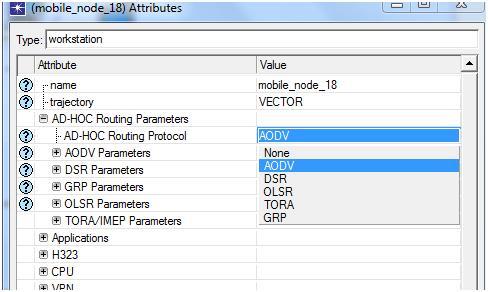
Similar simulation setup can be created for voice the applications and the routing protocol chosen in this context is AODV. Low resolution video is selected across the application configuration and the routing protocol used is AODV and the corresponding screenshot is as given below

adov routing 1

Routing protocol for video applications is selected as AODV and the corresponding screenshot is as shown below

adov routing 2

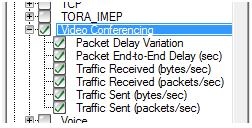
Now the performance metrics are chosen for video application and the corresponding screenshot is as given below

The following performance metrics can be used for evaluating the QoS of video application

  • Packet delay variation
  • Packet end to end delay
  • Traffic received bytes per sec
  • Traffic received packets per sec
  • Traffic sent bytes per sec
  • Traffic sent packets per sec

As with mobile nodes, similar performance metrics can be used for the rest of the scenarios in video applications as well. We only have to change the routing protocols to DSR and TORA.

Similarly run the results for evaluation against the simulation time after you create all required protocols.

DSR Protocol Simulation

Simulation for DSR is similar to DES protocol but the routing protocol set for the mobile nodes and the server is alone changed. The steps to be followed in this protocol are as follows:

  • Choose all the mobile nodes and the server from the simulation environment
  • Select any one of the mobile node and edit it to the attributes level.

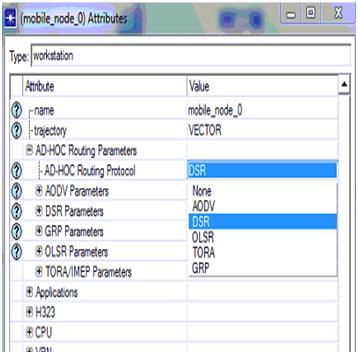
Go to the ad hoc routing protocols menu and change the routing protocol to DSR. Remember it was AODV with DES protocol. Refer the corresponding screenshot given 

From above screen it can be observed the AODV routing protocol is changed to DSR routing protocol.

Simulation of third scenario: TORA

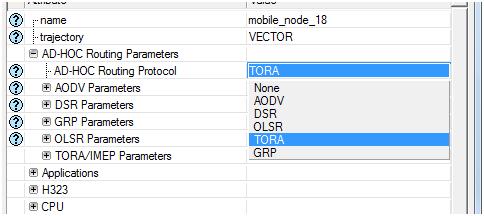
It is same as the second scenario only the routing protocol is changed to TORA throughout the process. Watch the screenshot below carefully.

This completes the simulation of all three protocols and the next step is to run the simulations against its simulation time. All the three scenarios are run for 15 minutes to achieve the results. 

Ad Hoc Network Project Reference for Setting Up The DES Metrics For Performance Evaluation

The main aim of this process is to analyse the packet losses in the network. The following steps are to be followed in setting up the DES metrics.

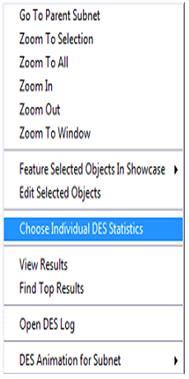
  • Right click on the simulation environment and chose the option  and Choose ‘Individual DES statistics’
  • A new window is opened where three options like global, link and node level are available. You got to choose the right option to evaluate the performance of the network
  • Refer  the following screenshot for Global level attributes, if chosen .

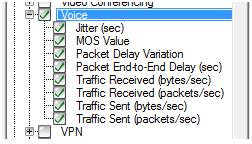
The following are the actual performance metrics used across the network against the traffic and packet sequences.

  • Jitter time in seconds
  • MOS Value
  • Packet Delay variation
  • Packet end to end delay in seconds
  • Traffic received in bytes per sec
  • Traffic received in packets per sec
  • Traffic sent in bytes per sec
  • Traffic sent in packets per sec

The same process stands good and can be applied for the second and the third scenario as well. The following are the actual simulation methodology implemented for the other scenarios.