google android white paper

This google android white paper gives a modest introduction to Google Android. After reading this google android white paper reader get answer to lots of questions like why Android come into picture, what Android is, and How to work on Android platform? I tried to make reader acquainted with Android, so that the benefits of Android will get highlighted, and reader will able to set up Android development environment & code-build-run first “Hello World” Android program. This white paper is also putting some light on using and building Android source code which is freely available on Android site.

The attached Document contains the below Table of Contents

1. INTRODUCTION to attached document

2. Why Android Software?

3. Android Application Architecture

3.1 Applications & Features

3.2 Application Framework

3.3 Libraries

3.4 Run time Android

3.5 Kernel

4. What Androids Are Made Of

4.1 Activities

4.2 Content Providers

5. Other Android features

5.1 Storage features

5.2 Network features

5.3 Multimedia features

6. Android Basics

6.1 Android software development kit (SDK)

6. 2 Configuring Eclipse for Android Plugins

6.3 Creating New Android Project

6.4 Adding “Hello World” code

6.5 Running first Android program

7. Android Source code

7.1 Android source tree

7.2 How to take source code and use it?

7.2.1 Setting up Linux machine

7.2.2 Installing Repo

7.2.3 Initializing a Repo client

7.2.4 Getting the files

7.2.5 Verifying Git Tags

7.2.6 Building the code

7.2.7 Using an integrated development environment (IDE)

7.3 Getting Android X86 & X64 code

Download google android white paper

Cloud Computing in Banking Sector Technical Paper

This Cloud Computing in Banking Sector Technical Paper discusses the basics of cloud computing, its benefits, layers and types of the cloud and its relevance to the banking Management sector. It further discusses the challenges and benefits for banks in embracing cloud computing and presents the situation banks are in today and the challenges faced by them in moving towards cloud computing.
The conclusion is that banks surely benefit by embracing cloud computing and that’s the next leap they have to take in order to grow their business.

Features of Cloud Computing Technology

Cloud Computing Technology a service which offers numerous advantages. Some of the important benefits of cloud computing are:
• Cost reduction: Cloud computing Technology can greatly help in reducing the costs since resources are acquired on a demand basis and charged accordingly
• Better usage of personnel: Since most of the interaction and work happens on the cloud itself once the cloud is set up, manual interaction required is very less. Hence personnel can focus on other things that deliver value instead of spending time on maintaining hardware and software
• Scalability: Cloud Computing Technology can scale itself up or down in terms of resources. It can scale up when there is more resource requirement and scale down when the resources are no longer required. This way resource can be effectively managed across the cloud and also the user is charged based on the resources used

Cloud Computing Technology and Banking

Like most of the other sectors, banks also are starting to move towards cloud computing for a variety of reasons. Since banks have to adhere to a lot of regulatory and legal requirements and customer and account data is of highest importance, banks always face a challenge in maintaining these. So banks need to be a lot diligent and cautious before moving on to the cloud.
The primary reason why banks started to look at the cloud is because of cost savings. Majority of the expenses that banks incur is on the infrastructure set up and usage of IT resources. Because of the cost and effort involved in this exercise, banks take a lot of time to roll out new applications to remain competitive in the market. Hence moving to the cloud is a better option to remain competitive and grow business.
Features of Cloud Computing Technology For the Banking Management Sector

Cloud Computing Technology can help the banking sector in the following ways which ultimately translates to cost savings, customer satisfaction and growth in business.
• Provide new and innovative services with reduced cost: By moving to the cloud, banks can utilize the services and latest technologies that the cloud has to offer. This way banks can leverage on the technology offered instead of investing in a new technology. Banks can also pay per use instead of dedicating their own resources. This is the biggest savings when compared to traditional computing where resources are dedicated irrespective of their usage and maintaining then involves a lot of cost Banks also can look at real-time processing and servicing by using the cloud in those areas where there is latency today. For example, banks can team up with post offices / credit card provides to provide real time experience to its customers
• Expand customer base and improve customer satisfaction: Banks can leverage smart applications available on the cloud to expand its customer base. For example, banks can tie up with cloud service providers for using applications like Smartphone which can help the customer do a lot of things online. This ensures round the clock availability of services to the customer, thereby improving customer satisfaction

Challenges Faced To Move to the Cloud

For obvious reasons, security and data privacy are the two main things that banks need to be concerned about when they are on the cloud. Banks are concerned that their data could be stolen or hacked or even mixed with data on the cloud or even compromised by mistake. Most banks treat their customer data differently depending on the relationship with the customer. Customer data and password may be less sensitive or highly sensitive. Situations like this should be well thought of before making a move to the cloud. For less sensitive data, banks may think of migrating to a public cloud and for highly sensitive data, they may opt to set up and manage their own private cloud.
Another challenge is the existing usage of legacy applications. Banks cannot modernize their infrastructure quick enough to move over to the cloud in a short span of time. Even if most of the applications are migrated to the cloud, the interaction between the legacy infrastructure and the cloud still needs to be addressed.

Cloud Computing repercussion on Scanner development Technical Paper

New generation Multi Function Peripherals and scanners have enriched features and functionality. Color scanning with high resolutions, different file format support, storage options, support for various ports, touch screen panel, support for various protocols and many more like this. But, user has to pay a hefty sum of money.  User always has different set of requirement and but he doesn’t have control over features he wants. He even has to pay for the features he doesn’t use.

This Cloud Computing repercussion on Scanner development Technical Paper is intended to describe cloud computing and its impacts on various components of Multi Function Peripherals. It describes cloud computing concepts and its applications on various fields. It tries to implicate the effects on various components of scanner.

Digital Picture Frame against Social N/w sites Via Cloud Computing

 Introduction

 This Digital Picture Frame against Social Networking sites Via Cloud Computing paper is about various types of testing involved while doing DPF testing against cloud computing concept. The term DPF refers to Digital Picture Frame, which basically reads images of Jpeg/bmp and other image formats. DPF also has got the capabilities of playing mp3 files and video files of formats mpeg/avi etc.

Digital Picture Frame DPF overview

DPF is a standalone device basically power supplied by chord or sometimes by in-built battery. In general DPF will have an inbuilt card reader which reads images from various cards like SD/MMC/XD/USB etc.       

 The frame is actually a very simple computer. It has most of the same components as the computer on your desktop, but they’re a lot simpler in the frame because they only have to perform a single task. The below circuit board is just a snapshot of the components that drive the digital picture frame.

 Features and specifications of DPF

There are some many features available depending on the type of DPF. Features vary depending on the type and manufactures of DPF.

Basic features and specifications of DPF were as follows.

  1. SS – Transitions like Wipe , Fade, Zoom and pane etc
  2. Auto On/OFF
  3. Wi-Fi
  4. Audio support (mp3’s)
  5. Video Support (mpeg/Avi)
  6. Internal memory capacity ( 256MB – 1 GB, depending on the model)
  7. PC suite application which interface frame and computer
  8. 8 in 1 inbuilt card reader.
  9. Aspect ratio : 4:3 / 16:9

Lot of new features getting embedded day by day into the current DPF’s, as per the market demands and needs of the customer.

How Digital Picture Frame reads the images

There are two ways how the DPF reads the images

  1. In built card reader – if the images are stored in any Storage device
  2. RSS Reader – if the Images are placed on Web applications/servers

Card reader is integrated to the Frame which directly communicates to LCD of the frame.

RSS reader is an application embedded in the F/w which directly reads images stored on the corresponding RSS feed.

 About the Social Networking Sites

Social networking sites are basically websites which focuses on building and reflecting of social relations or social networks among people.

 Most social networks are Web based and allows users to interact with other users over internet such as emails, instant chats and maintaining online communities.

Some of social network sites allows user to share images /applications and videos over the internet to share with other users.

Below are some social n/w sites which allows user to share pictures over internet.

  1. Flickr
  2. Face book
  3. Picasa        
  4. Twitter
  5. Orkut  
  6. AOL Lifestream
  7. Delicious
  8. Digg
  9. Diigo
  10. FriendFeed
  11. MySpace
  12. Netlog
  13. Reddit
  14. Scribd
  15. Stumbleupon

How Cloud computing relates to DPF and how DPF reads images from cloud

The Wi-Fi DPF’s are configured by means of web server / application where in the frames will get registered under the cloud. The web server application communicates with the social n/w sites like FB, picasa, Flickr etc.

All the Social Networking sites and Web server come under the same cloud to which frames are configured.

Types of Testing carried out on DPF

Since the frame is a standalone device and doesn’t have PC connectivity, most of the functionality is verified manually. Manual testing of frame covers below types of Testing

  1. Regression testing on the intermediate releases of F/w: Retesting the same functionality after bug fix and ensure the system works as expected.

For Ex:– When  a SS of 3 secs  duration is fixed, the same fix will be tested on the consecutive build along with the different SS durations like 5s, 10s, 30s. 

  1. Adhoc Testing: Randomly testing the frame and web server

For ex: – While SS is going on, go to frame settings page on web and delete the Web account associated with the frame. (Basically there won’t be any predefined test scenario for the same)

  1. Compatibility testing of DPF with different model Routers ( for Wi-Fi models) : verification of Wi-Fi compliance w.r.to different router models.

For ex:-  This test is to make sure that Wi-Fi Frame is compatible to different Authentication modes like WPS/WPA/WEP and None.

  1. Web server testing:   The Web application system test involves Authorization of the Frame to Web account, Thumbnail view of images that are added from Computer/Various sources and ensure all the images get reflected on DPF.
  1. Interoperability testing of Web server: Testing the web server on different browsers across various OS ( For Ex:- Firefox on Win vista, safari on Mac)

This test will ensure the System test case of the Web application in adherence to different combinations like Mac OS + Safari browser, Windows XP + FF, Windows Vista + IE8 and so on.

  1. N/w adherence Test : To verify whether frame adhere to n/w standards and guidelines

For ex:- When a frame is connected to Wi-Fi n/w which is at 32% signal strength, it should be in same n/w consistently and should not suppose to drop off from the n/w frequently.

  1. Localization Test: To verify whether frame supports all languages

For Ex: –   The error messages/Display text on the frame should be user friendly and should give a meaning sense in that particular language.

  1. Performance Test: Endurance test carried on Frame to ensure stability on long run with full load.

For Ex:- In this test frame is loaded with huge images (nearly 4000) and it is subjected to run SS continuously for more than 3 to 4 weeks.  The test is to ensure there are no Frame hangs/crashes. 

Conclusion:

This Digital Picture Frame against Social Networking sites Via Cloud Computing white paper explains how the DPF displays the images or content placed on social Networking sites via cloud computing concept. Also about the various types of testing carried on standalone devices like DPF.

Testing Strategies on Cloud Computing Technology Seminar

Cloud computing is poised to enter the mainstream IT solutions. With this paradigm shift, the strategic importance of creating and maintaining a private information technology infrastructure is diminishing. However cloud computing will have to face few immediate challenges before getting it widely adopted across industries.

The key challenges ahead are in terms of,

  • How to migrate existing applications/products as services on cloud platform?
  • What are the legal, regulatory, and business risks in using external computing power and sharing data outside the company’s private domain?
  • What are the appropriate SLAs for a cloud provider?
  • Is the TCO really low in using cloud computing platforms?
  • Are the system management tools matured enough on cloud platforms?

Facts that encourage wide spread acceptance of Cloud Platforms are,

  • The paradigm shift from software as a product to Software as a Service
  • Virtualization and its huge adaptability benefits
  • Standardization and commoditization of computing and ease of access through the internet

 Although cloud offers cost-effective access to huge computational power, storage capacity, and adaptability to scale. Users will need to understand the characteristics of the cloud platform in much detail and evaluate the provider services carefully. Vendors will need to adapt to cloud platforms and make products and services which are cloud ready and realign their business models to maintain their competitive advantage.

Testing as a service has enormous opportunities on this emerging computing platform. The cloud testing tools are yet to reach maturity and more testing software products, to orchestrate, record, and analyze testing, are expected to further fuel this opportunity.

Download Testing Strategies on Cloud Computing Technology Seminar

Virtualization Security for Cloud Computing Technology

As Cloud computing offers virtualized resources as service over the internet, security

For these resources is important. As these resources are responsible for delivering

Services over the internet probability of resource getting maligned by virus are more.

As number of resources increases managing these resources expensive in terms of security.

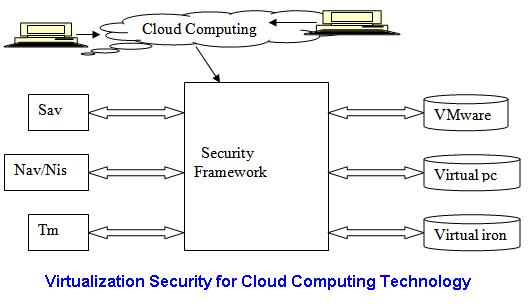
This Virtualization Security for Cloud Computing Technology paper describes about a framework which interfaces between various virtualization technologies and antivirus products and various ways in which virtualized resources are administered, by creating inventory list of virtualized resource and scanning them for virus/malware or spyware.

Virtualization Security for Cloud Computing Technology

This Virtualization Security for Cloud Computing Technology paper describes about various ways of deploying security agents in virtualized environment and maintaining the integrity of the virtualized resources.

Cloud Computing Engineering Seminar Topic

The Cloud Computing Engineering Seminar Topic Introduces Cloud computing, as the need of hour is a robust technology that has the capacity of integrating the global IT infrastructure and supporting billions of users over the surface of planet. As depicted by the literal ‘cloud’ the enormousity of such infrastructure is self-explanatory. Cloud infrastructure is built around the internet or private intranets including datacenters, high computing machines/server with help of a software abstraction layer that integrates huge hardware at distance

 The advantage of adopting Cloud-computing as a technology is of high value to end user as he need not get into hassles of procuring huge infrastructure on the fly. Also the synergic effect of integrating large set of machines and making them dynamic and ever expanding. Cloud-OS such as Microsoft Azure has practically made it possible to run applications under this Cloud, providing it as a service to extremely large group of people. The day is not far when we will see conventional applications residing over this cloud and available as a service to the user.

Cloud based solutions are going to be next big thing in the industry, and it will definitely impact the current software frameworks and development life cycles. With the fresh set of challenges and difficulties, we need to have completely different approaches for testing the new gamut of softwares. Two promising strategies, “Behavior simulation” and “Synthetic virtualization test environment”, discussed here will help us in addressing the unique requirements of testing in Cloud Scenarios. For us, as a global leader in testing industry, it is time to gear up for the new trends in quality assurance and a whole new world to explore and conquer.

Quantum Cloud Computing Technical Paper

The practical realization of cloud computing is fascinating and inevitable. But security is major concern in cloud computing. Traditional data encryption methods for security are unreliable in cloud computing. Strong security models which are unbreakable and practical are required to gain the confidence in cloud computing.

This is proposing one such model which uses the properties of quantum mechanics in a practical manner. This Quantum Cloud Computing Technical Paper proposes to merge the Cloud Computing and Quantum Encryption to bring out a new, permanently secured branch of cloud computing by the name “Quantum Cloud Computing (QCC)”. This Quantum Cloud Computing Technical Paper will discuss the model, its advantages, and its limitations and opens the model for discussion.The practical realization of cloud computing is fascinating and inevitable. Arrival of the cloud computing reduced the infrastructure costs to a grater extent and provided wonderful computing performance to its end users. The companies like Yahoo, Microsoft, Amazon, Google, and IBM already spent a huge amount of money and time in making the cloud computing more effective and secure.

But still the security is major concern in cloud computing. The traditional methods of data security can’t withstand the computing capability of cloud. The unbelievable computational capacity of the cloud computing brought new revolution and at the same time it posed the challenges on data security. The present methods of data encryptions are based on complex mathematical algorithms which will take considerable amount of time and computing power for ordinary computing systems to decode them. But decoding is highly possible in the context of cloud computing which has got a huge computational power. We have strong evidences for this.

The present work of this Quantum Cloud Computing Technical Paper gives an innovative, practical solution to this problem. This Paper is combining the elements of quantum cryptography with cloud computing. This paper gives a unique model to combine them together to make the cloud computing absolutely secure and coins the term “Quantum Cloud Computing”. This model solves the problem in more cost effective and practical way. It ensures all the users an absolute security of their data inside the cloud.

Key features of Cloud computing Technology

These are the below Key features of  Cloud computing Technology:-

1.    Cloud computing technology provides a more flexible and agile infrastructure at a low cost. It is important considering the fact that organizations have to often deal with business re-org, market fluctuations, resource resizing etc.

2.    Companies can significantly reduce their capital expenditure on IT by adapting to the cloud computing model. This can be achieved especially through utility based computing where the computing resources such as hardware, software, network bandwidth and other infrastructure components are rented from a third party service providers. So this way organization will have to only worry about the operational expenses from IT infrastructure standpoint. One other advantage of utility based computing is that IT skills required for maintaining the infrastructure will reduce drastically.

3.    Users can access the systems from anywhere in the world via internet regardless of where the infrastructure is located (third party service provider). All that is needed at the user end is a device that is internet enabled such as a computer, laptop or other handheld devices.

4.    Different companies can share the resources under a single cloud from a third party service provider. The benefit of doing so is as follows:

a.    Setting up a centralized infrastructure in a location where the cost of real estate and electricity is low.   
b.    Huge computing resource pool and a greater network bandwidth will increase peak load capacity.
c.     Using virtualization technology for setting up the cloud infrastructure will allow new host systems to be added or the existing systems to be upgraded with additional computing resources such as processor, memory, storage etc very

d.    easily without shutting down the systems thereby making the infrastructure extremely scalable.
e.    Optimized utilization of the systems that are often used only 5-10%.

5.    Cloud based application are easy to support and maintain as they are not installed on client machines. Any changes that are made to the application is available to the users instantly.

6.    Data is more secured due to centralized location of the infrastructure.

7.    Cloud computing resource usage can be measured and should be metered per client and application on a daily, weekly, monthly and yearly basis.

Download Key features of Cloud computing Technology

Brief Introduction to Cloud Computing

This Brief Introduction to Cloud Computing White Paper is intended to give a broad overview of what is cloud computing and how it can benefit the organizations in managing their IT. It also highlights the key features that the IT service providers can offer to their customers. The term ‘Cloud’ represents ‘Internet’. The cloud symbol is used in the telecom world to distinguish between the responsibilities of the provider to that of the user.

 Cloud computing is a paradigm shift from the client server model.  Cloud computing allows users in an organization to access shared resources, applications, servers, computers, etc over the internet on demand from a service provider. The provider can calculate the time bound resource utilization as per the service level agreement and bill the organization based on the usage. This is just like using the electricity from your provider and paying the electric bill based on the usage as captured by the meter. This will help the companies to optimize their utilization of IT assets thereby cutting down on any unnecessary IT costs. So this way organization can leverage on the cloud computing model to reduce the capital expenditure on IT.

Cloud computing technology is indeed a paradigm shift in IT infrastructure management thus providing significant cost savings and increased productivity to organizations. For IT service providers, it is an excellent opportunity to provide cost effective IT solutions to their customers with improved quality of service. However, it is imperative that more and more IT skills should be trained to maintain and support the cloud infrastructure.

There are certain factors that companies need to consider such as privacy of customers, compliance (PCI, SOX, etc) issues especially if it is a public cloud with a multi-tenant architecture.

Download Brief Introduction to Cloud Computing