Placement Management System C# with XAML Project

PROBLEM DEFINITION

This application is designed to develop a Placement Management system to assist the placement officer’s to maintain the student data and sort them according to the percentage criteria required for the company and student can review his/her data overcoming the drawbacks of the existing system.

OBJECTIVE

The purpose of this application is to develop an Application which facilitates the officer’s to maintain the student data and sort them according to the percentage and even delete the records and student can review his/her data overcoming the drawbacks of the existing system.

EXISTING SYSTEM

In the current scenario People Store the data of the students using some applications and sort them manually so filtering the people is a difficult task as there will be lots of students in the organization.

DRAWBACKS OF THE EXISTING SYSTEM

The major problem in the current system is that filtering the data is a manual approach and needs lots of time and a man can make mistakes while sorting.

PROPOSED SYSTEM

The application aims to overcome the drawbacks of the existing systems in the market and implement a few additional features.

The proposed systems consist of 2 different modules namely Admin and Student; each module has a different set of tasks to be done.

INTRODUCTION

The purpose of this application is to develop an Application which facilitates officials of the placements in the educational institutions to manage their student records. Using this Application Placement officer can add data of the students and even filter the students according to the criteria required for the organization and student can see his/her complete profile.

Functionalities

The product includes a few functionalities that help the admins to get the sorted list of students easily and effectively.

These functionalities include:

  • Administrator Panel to add/review/sort/delete student records.
  • Student Panel to review his/her data

MODULES

This application contains three modules.

  • Admin Module
  • Student Module.

MODULES DESCRIPTION

  • ADMIN MODULE

Admin Panel facilitates the officer’s to register a student, review the complete data, sort the data according to the percentages, and delete the data

Each Functionality is obtained by clicking the particular links

  • STUDENT MODULE

The Student Module facilitates the student to review their own data by entering their roll number.

These are the Modules covered in this Application.

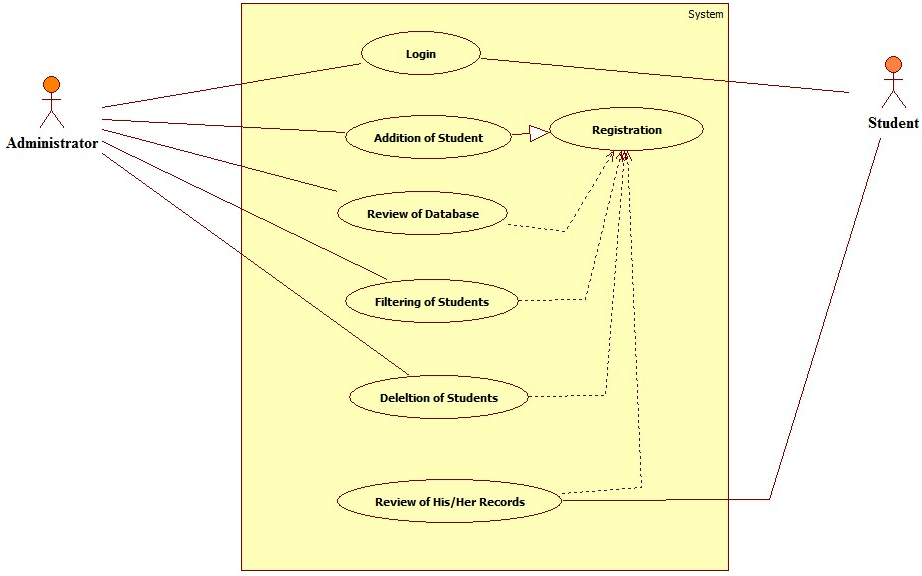
Use Case Diagram:

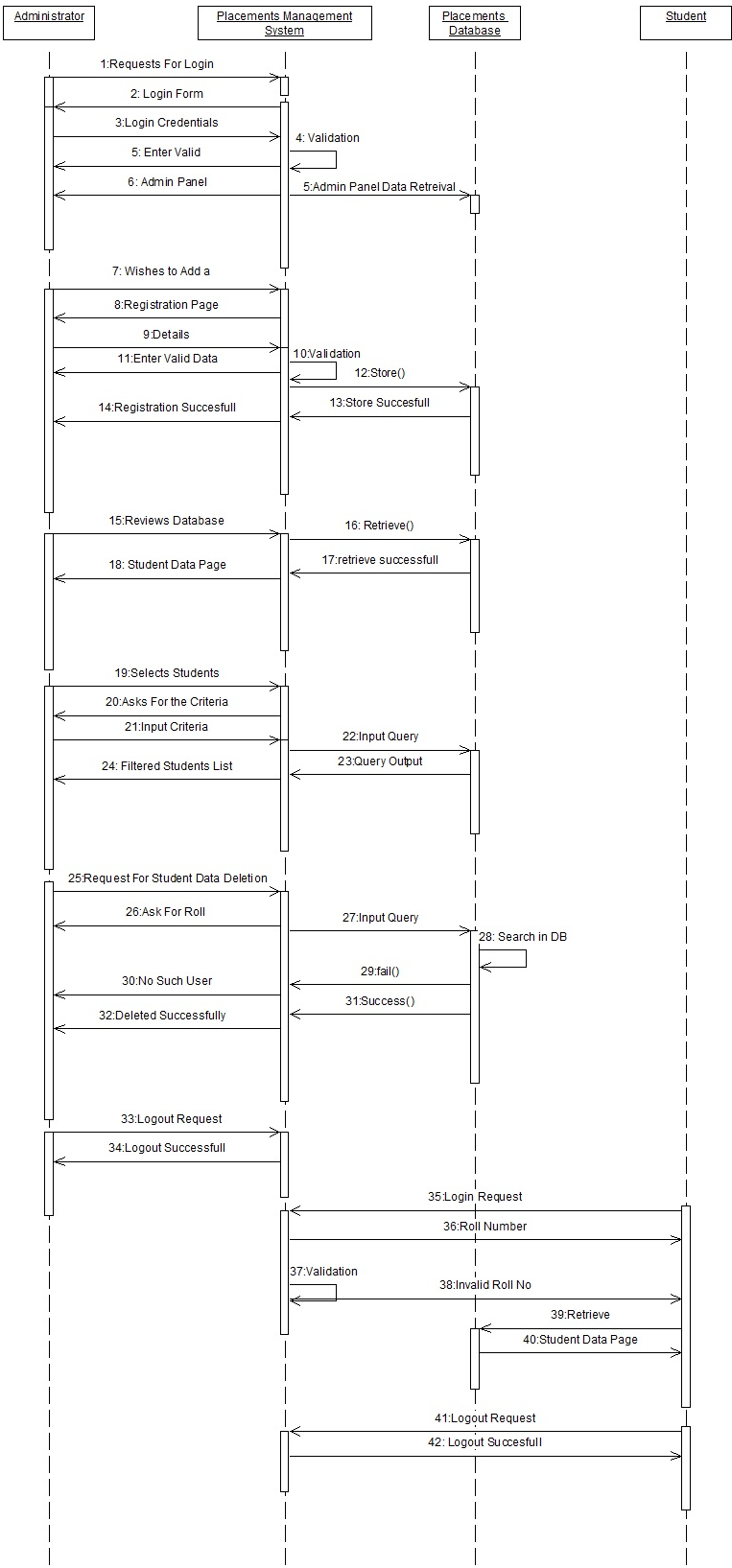
Sequence Diagram:

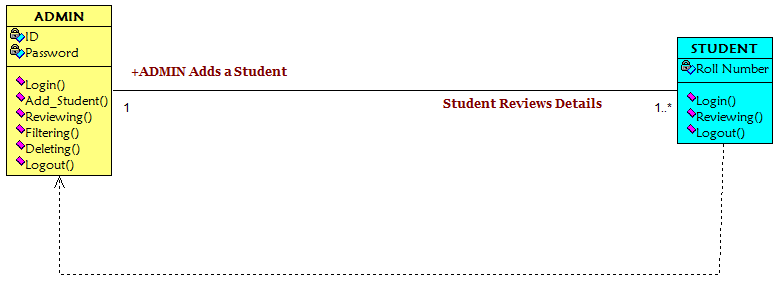
Class Diagram:

Placement Management system Class Diagram

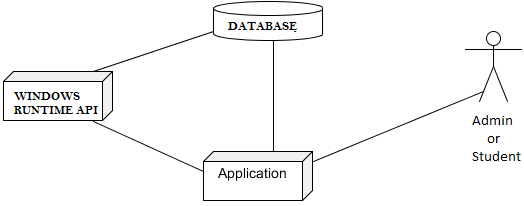
Architecture Diagram:

1) Test Case for Software Installation.

Test Case ID:       1
Test Case Name Software Installation Test
Purpose: To check whether the required Software is installed on the systems
Input: Run the Windows 8 SDK in Visual Studio.
Expected Result: Should Display the Integrated Development Environment
Actual Result: Displays the IDE  for installing the Software
Failure If the Software is not installed and configured accordingly then the system will not work
Remark Success

 2) Test Case for Running Application.

Test Case ID:       2
Test Case Name Application Run Test.
Purpose: To check whether the application runs on the local machine
Input: Run the application
Expected Result: Application should run on the local machine.
Actual Result: Application is running
Failure Could not run the Application (Force Closes).
Remark Success

3) Test Case for Selecting ADMIN.

Admin Case ID:       3
Test Case Name Choosing ADMIN Module.
Purpose: To check whether the application chooses the selected module and loads pages accordingly.
Input: Click on ADMIN link.
Expected Result: The pages from ADMIN Module are loaded.
Actual Result: The pages from ADMIN Module are loaded.
Failure Module will not be loaded.
Remark Success

4) Test Case for Selecting STUDENT Module.

Test Case ID:       4
Test Case Name Starting a Student Module
Purpose: To check whether the application loads the pages from the selected Module.
Input: Click on STUDENT link.
Expected Result: The pages from STUDENT Module are loaded.
Actual Result: The pages from STUDENT Module are loaded.
Failure The pages from STUDENT Module will not be loaded.
Remark Success

5) Test Case for Checking Database.

Test Case ID:       5
Test Case Name Testing the Database.
Purpose: To check whether the application stores data according to security constraints.
Input: Select ADMIN Module.
Expected Result: Successful List of Registered STUDENTS.
Actual Result: List of Registered STUDENTS.
Failure Display POP-UP alerting NO DATA FOUND
Remark Success

6) Test Case for Viewing Data in student module.

Test Case ID:       6
Test Case Name Viewing Student Data
Purpose: To check whether the application loads the student data according to Roll Number Entered by Student.
Input: Roll Number
Expected Result: Student Own Data is Loaded
Actual Result: Student Own Data is Loaded
Failure Student Own Data is not Loaded.
Remark Success

Output Screens:

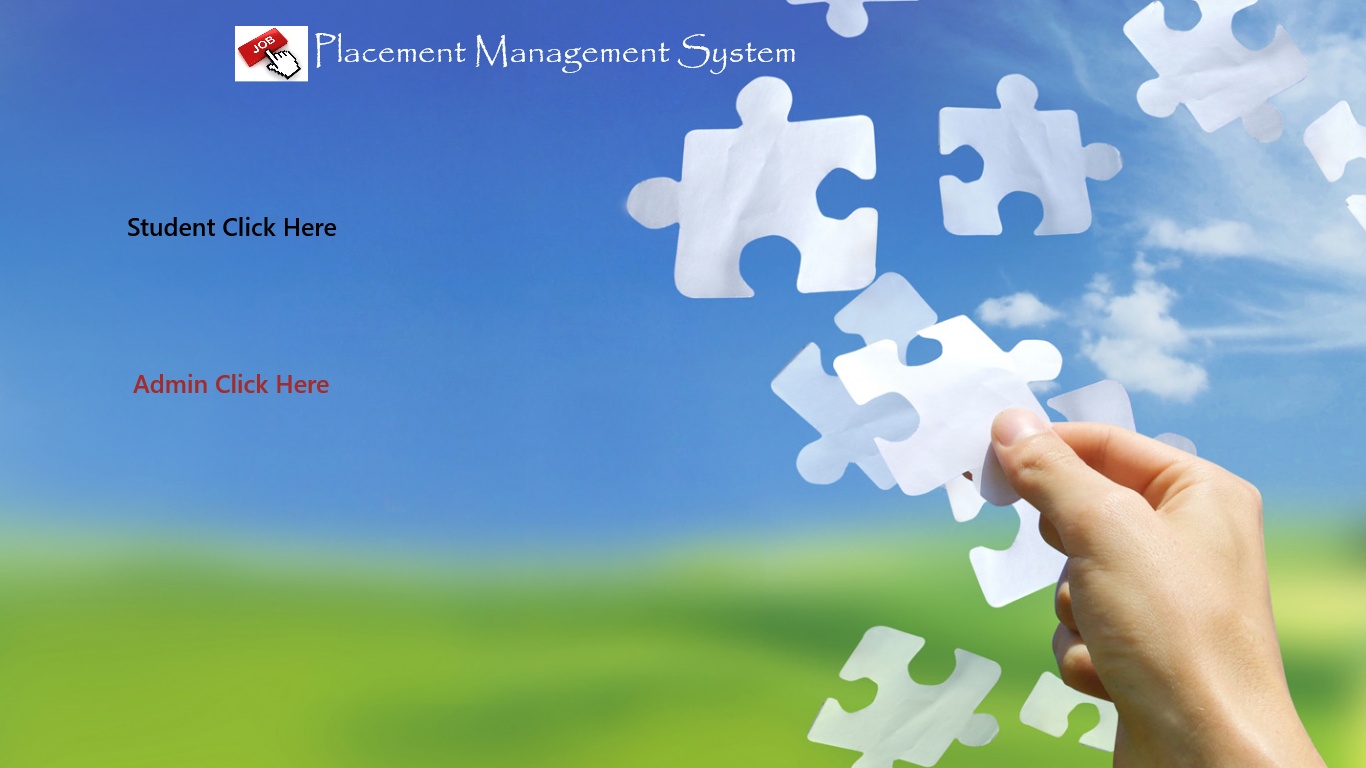
  1. Application Entry
  2. Main Window Opened
  3. Admin Selected
  4. Popup for Complete Details
  5. Popup of Invalid Credentials
  6. Admin Module Entry
  7. Add a Student Clicked
  8. Popup of Successful Registration
  9. Review Database clicked
  10. Select People Clicked
  11. Sorted People According to Percentage
  12. Delete Students Details Clicked
  13. Popup of Delete Result
  14. Admin Logout
  15. Student Clicked
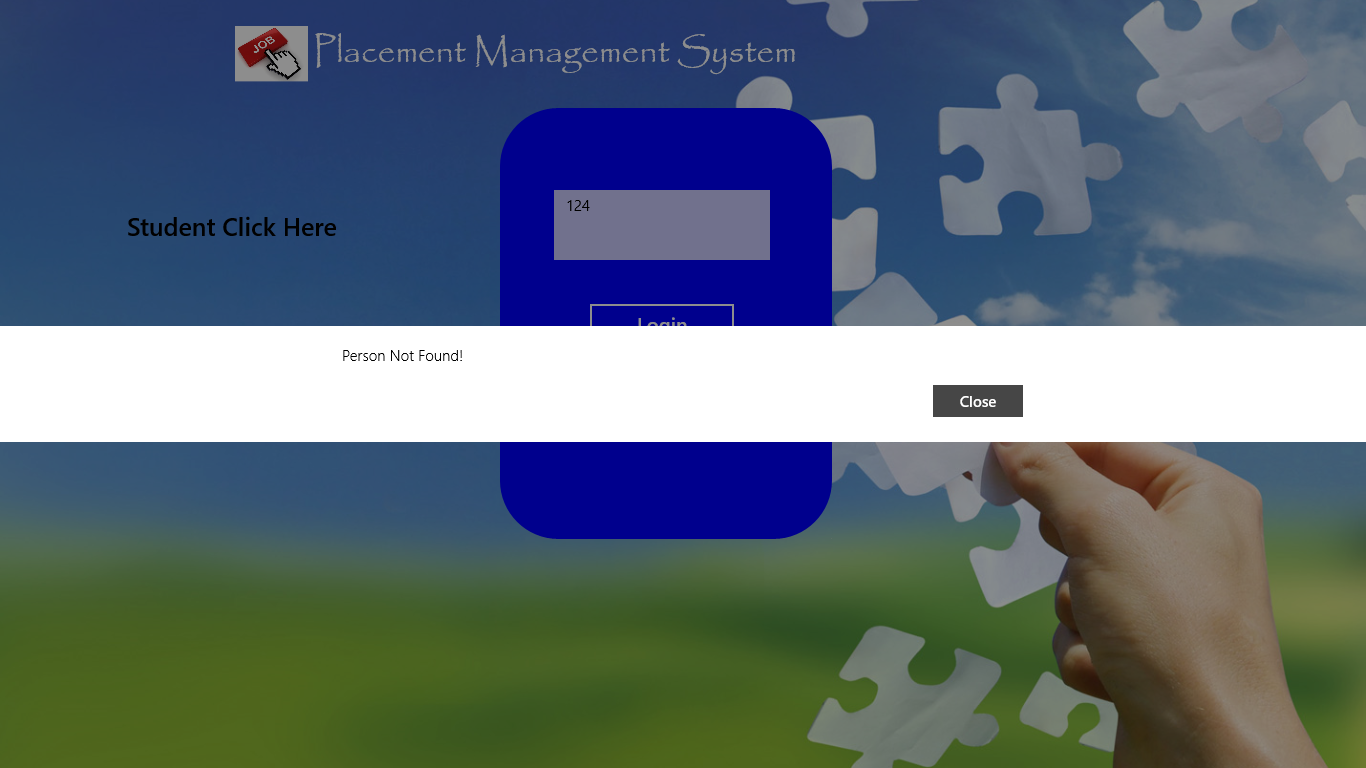
  16. Popup of Student Not Found
  17. Student Page Entry
  18. Student PageTo see Your Data Clicked
  19. Logout Clicked

Conclusion:

The end result will be an application that will help the TPO’S to manage the student data very efficiently. The officials can sort the data in time whenever there is an urgent requirement. Using this Application Placement officer can add data of the students and even filter the students according to the criteria required for the organization and student can see his/her complete profile.

APPLICATIONS AND FUTURE ENHANCEMENT

As the Requirements Changes day to day, we also need to give extensions to the application in the form of versions.

A few changes that can be expected in the future are:

  • A student can request for updating his/her data to the officials
  • Automatic deletion of record after the student is passed out from college
  • Admin can approve a request from a student panel
  • Admin can set Password Dynamically

Download Placement Management System C# with XAML Project Report Documentation.

Complaints Resolver Application .Net Project

Abstract:

Customer Complaints resolver is a web application which we can find the solutions to the problems we have raised and registered in the application. In this Final Year Project, we have 3 modules

  1. Admin
  2. Servicemen
  3. User

In Daily life we get a lot of problems for the devices we are using so each and every time we cannot make the way for the shop, then in this application user can find the solutions to the queries.

Admin:

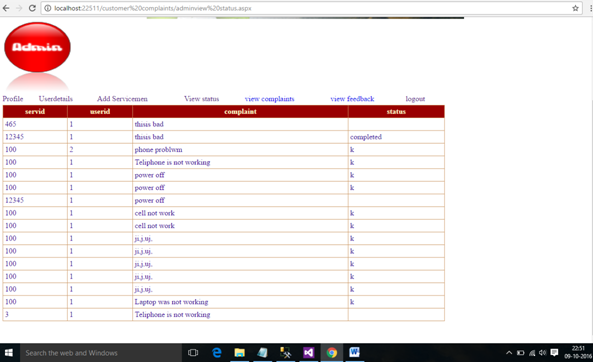
Admin Will login into the application with the default username and password. After logging admin can view the registered user details. Admin can add servicemen by giving service id and all the necessary details, he can also view the status of the user complaints, admin can view the complaints given by users and then admin will assign the users complaints to a serviceman. Admin can view the feedback provided by users.

Serviceman:

A serviceman can log in with the admin given username and password and he can view the complaints assigned to him by admin then he will respond or send solution according to the query.

User:

The user will register by providing all necessary details and then he will log in with the username and password after logging user can send the complaint by giving user-id and complaint description user can also give the feedback of how the response provided by the serviceman.

UML Diagrams:

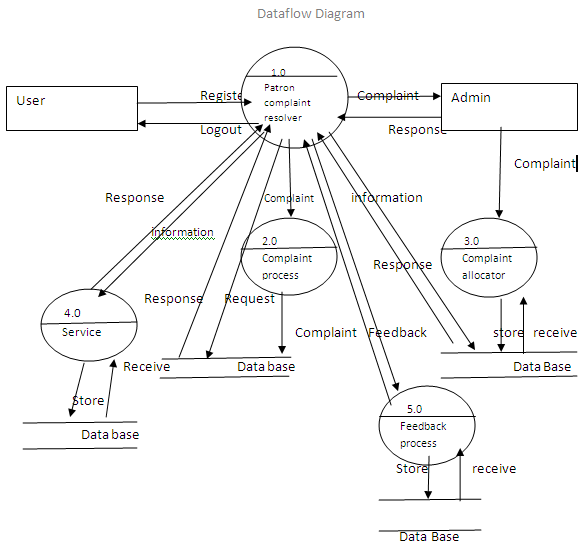
Data Flow Diagram:

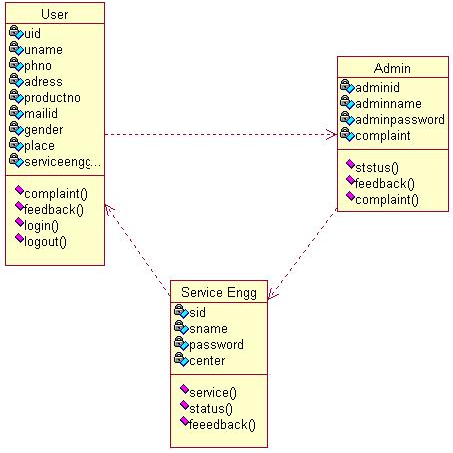
Class Diagram:

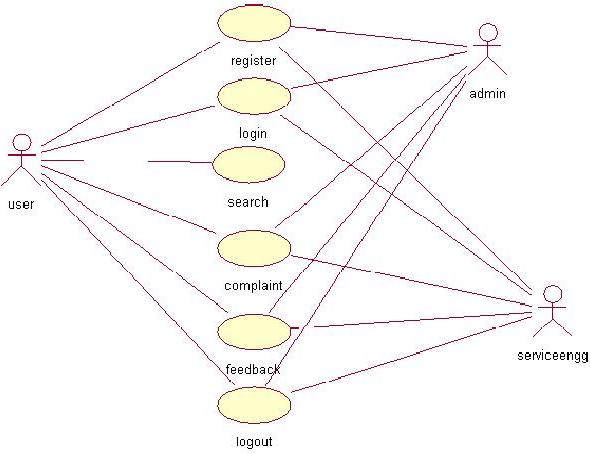
Use Case Diagram:

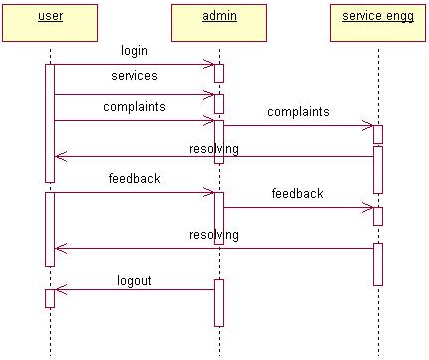
Sequence Diagram:

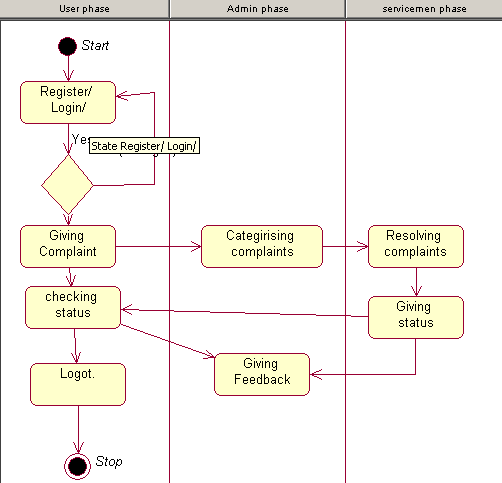
Activity Diagram:

Existing System:

In Existing System user needs to contact the persons for each and every problem he got, this is annoying and wastes a lot of time. We may not get the best solution in some cases.

Proposed System:

The proposed system, the user just needs to register into the application and then using the username and password and then just describe the problem and then submit the rest is dine by admin and serviceman. The user will have the least amount of work and if he is not satisfied with the solution he can give feedback to admin.

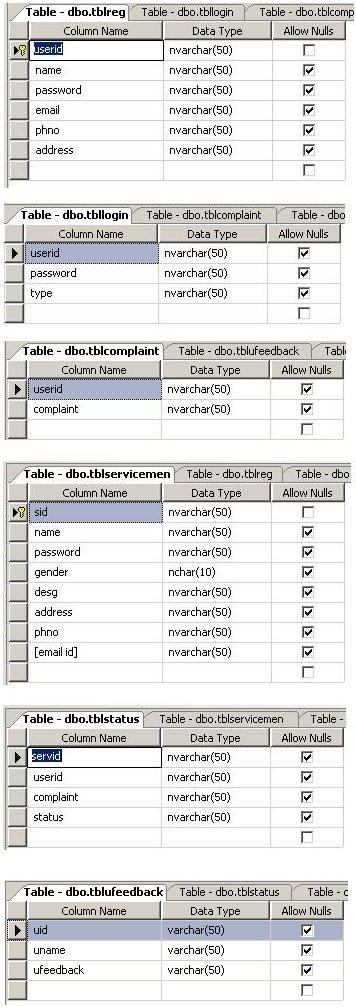
Database Design:

Download Complaints Resolver Automation System .Net Project Code, Project Report, Output Screens, UML Diagrams, etc

Employees to Employer Conference .Net Project

Abstract:

In this Employees to Employer Conference project, we will provide an enhanced way of communication between team members and employees working for an organization.

There are 2 modules

  1. Admin
  2. Employee

Admin:

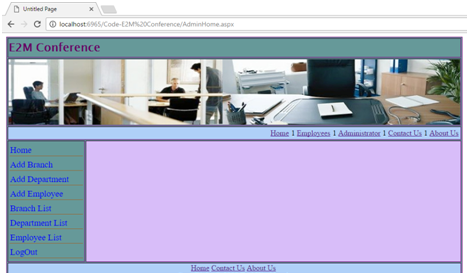
Admin will login into the application by giving the default username and password and admin can create the branches by giving its id and he can also add departments for respective branches and add employees for respective branches and departments that are added by admin. Admin can view the added branches, Departments and employees of all branches. Admin can delete the employees.

Employee:

Employee will login into the application by the admin given user-id and password and selecting the department, after logging in an employee can view his profile and also add the documents required for any type projects which are made in the organization. While uploading documents he can give the description for what kind of this document is. He can also enter into the conference and discuss with the other team members in the respective branch and department about the project details. Employee can also view the list of documents uploaded by him.

Existing System:

In the existing system communication between employees is lacking which leads to a non-healthy environment and may decrease the growth of the organisation so the above mentioned will be sorted out with this application. 

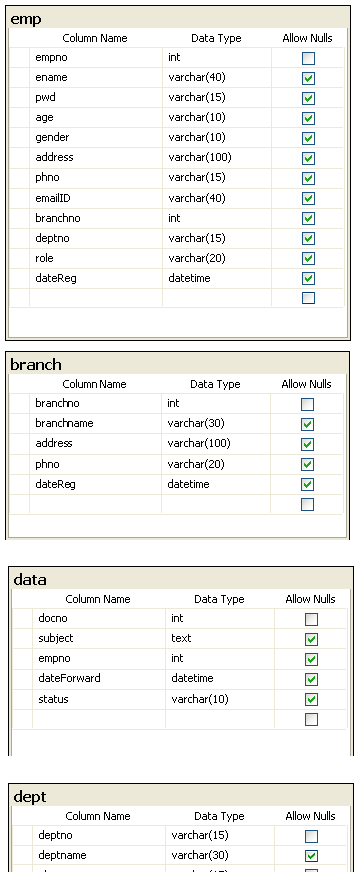
Database Tables:

Database tables for Employee, branch, Data and Department

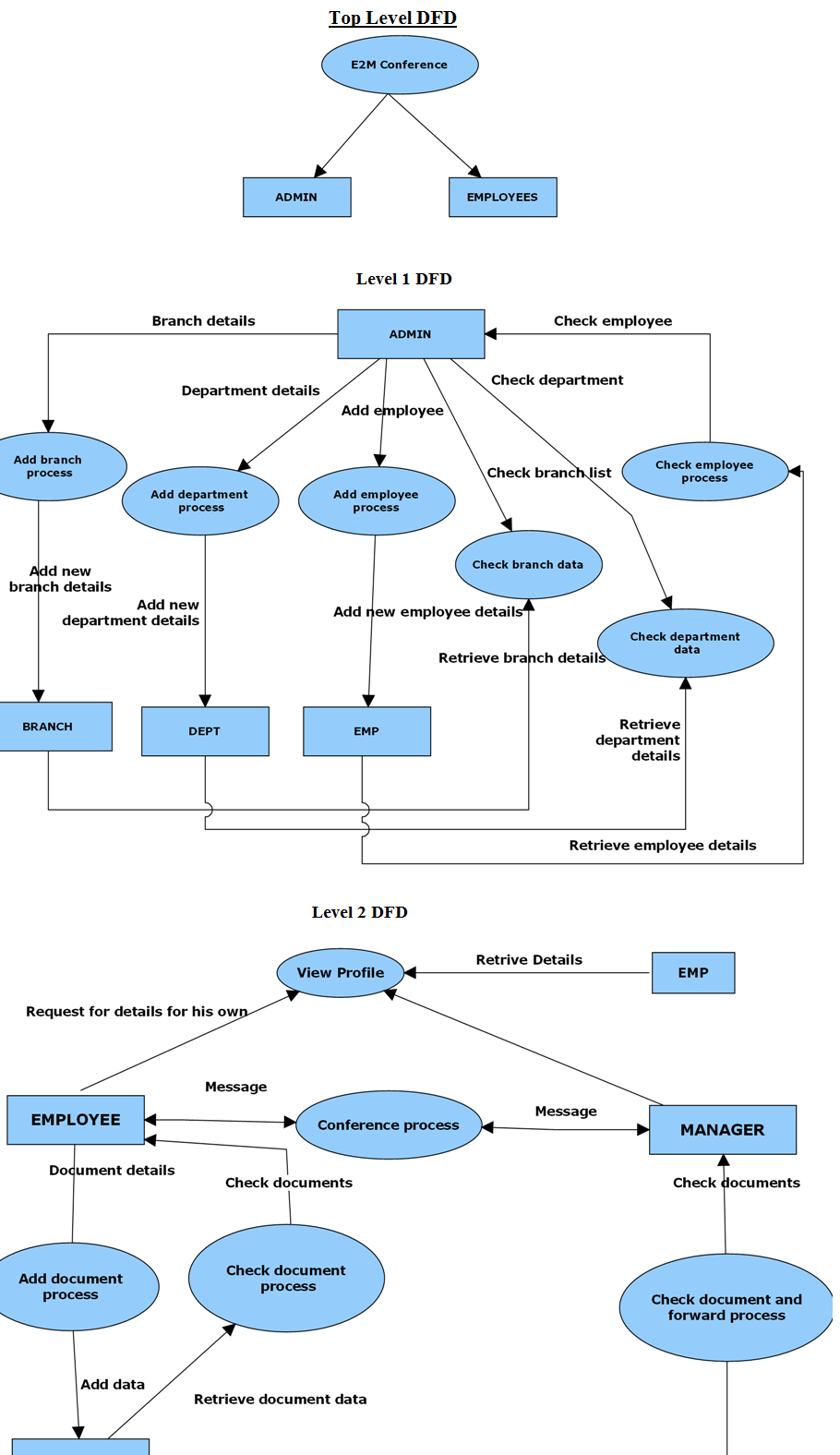
Data Flow Diagrams:

Proposed System:

In Proposed System admin will create the employee and branches and departments and employees who are in the same department and same branch can login into the application by the admin given username and passwordand they upload the documents required for projects and enter into conference and discuss about the on-going project.

UML Diagrams:

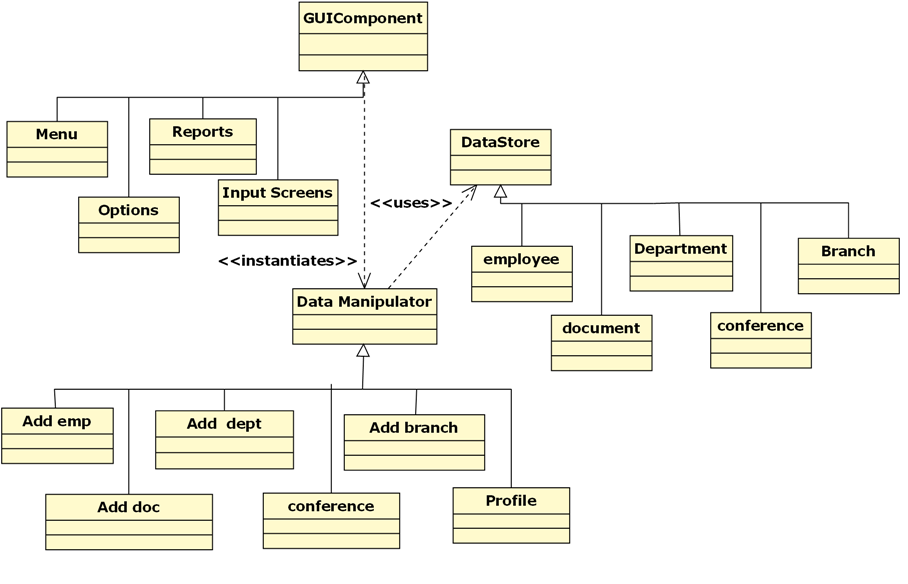
Class Diagram:

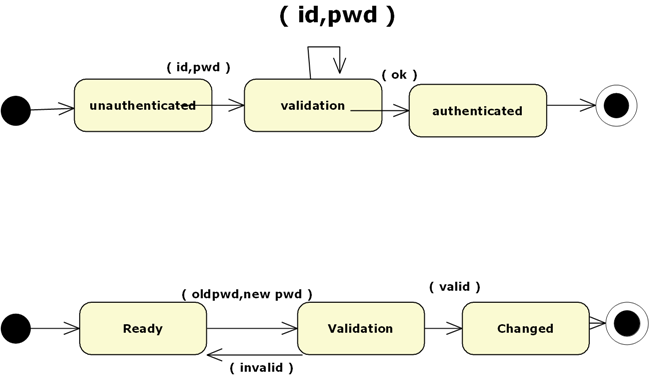
State Diagram:

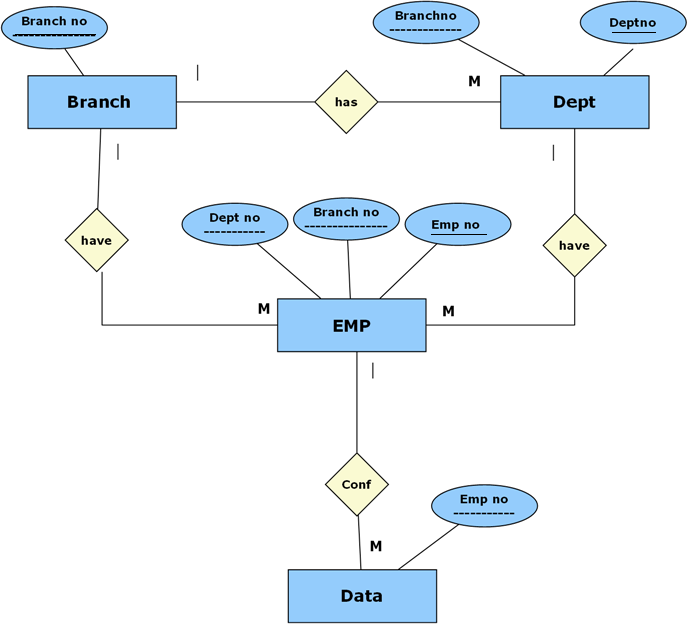
ER Diagram:

Download Employees to Employer Conference .Net Project Source Code, Project Report final Documentation and PPT Presentations.

Academic Java Project on Bug Tracking System

Abstract: 

In General, we found many bugs and we report them to the organization regarding a product or a service and the organization admin will see the bug reports of the user and assign a technical expert to resolve the issue. User can’t know the status of the issue so we propose this project.

In this project, the user will sign up and login into the application and report a bug by selecting product or service and which environment he is using and detail description of the bug.  After submitting the bug admin can view the bugs reported by a user and he will assign any technical expertise to resolve the issue, Admin can also add the technical expert by giving necessary details.

Using the login id and password the technical expert can log in and view the bugs assigned by admin he will go through the issue and update the status if it resolved. User and Admin can view the status of the bugs.

Flow Diagrams:

ER Diagram:

Class Diagram:

Sequence Diagram:


In this Bug Tracking project, we are having three modules

  • Admin
  • Technical Expert
  • User

Existing System:

In the existing bug tracker system all the status of the bugs and their details are stored in an excel sheet so preparing and updating the sheet is a very long process and it will consume more time.

Proposed System:

In the proposed bug tracker system everything generated by application and user can also view the status of the bug. In this, we are using the database to store the details so each and every detail is secured and can access from any place using this application.

Download Bug Tracking / Defect Tracking System Java Project Code, Project Report Document, PPT.

Road Transport Authority RTA Information System .Net Project

Abstract:

Road Transport Authority is a C#.Net based web application which enhances the use of RTA Services with ease. In this .Net Project there are 3 Modules

  1. RTO
  2. Employee
  3. Apply For LLR (User)

Employee:

In This Application RTO Will add the employees with details the employee can login by the given username and password. The employee can add the LLR details received from the user. An employee can also renew the LLR of the users. The employee can also generate the payment against issued challan.

Employee performs the following Functions

  • Issue of Challans
  • View Renewed LLR Details
  • View Renewed PL Details
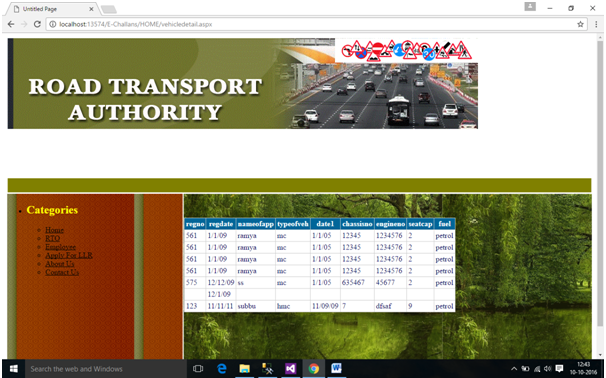
  • View Registered Vehicle Details
  • View New LLR Registrations
  • Can Also view the registration details Monthly Wise

RTO:

RTO Can add the employee details and can view the registration of vehicle details and issue of LLR and PL Details and renewals of LLR and PL. 

User:

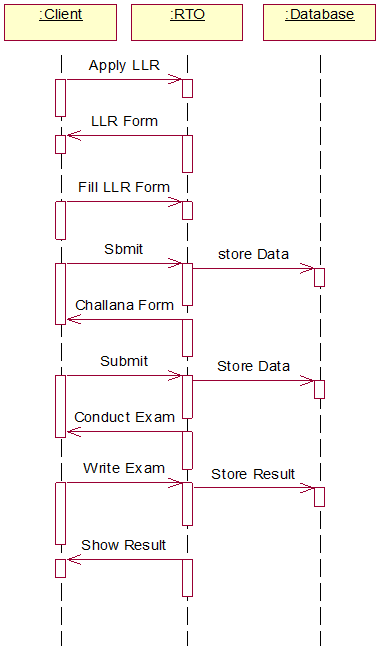
The user can simply for LLR by giving all necessary details and then clicking on submitting we are taken to the challan payment page after successful completion of payment we should write the Test for Learning License. After Exam completion, the result will be shown.

UML Diagrams:

Object Diagram:

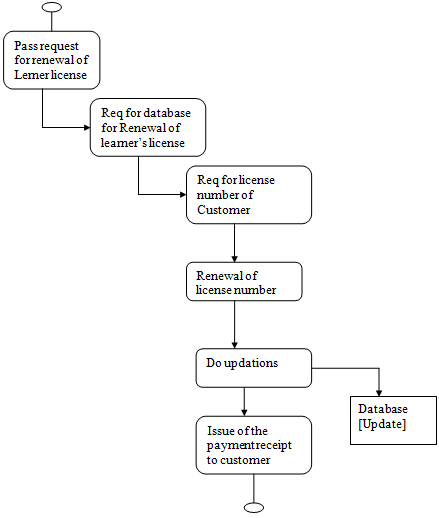
Activity Diagram Renewal of Learner License And Permanent Licence:

Use Case Diagram:

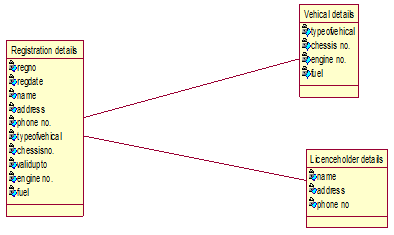
Class Diagram:

Sequence Diagram:

Existing & Proposed System:

Nowadays we see that using the internet has grown a lot so we need to implement everything online to provide fast and efficient services to the public or users. Users in the earlier days must visit the RTO office to complete the registration of a newly Brought vehicle or to apply an LLR or Pl, which takes a lot of time. Using this application, the RTO and Employee can register the vehicles Using their applications. In this application, we also provided and LLR Test to written online, but in practical to write an LLR we must go to RTO Office and register and wait for a long time. The Whole process is made Simple By this application.

Now in this application generating or extracting the user details are just matter of time because everything which is registered or added is made to store in a centralized database so extracting the details and generating the monthly reports was easy. Previous days we used to maintain or write the records manually, so to search the details or providing the monthly reports was a big task. 

Data Dictonary

  • Table Name: Challana details
Column Name Type Size
cno nvarchar 50
name varchar 50
amount nvarchar 50
ianame varchar 50
Ides varchar 50
Vfrom Varchar 50
Vto Varchar 50
  • Table Registration details
Column Name Type Size
regno nvarchar 50
regdate varchar 50
nameofapp varchar 50
sdwof varchar 50
age varchar 50
Add1 varchar 50
Add2 varchar 50
city varchar 50
state varchar 50
phno varchar 50
nameadd varchar 50
typeofveh varchar 50
date1 varchar 50
chassisno varchar 50
engineno varchar 50
Seatcap varchar 50
Fuel varchar 50
  • Table Name: LLR details
Column Name Type Size
Img_pk Int 4
Img_title varchar 50
Img_stream Image 16
Img_type Varchar 50
llrno Varchar 50
ldate Varchar 50
name Varchar 50
swd Varchar 50
dob Varchar 50
bg Varchar 50
a1 Varchar 50
a2 Varchar 50
City Varchar 50
State Varchar 50
Phone Varchar 50
Mark Varchar 50
Vfrom Varchar 50
Vto Varchar 50
Type Varchar 50
  • Table Name: Admin
Column Name Type Size
Id nvarchar 50
Password nvarchar 50
  • Table Name: LLR Exam
Column Name Type Size
Examno Varchar 50
Ans1 Varchar 50
Ans2 Varchar 50
Ans3 Varchar 50
Ans4 Varchar 50
Ans5 Varchar 50
Ans6 Varchar 50
Ans7 Varchar 50
Ans8 Varchar 50
Ans9 Varchar 50
Ans10 Varchar 50
name Varchar 50
Edate Varchar 50
chalno Varchar 50
  • Table Name:Addemp
Column Name Type Size
Id nvarchar 50
Password nvarchar 50
Name varchar 50
Address varchar 50
phno varchar 50
  • Table Name: Renewal of LLR and PL
Column Name Type Size
llr nvarchar 50
dateofiss varchar 50
dateofren varchar 50
typelicence varchar 50
name varchar 50
sdw varchar 50
dob varchar 50
bloodg varchar 50
Add1 varchar 50
Add2 varchar 50
city varchar 50
state varchar 50
phno varchar 50
Ident1 varchar 50
Ident2 varchar 50
vfrom varchar 50
vto varchar 50
chano varchar 50
amount varchar 50
  • Table Name:Result
Column Name Type Size
aname nvarchar 50
examno nvarchar 50
cno varchar 50
edate varchar 50
marks varchar 50
result Varchar 50

Conclusion:

In all the above advantages we must use this application for fast completion of Process and secure payments using challan details.

Download Road Transport Authority RTA Information System .Net Project Source Code, Project Report

Java Project on Travel & Tourism Management System

Abstract:

The Main objective of this Travel & Tourism project is to make the travel easy and comfortable for the users right from finding the routes and buses to till the booking of the tickets. In this project, we have two modules, Admin, and user.

Admin in this Travel & Tourism Management System project will log in with the default username and password and admin has authority to add the bus routes and add the travel and assign the route id’s and bus id’s and finally, the admin will add the buses at particular times in different routes. Admin will also add the different travel agencies while adding buses admin will fix the ticket price and the capacity of seats.

Finally, the user will register and log in and the find the appropriate routes and use the route id he will search the bus by giving all details like date of journey and type of seat etc. After selecting the information user will be headed to select seats in a view the selected seats will be displayed as red and then after successful payment the booking confirmation will be shown.

If the user feels any feedback need to give, he can provide feedback to admin.

Existing System:

In the existing system, the user needs to find the bus routes by visiting the travel desks and enquire the information and the user needs to book the tickets manually and there may be a chance of no availability of tickets. So we Proposed this project this will overcome all difficulties.

Proposed System:

In the proposed system, the user need to just login into the application and can find the routes and booking immediately and complete the booking process for a successful transaction.

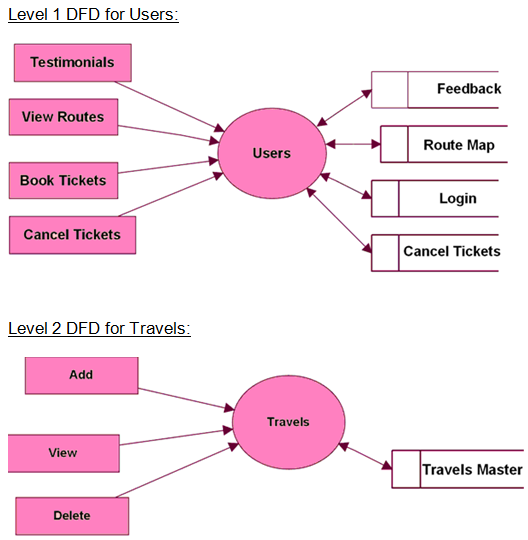
Data Flow Diagrams:

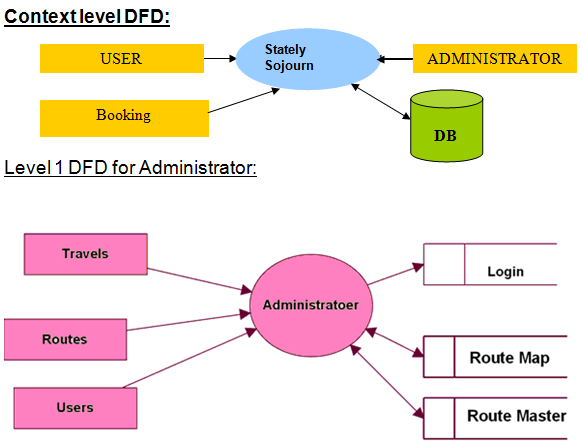
Context Level DFD and Level 1 Data Flow Diagram for Administrator, Users

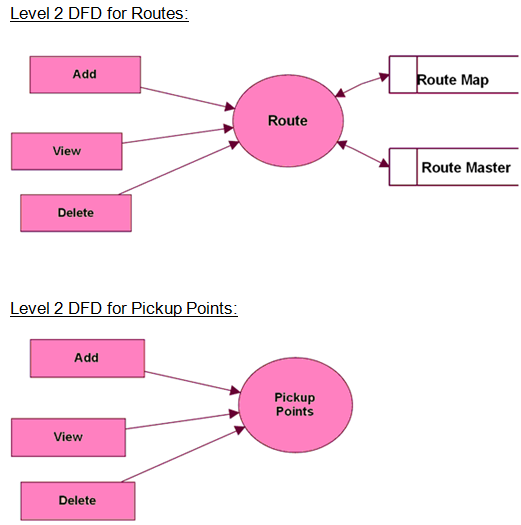
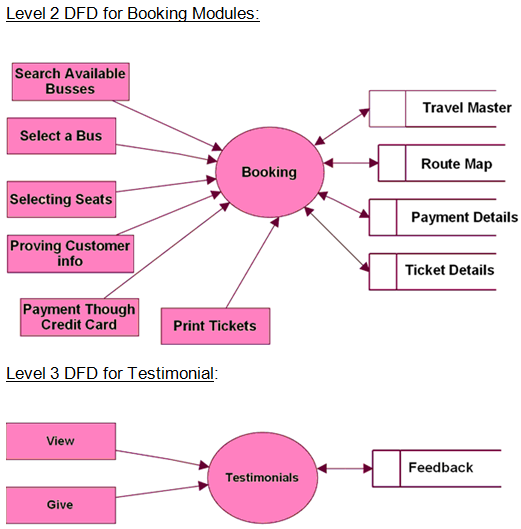
Level 2 Data Flow Diagram for Travels, Routes, Pickup Points, Booking Modules

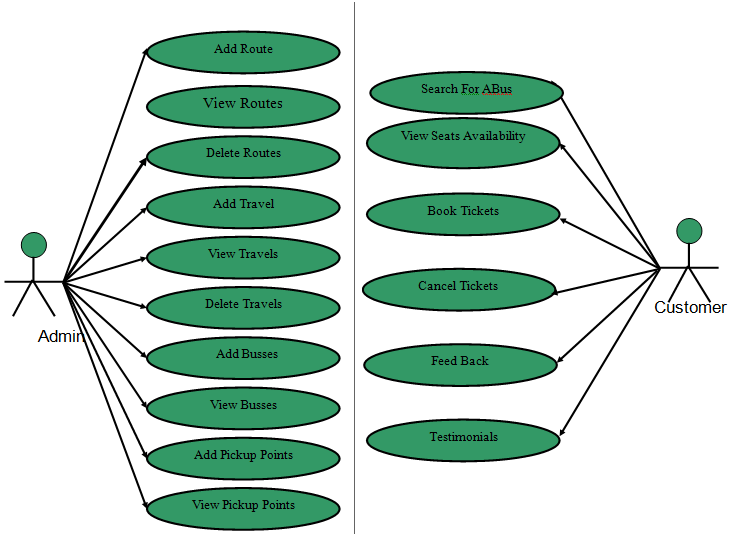
Use Case Diagram:

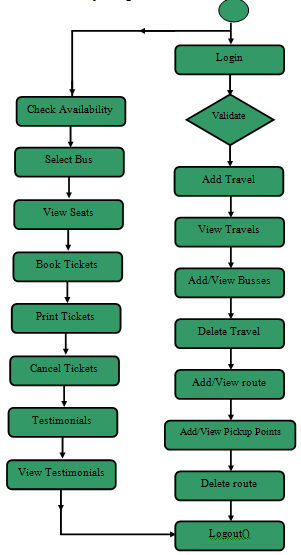
Activity Diagram:

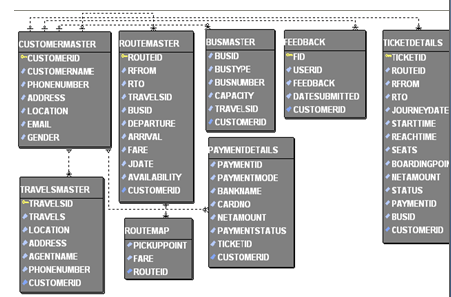
ER Diagram:

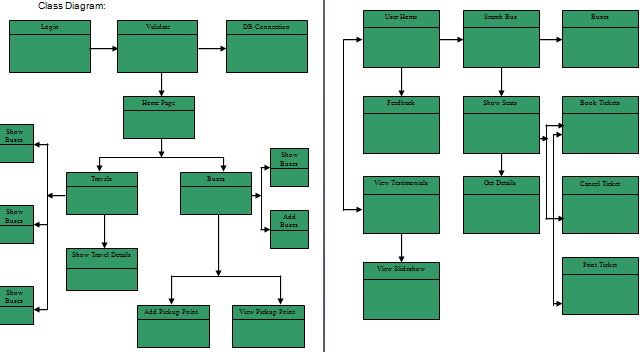
Class Diagram:

Download Travel & Tourism Management System Java Project Source Code, Project Report Documentation, PPT, UML Diagrams and Output Screens.

Java Project on Computer to Computer Learning System

Computer to Computer Learning System

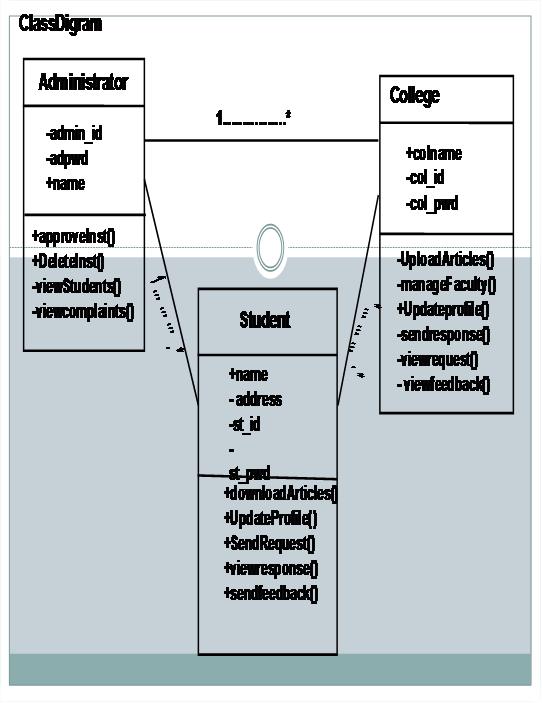
Computer to Computer Learning is the modern way of education, in which the students can get the valuable information through CD’s and Digital Copies. Generally, an existing system the educational institutions provide online material which is one-way uploading and hence the database is limited to a single person and hence the information updating needs time, But in this project, the database was made online so the database was accessible to multiple users. Any Format of information can be uploaded like audio, video, text etc. In this application, there are 3 modules

  1. Admin

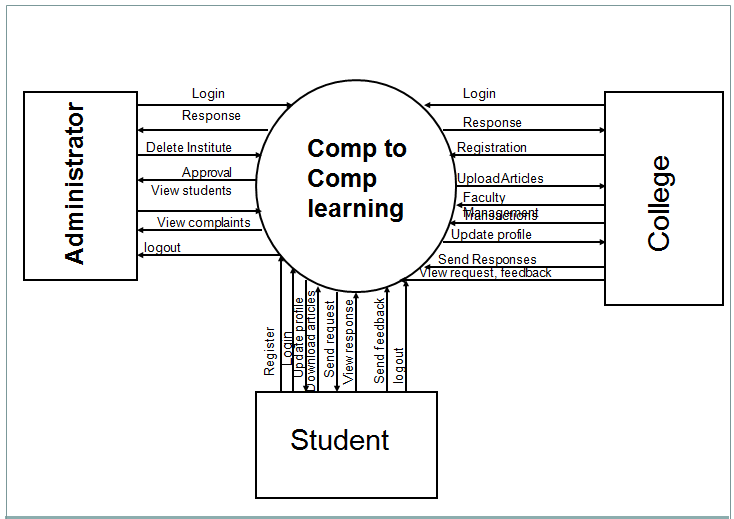
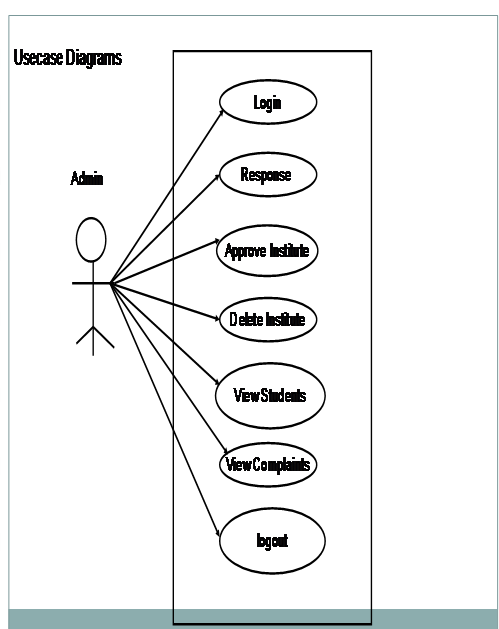
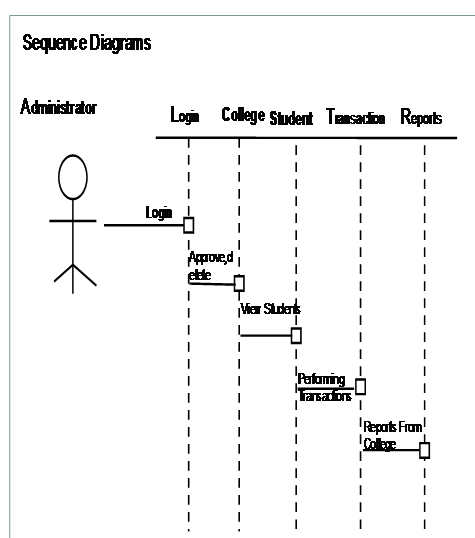
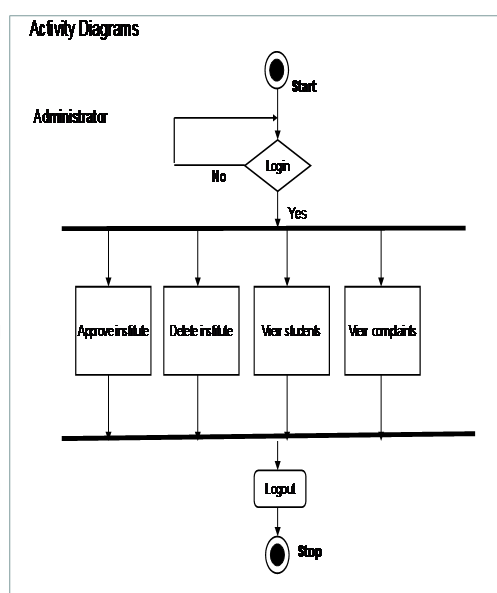
Admin can view the institutes and students registered and delete them if he feels unnecessary. Admin can also view the complaints given by students

All the users are controlled by admin. Administrator services are

  1. Approve the institute
  2. delete institute
  3. view students
  4. view complaints
  1. College:

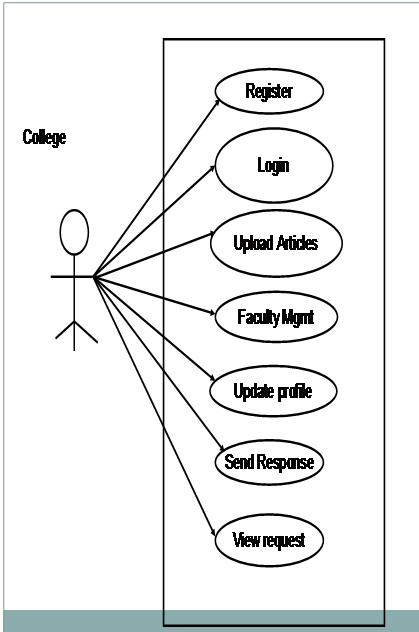
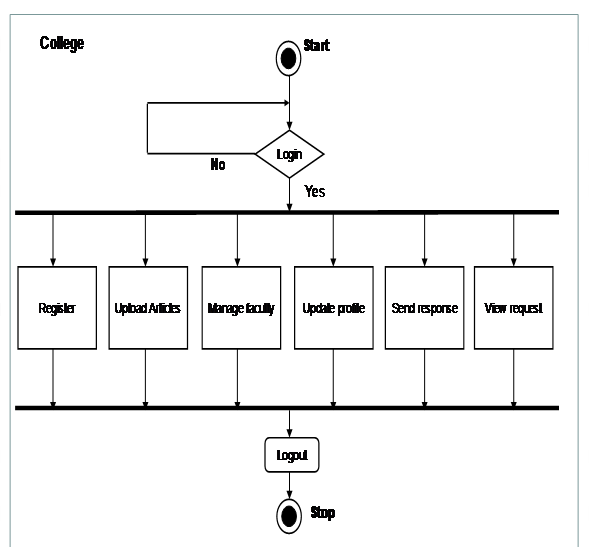
The college needs to register and log in and upload the articles on different topics providing the information and maintains the faculty details and view the responses and requests provided by students.
College is an Organization which can handle the all the student details. The College services are

  1. Registration
  2. Upload Articles
  3. Faculty Management
  4. Update profile of College
  5. Send Responses
  6. send a response for appropriate requests
  7. view request and send feedback
  1. Student:

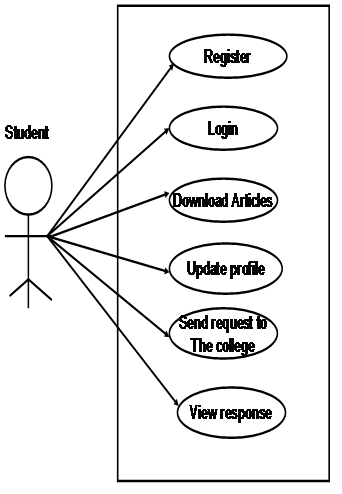
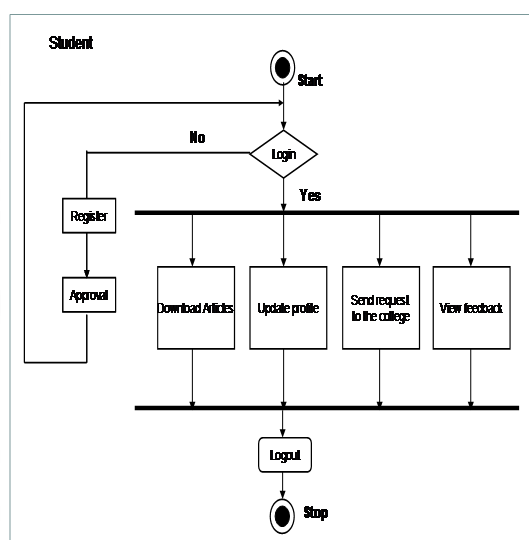
The student will log in with a valid username and password and he can send a request to college he can view the response from college and he can also give feedback to admin. He can also update his profile.

The Student services are

  1. Update profile
  2. send a request to the college
  3. view responses
  4. and send feedback

Existing System:

In the existing Computer to Computer Learning System, the main problem is the database is maintained at individual such as in excel sheets and hence the system is not available for all college students so we propose the multiple access database systems in this project.

Proposed System:

In Proposed Computer to Computer Learning System, we used Centralized or Multiple access databases and it is automatically updated with the multiple users on the system so this makes the system fast.

Output Screens:

  1. Login Page:
  2. Registration Page:
  3. Clooege Registration:
  4. Student Registration:
  5. Admin Login:
  6. Student List:
  7. College Login:
  8. Student Login:

Architecture Diagram:

Use Case Diagram:

Sequence Diagram:

Activity Diagram:

Class Diagram:

Download Computer to Computer Learning System Java Project Source Code,  Project Report, PPT, UML Diagrams.

Java Project on Computer to Telephony Integration System

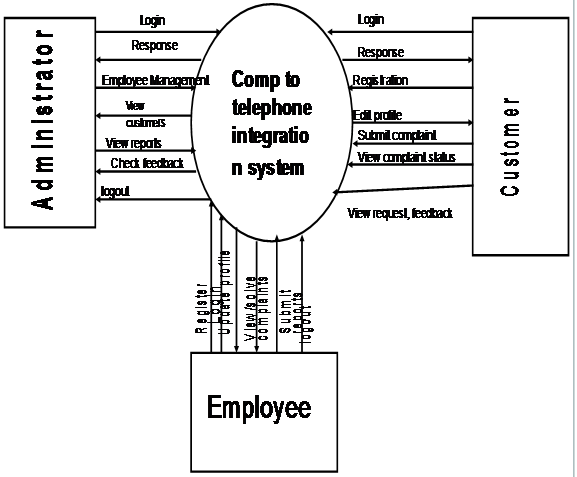
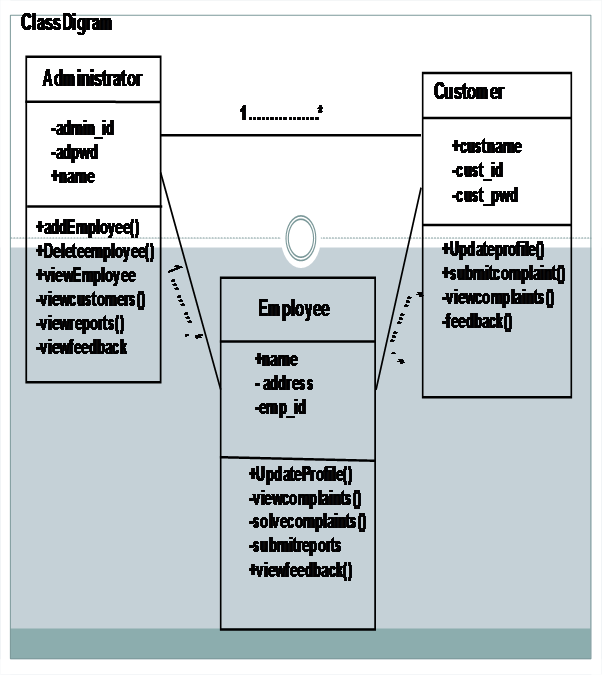
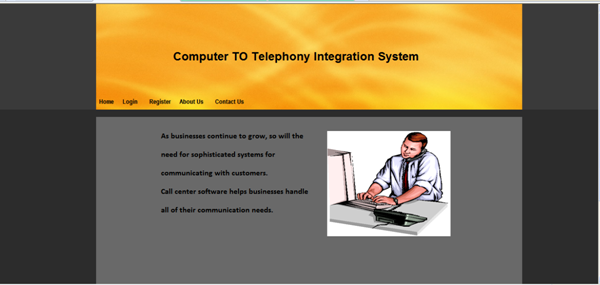
In Any Growing Business or organization customers, satisfaction is the most common factor so to accomplish that we need to take the feedback from the customers or else we need to provide a complaint service for customers to solve any errors or problems occurred to them so, we need some call center executives. In this Computer to Telephony Integration System project, there are 3 modules.

  1. Admin
  2. Customer
  3. Employee

1.Admin:

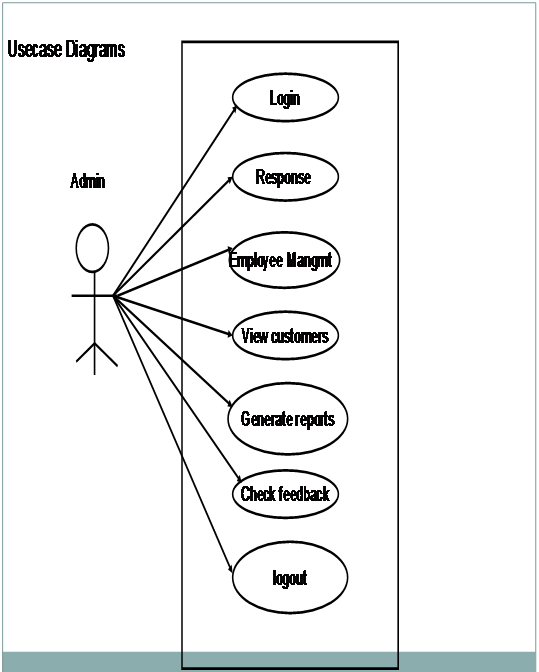
Admin will login with valid username and password after logging admin can add employees and delete employees. Admin can view the Customers registered and generate the reports.
All the users are controlled by admin. Administrator services are

  1. Employee Management
  2. View Customers
  3. Generate The Reports
  4. Check The Feedback

2.Customer:

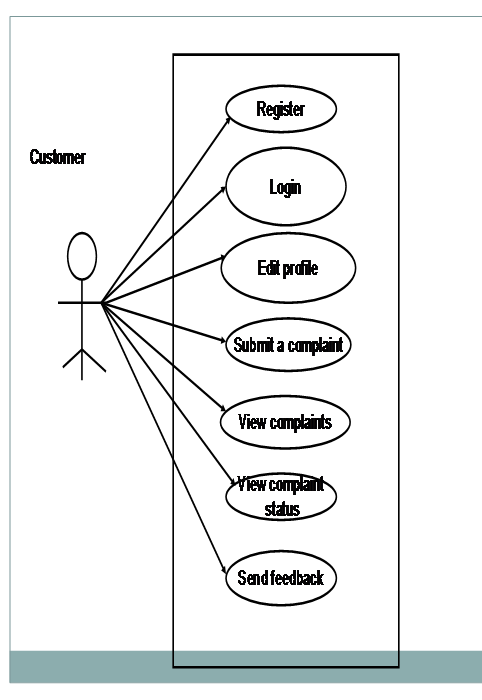
Customer will register and login into the application and update his profile. He can Submit the complaints and wait for the reply and he can see the status of the complaint and can give the feedback to the admin.

The Customer services are

  1. Update profile
  2. submit the complaints
  3. view complaints status
  4. send feedback

3.Employee:

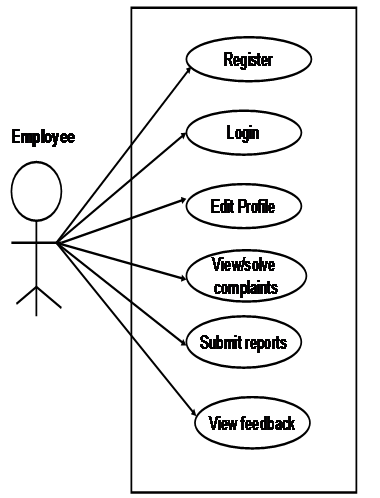
Employee will login and view and update his details and view the complaints uploaded by the customer and provide a solution and submit reports. He can view and request and send feedback.
The employee is a work which can handle the all the customer details. The Employee services are

  1. Edit profile
  2. view/solve complaints
  3. submit reports
  4. view request and send feedback

Software Requirements 

Operating System: Windows or Linux/Solaris

User Interface: HTML, CSS

Client-side Scripting: JavaScript

Programming Language: Java

Web Applications: JDBC, JSP

IDE/ Workbench: Eclipse with MyEclipse Plug-in

Database: Oracle / MySQL

Server Deployment:  Apache Tomcat

Architecture Diagram:

Admin Use Case Diagram:

Customer Use Case Diagram:

Employee Use Case Diagram:

Activity Diagram:

Sequence Diagram:

Class Diagram:

Output Screens:

  1. Home Page:
  2. Admin Page:
  3. Customer Registration:
  4. Customer Login:
  5. Edit Customer Profile:
  6. Add Employee Details:
  7. Customer Details:
  8. Employee Login:
  9. Update Employee Details:

Download Computer to Telephony Integration System Java Project Source Code, Project Report, PPT, UML Diagrams

Java and MySQL Project on Credit Card Approval System

CREDIT CARD APPROVAL SYSTEM

Now a day’s using credit card is increased drastically when compared to previous years so the banks also interested in providing more credit cards but the present system has the drawback of providing cards. The System is completely manual so the bank agent must visit the customer and collect the details and provide the transaction details etc.

This takes a much amount of time so we came with the application. In this Credit Card Approval System application, the customer can register and login into the application and he must fill all the necessary details and he needs to provide the transaction or billing details.

The customer can also view the transactions done using a credit card and to whom the money is transferred. He can also view and update the information provided by him

Modules present in the application are

  • Customer

Existing System:

In the Existing system, everything is manual so if any transaction details of customer required it is difficult to figure it out. There are no print reports of the customer transaction details.

Proposed System:

In the proposed System everything is Computerized and all the records are in excel format so tracking the details are much faster and easier.

Download Credit Card Approval System Java Project Code, Report, PPT

Programming Language for Problem Domain Science: ALPHA

Name of New Science Programming Language

 ALPHA is the name of the new programming Language for Problem Domain of Science. It attempts to use the best of the programming advantages of object-oriented language and dynamic languages. It is expected to replace static languages and ideal for large scale scientific software system development.

Introduction and explanation of language purpose

As ALPHA is a dynamic programming language, and includes the best of the programming advantages of object-oriented language as well as dynamic. It retains several of the features of C++ as well as LISP. Therefore, its main advantage is in building component software aimed for safe applications which require compactness. The goal of this language is to allow for fast paced programming and development. It also is robust as it will allow constant refinement in terms of prototypes.

Programming languages increase capacity to express ideas, in terms of exploring new language opportunities, building language features, encourage their use, improve background for language selection, increase ability to learn new languages, understand implementation and its significance and more importantly learn to design new languages. Thus, every computer application for different domains – business, artificial intelligence, scientific applications or systems programming—use different programming languages to achieve different goals.  A domain-specific language (DSL) is a computer language which is specialized and written for a particular application domain. These are different from General Purpose Language (GPL) which is applied to multiple domains.

Every problem domain identified offers an opportunity for programmers, language designers to explore and innovate. In the problem domain of science, applications need simple data structures, arrays and floating point operations. It also requires control structures for counting loops as well as selections. It also involves matrix manipulation that needs fast floating point calculations and also has the capability to load much data into memory in-line with input and output operations. Among the existing languages, such as Java, the limitation is in terms of performance as well as memory use. It does offer the best solution for manipulation of large matrices. Similarly, C and C++ despite being Object Oriented programming languages also have their more limitations.

A programming language is evaluated for different criteria – readability, writability and Reliability. Therefore, when designing a language there are other influential factors as well – computer architecture, programming methodologies. Languages can be created in different categories – imperative ( using Von Neumann architecture) or kept functional (mathematical functions), be Logical or rule based and Object Oriented or Object based.

There are typical design trade-offs with respect to designing language. When it is designed for reliability, it is likely to execute slowly at the cost of time, while a language which is readable is not easy to write. Similarly if the program is flexible it is typically not as safe to use and if its safe, then it is not likely to very flexible.

Implementing languages involves three methods – compiler, pure interpretation or hybrid. The programming environment therefore includes a collection of tools – file system, compiler, editor or a linker. The domain specific language requires that it is designed at three levels – Lexical, Syntactic and Semantic.

Syntax

The literals in use include Boolean # true, #false, Numbers include 32// for a decimal integer, #b1010 // for  binary integer #02 // for octal; -34.5// for floating point number, #x3B// for hexadecimal. Strings “x” for character; “ welcome” for simple string “welcome/m” for escape. Symbols in use are #”welcome” for a symbol, #”welcome” for the same symbol and Welcome:/ for keyword syntax. The collections are #(1.”one”_ for literal pair), #1,2,3, ( for list literal) #[1,2,3] for vector.

Naming conventions

Classes are named using brackets, constants are used with $, module variable use * symbols and local variable use “loc”. Predicate functions give back # true or #false, and end in ? ‘

Operators: equality, comparison, arithmetic, collections, sequence, bitwise as well as logic.

String Formatting

Format ( sequence, %s: %d”, port) here the directive  %sis object  and is described as ‘unique’ format.

The Semantics include direct pointer access, dynamic language, adapt an existing garbage collector, and to handle concurrency, using actor model given that multiple cores are the trend. The major concepts in use are objects as well as functions. It is designed to implement both of them but will have certain omission (Ploger, 1991) . Here the features are useful for writing programs since the extensive library allows wider control flow and data types as well as numbers. The assumption is to consider all values and data as ‘objects.’ They are designed as ‘classes.’ And the ‘instances’ are with respect to atleast one of the classes. The arrangement of the classes is such that there is an increasing or hierarchy involved. This provides scope for much of the acyclic features. The inheritance features of the classes are also in a class which is at a higher level. The first level of this hierarch is that of the object or the class.

The line of thinking in this programming language is to use the class as central to the structure. This involves certain types of work or specifications. Such grooves or levels ensure that a state is retained by a class. Here the idea is to ensure that there is a logical anchoring or association of a calls with an instance or what is also called as an event. For every one class  there is an event or instance. The organization of these events is done in a hierarchy or logical sequencing where one is higher than the next. This type of class segmentation allows for a acyclic instances and event resolutions. Each of these levels or grooves are then given a particular name. Hence, every level is identified uniquely. This identification is also associated with particular functions. These functions are associated with variables which fetch and those which deliver. Therefore, reading and writing of names in the desired action sequences becomes easy. The functions which are part of ALPHA are in terms of objects. The actions these functions perform are related to several characteristics. These include certain procedures, methods and message to languages that are separate from original language or native language. The association is therefore with two types of functions – these are methods as well as generic functions. There are any number of associations between the two sets of working functions. Therefore, the principle used here is to find out which functions are for which method. The argument list become crucial to this classification as well as the codes. The methods here include all of the formal parameters and are required to develop an argument. However, if they are not of the same class, they have to be defined differently. This could include the use of subclasses as well as other defined parameters. When functions are not used as per their arguments then the possibility of error situations too have to be handled. The priority here is to ensure that there is no mismatch between argument type and function. Therefore, a strong feature for type checking is introduced to capture such errors. This is the design which will ensure that static analysis is possible even when it is in run time. The functions which are generic in nature are then grouped differently. Here the issue is to ensure that there is more than the zero method used. The different types of functions are known to perform same functions, when they use same name. Hence it is very important to examine the generic nature to either form the same class or to redefine the parameter. The design feature currently is to examine the type of argument and also to ensure that the method chosen to invoke is appropriate. When, there is wrong entry, the appropriate method should be used. Until then a negative or error message continues. This method of designing ensures that faulty generic functions are captured early. Such generics are known to create or modify during run time and ensures that dynamic type checking will allow complete running of the program.  The generic functions therefore have to be defined in such as way that they are not over defined. Thus, the polymorphic capabilities are to be used in relation to generic functioning.

To ensure that there is no ambiguity between descriptions of classes, generic functions a well as methods, relationships are formalized. The abstract syntax, description as well as basic operations with respect to functions and classes become necessary. The idea is to ensure validity functions are included for easier static analysis. In terms of defining classes it has to be said that the acyclic graph is persued. The representations in terms of class, classname as well as class are to be used appropriately. The subclasses which includes a list of classes are in direct relation to inherent properties with relation to classname. The operations which are in basic use are related to generic functions. The use of the over defined objective is very critical to the working of the language here. The idea is to examine the type of the parameter before it calls or invokes the related or associated method (Martin-Lof, 1982). The type of method is again associated with that of the type in use. Thus all of the generic functions work as a list and each element of the list is prioritized as a parameter.

The pointer to corresponding methods is also used for the parameter lists. The generic functions which are in use at the top-level function are related to the generic functions. The operations as well as the generic functions which are associated with the new types of generic functions are also ideal for removing generic functions (Guzdial,1994).. The idea is to add more method to the current or existing generic functions. These can also be removed by various methods using a variety of generic functions as well as application of generic function in terms of arguments. The use of method is one of the basic functional units used. It is considered for collecting a list of typed parameters and it also returns the typed value. The methods which are defined are of no significance to the users. The methods used for definition are automatically related to the generic function without the same name. The new methods used are attached to the new generic functions in use. This method s is also useful in defining unique identifiers which are related to ‘key’ making. The core idea is of the new key which is in equivalence to the expression which introduces it to a given namespace. The parameter lists, as well as the keys related provide the necessary functions. However, it has to be noted that these factors are generic. The new function which is required is with relation to the degree to which the generic function is of use. The creation of a generic new function is also to be identified. The new method involves the alteration of the generic function and has to be supported by the function space as well as the scheme environment.

For example to calculate the cube root of a number by the use of Newton method;

(name-method Newtons-cube (x)

(trim-methods ((cube1(guess)

(if (close? Guess)

Guess

(cube1(improve guess))))

(close? (guess)

( < abs)- (*guess guess) x )) 0.001))

(improve (guess)

(/ + guess( / X guess)) 3)))

(sqrt1 1)))


Choice and justification of interpretation/compilation method(s) to be used

As computers are able to execute only machine code, ALPHA programming language I have developed has to be converted to machine code before it is suitable for running in any other language. I propose to use the translator X, written for language X and will therefore have a Virtual X Machine. The options I have general translation are – (1) Compilation (2) Interpretation (3) Hybrid translation which uses both compilation and interpretation. With a hybrid model, ALPHA is easy to use as it reads source program every time it is run. However it detects ‘static errors’ during compilation and when source is changed, it interprets again. By using the hybrid system, it gives high flexibility and programming reruns, though optimization is retarded.

In using the compiler it is easy to translate from one language, that is the source language to another or the target language, via the following stages – scanning, parsing, semantic analyzing, intermediate code generation, optimizer and code generation, to arrive at target program.

Discussion of memory management and scoping features

ALPHA is designed for automatic memory management. It will allow allocation function with a simple direction of ‘memmake.’ It will also allow implementation in terms of finalization as well as hash tables. These will be interfaced for features which are yet in the process of standardization. Finalization is attempted by the use of functions finalwhennotreach. This will allow a call to finalization function and coordinate with the garbage collector. For this to statrt the object is first declared not reaching. Further, the hash tables which are weak many allow other keys and values which are weak, but are all subject to parameter which are provided at the time of start and allocation (Spohrer, 1989). As soon as the garbage collector determines the strong references in terms of value, keys, the weak and value tables are handled. The entries are deleted and there is no strong reference remaining.

Specification and rationale for major language features in terms of:

Simplicity: Uses fixed number of keywords, control structures and types. There is use of pointers over references, instead of increments as in C.

Orthogonality: Features are independent, data of all types can be passed by value as well as reference, data can be passed to and returned from functions.

Data types – complex for easy writing

Syntax design – yes

Support for abstraction – yes

Expressivity – complex

Type checking – strong

Exception handling – present

Restricted aliasing – Present

Discussion of the readability, writability and reliability of the language based on the language characteristics as chosen

Reliability and writability are a trade-off. However, the language supports writing reliable programs.  Therefore a characteristic complexity is involved in the language as more data types are used for easier writing, and introduction of exception handling though increasing readability becomes complex.

The idea of designing a programming language is to ensure multiple objectives. There has o be sophistication in terms of data types, since it is meant for scientific domain. There has to be advanced specifications (Peyton Jones, 1987). Secondly, errors during programming have to be captured at the earliest. At the same time the idea is to ensure that it runs error-free and is safe to use. That is to say, the vulnerabilities are the least and that there is efficient optimization. This is possible in theory only when the compilation strategies are efficient. In a modern day language, the idea is to have strong libraries, almost matching that of an assembly language. It involves the use of several sets of instructions which are then useful in ensuring higher levels of problem resolution. Though the use of assembly language is considered a very useful way in which to handle scientific domain software, the use of dynamic elements is also critical. The advantages with assembly language levels is that it optimizes use of substrate levels but has limitations as it involves difficulties related to day-to-day executions. Therefore, by adding the finer layers of more advanced object oriented programs, it is therefore comfortable to bring in the additional use factor and user experience. Also capturing errors become easy by use of controls and strong type control factors.

One of the major issues with language programming is that it is lately dominated by what is called as network effects (Owen, N. W., Kent, M., & Dale, 2004).. The costs of using minority languages are often exploitative. The use of language for a minority or limited projects is exorbitant in terms of costs; as well as the benefits they have to offer in the long term. Therefore, it is recommended that majority language is used for most occasions. However, in terms of problem domains such as science, minority languages too hold powerful use case. It is useful especially with respect to per project case-level, recommend experts. The use of General programming language compilers will offer wider scope for such language projects. Therefore, the concentration in terms of using new language is on developing a good language and promote it  among other programmers, since the productivity, cost and quality are worthy of their use. Thus, generic solutions are supportive in the background while, advanced languages such as ALPHA allow higher productivity and bring further importance to the domain of science.

References

Berry, G., & Gonthier, G. (1992). The Esterel synchronous programming language: Design, semantics, implementation. Science of computer programming, 19(2), 87-152.

Guzdial, M. (1994). Software‐realized scaffolding to facilitate programming for science learning. Interactive Learning Environments, 4(1), 001-044.

Hoare, C. A. R. (1969). An axiomatic basis for computer programming. Communications of the ACM, 12(10), 576-580.

Knuth, D. E. (1992). Literate programming. CSLI Lecture Notes, Stanford, CA: Center for the Study of Language and Information (CSLI), 1992, 1.

Maloney, J., Resnick, M., Rusk, N., Silverman, B., & Eastmond, E. (2010). The scratch programming language and environment. ACM Transactions on Computing Education (TOCE), 10(4), 16.

Martin-Löf, P. (1982). Constructive mathematics and computer programming. Studies in Logic and the Foundations of Mathematics, 104, 153-175.

Owen, N. W., Kent, M., & Dale, M. P. (2004). Plant species and community responses to sand burial on the machair of the Outer Hebrides, Scotland. Journal of Vegetation Science, 15(5), 669-678.

Peyton Jones, S. L. (1987). The implementation of functional programming languages (prentice-hall international series in computer science). Prentice-Hall, Inc..

Ploger, D. (1991). Learning about the genetic code via programming: Representing the process of translation. The Journal of Mathematical Behavior.

Smith, D. C., Cypher, A., & Spohrer, J. (1994). KidSim: programming agents without a programming language. Communications of the ACM, 37(7), 54-67.

Spohrer, J. C. (1989). Marcel: a generate-test-and-debug (gtd) impasse/repair model of student programmers.

Steele Jr, G. L. (1980). The definition and implementation of a computer programming language based on constraints.