Initial Public Offering (IPO) MBA Final Year Seminar Topic

This Initial Public Offering (IPO) MBA Final Year Seminar Topic focuses attention on one of the very important instrument in Financial Markets, Initial Public Offering.

INTRODUCTION:        

Financial Markets where securities / shares are bought and sold on exchange are called Capital Markets. In order to generate lucrative interest of investor in Capital Markets, one must thoroughly address interest in new securities which are yet to launch in stock exchanges. Yes, we are talking about New Issue Markets.

In order to expand, diversify the existing business, debt repayment, acquisitions, etc., companies or corporate houses need huge capital, hence this capital can be collected by inviting public for investment in the company. In order to become public company from private company, it must have SEBI (financial markets regulatory body in India)’s & existing stakeholders (called private investors) approval. Once SEBI & stakeholders clearance is received, private company can start procedure to become public company. That’s why; this process is also defined as the process of converting private company into public.

Download Initial Public Offering (IPO) MBA Final Year Seminar Topic

Effects of Money Market on the Banking Industry MBA Seminar

Financial market plays the major role of transferring funds from the lenders to the borrowers. The financial market is categorized into “Money Market “and “Capital Market” based on the lending and borrowing period.

Money market deals with short-term transferable securities of periods one year or less. The sale of these securities finances the working capital of commercial and industrial        firms, financial firms, and governments. What is interesting about the money market is that it shouldn’t really exist. Financing working capital is precisely what banks do. However the banks are blocked from performing that function due to the government regulations. To a large extent, money markets exist to provide “work-arounds” for regulatory obstacles.

This Effects of Money Market on the Banking Industry white paper examines the reasons behind the growth of “Modern Day Money Market” and analyses its effects on the US banking industry.

 The MBA Seminar Topic covers the following areas:

  1. The Early Money Markets.
  2. Growth of “The Present Day Money Market”.
  3. Effect of Money Market on the functioning of Banks.

The Attached document contains the below table of contents:-

1.     Introduction to the Money Market

2.     Money Market: Early Survey Findings

3.     The Growth of the Modern Money Market

3.1       Instruments of the Money Market

3.2       Money Market Intermediaries

4.     Effects of Money Market on the U.S. Financial System

5.     Appendix

6.     Glossary

7.     References

Download Effects of Money Market on the Banking Industry MBA Seminar

Water Level Indicator Electrical Project Abstract

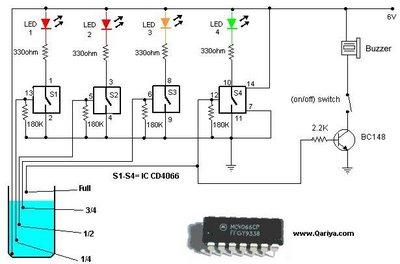
Water level indicator electrical project explains about displaying information of water level in the tank by using led lights. There are four led lights used in the circuit when LED1 is on it means that water level is at ¼ of the tank and if LED 2 is displayed then water level is ½ of the tank and if LED 3 is displayed water level is ¾ of the tank and if LED 4 is displayed water level is full. This project uses IC Chip CD4066. 

Water-level-indicator-electrical-project-abstract.

In this paper you can find circuit diagram of the project which can be first tested on bread board and then make it in to circuit board. This paper explains about how this project works with circuit diagram explanation.

download  Water level indicator electrical project abstract Embedded system Abstract.

Vehicle Tracking System Abstract

Vehicle Tracking system using GPS module and GSM modem,  and ARM7 (LPC2129). 

WORKING PRINCIPLE: 

This project mainly works on GPS and GSM systems. The vehicle is traced by using information from satellite systems and send to GSM systems.     

Vehicle and user are connected initially by using GSM network. the user will send message to Moving vehicle for connectivity, hardware mounted on vehicle reacts to message and send conformation message to user and then if the message is valid one then GPS modem is initiated and requested for location. 

The latitude and longitude values are compared with the values stored in the memory and corresponding location name is given to the Controller which in turn uses GSM/GPRS to send the location name by means of Short Message Service back to USER. 

VEHICLE-TRACKING-SYSTEM-Abstract


Operation
:
 

The heart of this project is a micro controller ARM7 (LPC2129). 

GSM:

Messages sent by the user is received by the GSM  module. 

1)  Password option is provided for secure authentication. 

2)  Micro controller will play important role in sending and receiving commands to GPS. 

3)  Micro Controller extracts the location name and send the same to the GSM via serial communication. Micro controller will find location and send details to GSM Mobile using serial communication system.

Vehicle Anti-Collision System Using Ultrasonic Signals

Aim:-

Vehicle Anti-Collision System Using Ultrasonic Signals  project is used to avoid collision between vehicles moving front and thereby an accident. 

Introduction:-

          Nowadays accidents become a common happening in roads due to carelessness or due to over speeding. If we can avoid this means we can save many lives.

The main aim of our project is to develop a anti-collision system for vehicle which can be used for real time application. The main features of the project are: ultrasonic sound sensor and power control circuitry.

This system monitors the distance between our car and any other vehicle or obstacles in the front. If our car crosses a particular limit the power will be cut out.

Vehicle-Anti-Collision-System-Using-Ultrasonic-Signals
Working:-               

       The controller always waiting for “Stop-value”(i.e. 23 0r 05) and  Enter the value ,The controller always monitor the sensor values ,if the value comes within a particular limit the car will be stopped and indicator will be on. if it is near the stop limit it will alert the driver and buzzer will be on. If the block is gone then, car will move normally. For controlling car movement we are using relay circuitry.

       A 16×2 LCD is implemented to display the modes and distance.

download  Vehicle Anti-Collision System Using Ultrasonic Signals  Embedded system Abstract.

Ultrasonic Based Parking Guidance System

Ultrasonic based parking guidance system embedded system projects main idea is to provide alternative method for parking system.

Abstract:

Parking a vehicle is one of the biggest task in a congestion area and especially when you are reversing back your vehicle u couldn’t guess the exact distance you are moving and how much distance is the vehicle from you. This Project is used to avoid all the above convictions by using ultrasonic sensor. This ultrasonic sensor is used to read the distance and display it on your dash board. When your vehicle is moving back the exact distance between your vehicle and the object is shown in LCD and if the distance is reducing to a certain limit a warning is raised by making sound. This helps parking your car with more safely.

ULTRASONIC-BASED-PARKING-GUIDANCE-SYSTEM


Working Principle:

When your car starts moving back to park your vehicle the ultrasonic sensor module is get on and it starts reading the data and sends the data to micro-controller through UART .In micro-controller the data received is compared with the data stored in micro-controller ,If the value reduces below certain limit a buzzer is on,the readings are shown on LCD.

download Ultrasonic Based Parking Guidance System.

google android white paper

This google android white paper gives a modest introduction to Google Android. After reading this google android white paper reader get answer to lots of questions like why Android come into picture, what Android is, and How to work on Android platform? I tried to make reader acquainted with Android, so that the benefits of Android will get highlighted, and reader will able to set up Android development environment & code-build-run first “Hello World” Android program. This white paper is also putting some light on using and building Android source code which is freely available on Android site.

The attached Document contains the below Table of Contents

1. INTRODUCTION to attached document

2. Why Android Software?

3. Android Application Architecture

3.1 Applications & Features

3.2 Application Framework

3.3 Libraries

3.4 Run time Android

3.5 Kernel

4. What Androids Are Made Of

4.1 Activities

4.2 Content Providers

5. Other Android features

5.1 Storage features

5.2 Network features

5.3 Multimedia features

6. Android Basics

6.1 Android software development kit (SDK)

6. 2 Configuring Eclipse for Android Plugins

6.3 Creating New Android Project

6.4 Adding “Hello World” code

6.5 Running first Android program

7. Android Source code

7.1 Android source tree

7.2 How to take source code and use it?

7.2.1 Setting up Linux machine

7.2.2 Installing Repo

7.2.3 Initializing a Repo client

7.2.4 Getting the files

7.2.5 Verifying Git Tags

7.2.6 Building the code

7.2.7 Using an integrated development environment (IDE)

7.3 Getting Android X86 & X64 code

Download google android white paper

Cloud Computing in Banking Sector Technical Paper

This Cloud Computing in Banking Sector Technical Paper discusses the basics of cloud computing, its benefits, layers and types of the cloud and its relevance to the banking Management sector. It further discusses the challenges and benefits for banks in embracing cloud computing and presents the situation banks are in today and the challenges faced by them in moving towards cloud computing.
The conclusion is that banks surely benefit by embracing cloud computing and that’s the next leap they have to take in order to grow their business.

Features of Cloud Computing Technology

Cloud Computing Technology a service which offers numerous advantages. Some of the important benefits of cloud computing are:
• Cost reduction: Cloud computing Technology can greatly help in reducing the costs since resources are acquired on a demand basis and charged accordingly
• Better usage of personnel: Since most of the interaction and work happens on the cloud itself once the cloud is set up, manual interaction required is very less. Hence personnel can focus on other things that deliver value instead of spending time on maintaining hardware and software
• Scalability: Cloud Computing Technology can scale itself up or down in terms of resources. It can scale up when there is more resource requirement and scale down when the resources are no longer required. This way resource can be effectively managed across the cloud and also the user is charged based on the resources used

Cloud Computing Technology and Banking

Like most of the other sectors, banks also are starting to move towards cloud computing for a variety of reasons. Since banks have to adhere to a lot of regulatory and legal requirements and customer and account data is of highest importance, banks always face a challenge in maintaining these. So banks need to be a lot diligent and cautious before moving on to the cloud.
The primary reason why banks started to look at the cloud is because of cost savings. Majority of the expenses that banks incur is on the infrastructure set up and usage of IT resources. Because of the cost and effort involved in this exercise, banks take a lot of time to roll out new applications to remain competitive in the market. Hence moving to the cloud is a better option to remain competitive and grow business.
Features of Cloud Computing Technology For the Banking Management Sector

Cloud Computing Technology can help the banking sector in the following ways which ultimately translates to cost savings, customer satisfaction and growth in business.
• Provide new and innovative services with reduced cost: By moving to the cloud, banks can utilize the services and latest technologies that the cloud has to offer. This way banks can leverage on the technology offered instead of investing in a new technology. Banks can also pay per use instead of dedicating their own resources. This is the biggest savings when compared to traditional computing where resources are dedicated irrespective of their usage and maintaining then involves a lot of cost Banks also can look at real-time processing and servicing by using the cloud in those areas where there is latency today. For example, banks can team up with post offices / credit card provides to provide real time experience to its customers
• Expand customer base and improve customer satisfaction: Banks can leverage smart applications available on the cloud to expand its customer base. For example, banks can tie up with cloud service providers for using applications like Smartphone which can help the customer do a lot of things online. This ensures round the clock availability of services to the customer, thereby improving customer satisfaction

Challenges Faced To Move to the Cloud

For obvious reasons, security and data privacy are the two main things that banks need to be concerned about when they are on the cloud. Banks are concerned that their data could be stolen or hacked or even mixed with data on the cloud or even compromised by mistake. Most banks treat their customer data differently depending on the relationship with the customer. Customer data and password may be less sensitive or highly sensitive. Situations like this should be well thought of before making a move to the cloud. For less sensitive data, banks may think of migrating to a public cloud and for highly sensitive data, they may opt to set up and manage their own private cloud.
Another challenge is the existing usage of legacy applications. Banks cannot modernize their infrastructure quick enough to move over to the cloud in a short span of time. Even if most of the applications are migrated to the cloud, the interaction between the legacy infrastructure and the cloud still needs to be addressed.

Cloud Computing repercussion on Scanner development Technical Paper

New generation Multi Function Peripherals and scanners have enriched features and functionality. Color scanning with high resolutions, different file format support, storage options, support for various ports, touch screen panel, support for various protocols and many more like this. But, user has to pay a hefty sum of money.  User always has different set of requirement and but he doesn’t have control over features he wants. He even has to pay for the features he doesn’t use.

This Cloud Computing repercussion on Scanner development Technical Paper is intended to describe cloud computing and its impacts on various components of Multi Function Peripherals. It describes cloud computing concepts and its applications on various fields. It tries to implicate the effects on various components of scanner.

Digital Picture Frame against Social N/w sites Via Cloud Computing

 Introduction

 This Digital Picture Frame against Social Networking sites Via Cloud Computing paper is about various types of testing involved while doing DPF testing against cloud computing concept. The term DPF refers to Digital Picture Frame, which basically reads images of Jpeg/bmp and other image formats. DPF also has got the capabilities of playing mp3 files and video files of formats mpeg/avi etc.

Digital Picture Frame DPF overview

DPF is a standalone device basically power supplied by chord or sometimes by in-built battery. In general DPF will have an inbuilt card reader which reads images from various cards like SD/MMC/XD/USB etc.       

 The frame is actually a very simple computer. It has most of the same components as the computer on your desktop, but they’re a lot simpler in the frame because they only have to perform a single task. The below circuit board is just a snapshot of the components that drive the digital picture frame.

 Features and specifications of DPF

There are some many features available depending on the type of DPF. Features vary depending on the type and manufactures of DPF.

Basic features and specifications of DPF were as follows.

  1. SS – Transitions like Wipe , Fade, Zoom and pane etc
  2. Auto On/OFF
  3. Wi-Fi
  4. Audio support (mp3’s)
  5. Video Support (mpeg/Avi)
  6. Internal memory capacity ( 256MB – 1 GB, depending on the model)
  7. PC suite application which interface frame and computer
  8. 8 in 1 inbuilt card reader.
  9. Aspect ratio : 4:3 / 16:9

Lot of new features getting embedded day by day into the current DPF’s, as per the market demands and needs of the customer.

How Digital Picture Frame reads the images

There are two ways how the DPF reads the images

  1. In built card reader – if the images are stored in any Storage device
  2. RSS Reader – if the Images are placed on Web applications/servers

Card reader is integrated to the Frame which directly communicates to LCD of the frame.

RSS reader is an application embedded in the F/w which directly reads images stored on the corresponding RSS feed.

 About the Social Networking Sites

Social networking sites are basically websites which focuses on building and reflecting of social relations or social networks among people.

 Most social networks are Web based and allows users to interact with other users over internet such as emails, instant chats and maintaining online communities.

Some of social network sites allows user to share images /applications and videos over the internet to share with other users.

Below are some social n/w sites which allows user to share pictures over internet.

  1. Flickr
  2. Face book
  3. Picasa        
  4. Twitter
  5. Orkut  
  6. AOL Lifestream
  7. Delicious
  8. Digg
  9. Diigo
  10. FriendFeed
  11. MySpace
  12. Netlog
  13. Reddit
  14. Scribd
  15. Stumbleupon

How Cloud computing relates to DPF and how DPF reads images from cloud

The Wi-Fi DPF’s are configured by means of web server / application where in the frames will get registered under the cloud. The web server application communicates with the social n/w sites like FB, picasa, Flickr etc.

All the Social Networking sites and Web server come under the same cloud to which frames are configured.

Types of Testing carried out on DPF

Since the frame is a standalone device and doesn’t have PC connectivity, most of the functionality is verified manually. Manual testing of frame covers below types of Testing

  1. Regression testing on the intermediate releases of F/w: Retesting the same functionality after bug fix and ensure the system works as expected.

For Ex:– When  a SS of 3 secs  duration is fixed, the same fix will be tested on the consecutive build along with the different SS durations like 5s, 10s, 30s. 

  1. Adhoc Testing: Randomly testing the frame and web server

For ex: – While SS is going on, go to frame settings page on web and delete the Web account associated with the frame. (Basically there won’t be any predefined test scenario for the same)

  1. Compatibility testing of DPF with different model Routers ( for Wi-Fi models) : verification of Wi-Fi compliance w.r.to different router models.

For ex:-  This test is to make sure that Wi-Fi Frame is compatible to different Authentication modes like WPS/WPA/WEP and None.

  1. Web server testing:   The Web application system test involves Authorization of the Frame to Web account, Thumbnail view of images that are added from Computer/Various sources and ensure all the images get reflected on DPF.
  1. Interoperability testing of Web server: Testing the web server on different browsers across various OS ( For Ex:- Firefox on Win vista, safari on Mac)

This test will ensure the System test case of the Web application in adherence to different combinations like Mac OS + Safari browser, Windows XP + FF, Windows Vista + IE8 and so on.

  1. N/w adherence Test : To verify whether frame adhere to n/w standards and guidelines

For ex:- When a frame is connected to Wi-Fi n/w which is at 32% signal strength, it should be in same n/w consistently and should not suppose to drop off from the n/w frequently.

  1. Localization Test: To verify whether frame supports all languages

For Ex: –   The error messages/Display text on the frame should be user friendly and should give a meaning sense in that particular language.

  1. Performance Test: Endurance test carried on Frame to ensure stability on long run with full load.

For Ex:- In this test frame is loaded with huge images (nearly 4000) and it is subjected to run SS continuously for more than 3 to 4 weeks.  The test is to ensure there are no Frame hangs/crashes. 

Conclusion:

This Digital Picture Frame against Social Networking sites Via Cloud Computing white paper explains how the DPF displays the images or content placed on social Networking sites via cloud computing concept. Also about the various types of testing carried on standalone devices like DPF.