Asset Management System Project

Asset Management System is an web based application, which is indispensable for all organizations and with an intention of putting the details about all the machinery working in the different assembly lines of a big factory. The Asset management system is primarily implemented in a plant which has multiple assembly lines with heavy machinery working in that.

The machinery will have different characteristics. The attributes related to that machine should be found out and should be entered in the database. The assets can be classified into different type according to the attributes and functions of those machinery. There could be further classification of machines based on their locations also.

The equipment registration takes the details of all the machines in the assembly line. The system may follow a tree structure to classify the types of equipment. The system should be classified to know the correct type pf machinery installed. The levels of classification may vary accordingly as the machine specification varies. The total attribute of the system may be obtained by combining all the information available in the successive layers.

The location of each equipment in a facility can be entered in to the system in hierarchical way. Each equipment should be linked to its own recode. The user can browse through the hierarchical system to identify the particular asset and thereby can access the record related to that asset. The identified machine with a particular specification may be in different locations also. So finding the correct machine and its location is also vital. The data in such hierarchies are stored in linked tables.

The user can first select a system hierarchy and then identify a particular a location of the machine. There shall be no limit to the number of layers in the tree structure. Specific equipment is identified with either number given by the manufacturer in the specification plate given or it can be marked physically. To avoid conflicts an unique ID may be assigned to an asset.

All the technical details regarding the machine are to be entered in the database. Details of the machines have to be entered in the database after designed the tables with all the attributes of the machines.

In this Asset Management System Project having the following modules

1. Decision to Purchase
2. Purchasing and Commissioning
3. Managing the life of the Asset
4. Decommissioning

1. Decision to Purchase

The ability to examine the Asset management database so as to check for

  • Availability of spare assets,
  • Maintenance of an approved Suppliers list
  • Maintenance of an approved Products list

2. Purchasing and Commissioning

In this module the entire stock comes into a business by mode of purchase, purchase department plays a vital role where the needs of other department are to be notified by them. According to each department needs the material (Raw Material / Assets) are purchased by a concern person who is In-charge of the purchase department.

After getting the requirement from the departments ‘Supervisor / In-Charge’ i.e.: home or owner and location, he orders the product to the ‘Vendors’ who provide lesser Quote with Quality.

Then by receiving the ‘Quotation’ from vendor, if he is satisfied with the material and Quality he gives an ‘Order Form’ so that they deliver the material along with “Bill / Invoice and Delivery Challan”.

The products are safe-guarded under Warehouse Department where the each department maintains the details about “Stock In” and “Stock Out”.

Human Resource Management System .Net Project

Objective:-

The ultimate aim of this Human Resource Management System project is to automate the entire work of REPS using software.

Modules:-
  1. Admin
  2. Employee
  3. Manager
  4. Account

Description:

This section describes the processes to be automated with respect to the Human Resource (HR) department. 

Admin:

The Admin module contains the some of the Master Setup Process of Information’s. The sub modules presented are listed here.

  • Employee details
  • Previous Experience Details
  • Loan Settings
  • Leave Settings
  • Department Details
  • Holiday Settings
  • Appraisal
  • Promotion
  • Designation Settings
  • Add user
  • Attendance 

Employee Details:

Employee details maintains a database of all the employees personal details. This  data bank helps in tracking changes in salary scales and allowances, Production of appropriate reports, verifying and registering personal details of each and every employee and also  while issuing loans to an employee.

Previous Experience details:

Here to collect the all the Previous experience information about particular employee. This help the HR to track the performance of the employee in the previous company.

Loan Settings:

The loan module walks through the employees salary details and sanctions loan.

Loan is provided by the company based on the annual income of  the individual. This module calculates the EMI for the loan provided and finally it generates a report.

Leave Settings: 

The  Leave  details maintenance help to credit leave to employee accounts, Maintain details on leave availed and required approvals, Maintain details of   leave encashment, Validate details of residual leave.

Appraisal management 

The appraisal module helps the employer in maintaining details of timely performance reports that portrays an employees performance. This module helps in rating the employees skill level and generates appropriate appraisal to employees.

Promotion-details Management

The promotion module helps in keeping track of the experience gained by the employee and generates a list of eligible candidates for promotion. Promotion is awarded according to the performance and seniority.

Department details

The department details module maintains department details of employees.

This helps in work allocation, transfer of  employee from one department to another, Providing promotion and also to examine the performance of  a group of employee.

Holiday Settings

This lists yearly holidays provided for all the employees by the company.

Designation settings

This module maintains all employees’ designation details and defines a work profile to the employee. This provides a clear layout of  the employee’s authorities and responsibilities.

Add user

This allows new users to register.

Attendance management

This module keeps track of each employee’s late arrival and overtime worked by the employee. This keeps an attendance register and captures interface data. A report is generated regarding an employees in time and out time.  

Software Requirements:

Development Environment : Visual Studio.NET

Front End : ASP.NET

Back End : SQL Server

Client Side Scripting : JavaScript

Server Side Script : C#.NET

Customer Care and Billing System for GSM Network

Now a day all the works done automatically and quickly. By making an office, factory, etc as computerization, the works in all the (process) department of the office becomes quicker and fast.

In the days, we had done all the calculation manually; all the accounts and bills in an office are done and calculated manually.

The data are stored in the paper form only. If there are any incidents like filling or the paper will burn. In some cases, the paper will destroy by ants, rates, etc.

Hence to avoid the above works, now days we are easily storing all information in a computer. All the accounts are done easily and faster. All the bills of any department are taken daily.

We can also see any data at any time immediately. If we want to remove a data, we can easily remove it. If we want to make changes in the older data we can do it immediately.

Hence by computerizing an office, factory, etc. all work can be completed faster and the working time in case of calculations becomes lesser.

In my project “Customer Care and Billing System for GSM Network” is designed to overcome the above problem.

JSP is used for designing the project and this front-end tool provided many components essential for developing this project. The front-end tool also provides me the Data report by using the data report only we had take (bills) printout of all the modules, data stored in the database daily.

Back end tool is MYSQL server data’s are stored during runtime are safely saved in this back end tool. Because by using JSP we did not create a table, only manipulation works are done.

This project Customer Care and Billing System for GSM Network Operators Throughout the World consists of information’s

  • New Facilities
  • Bill Facilities
  • Customer Personal information
  • Management-employee information

NEW FACILITIES:

In this mobile, all the new facilities in  GSM NETWORK  are expresses. If a new customer arrives to this portion, they can able to know the new facilities like interactive Voice Response (IVRS). This IVRS  helps to the customer because the customer can connect to this IVRS at any time by dialing 98940 12345 or 121. It gives  the menu options in the customer’s mobile phone. This IVRS gives all the information’s about the new facilities, bill facilities, bill details and get connection with the customer care officers for any other helps from the management. In this the customer can also check their bill details. And it gives the information’s like  how to connect  with the new IVRS and how to access it from landline. To get the new IVRS connection the customer dial to the above specified number and register their preferrd language as either English or Tamil and their password not as 1234 and get the helps they needed.

BILL FACILITIES:

In this module, all the bill facilities in  GSM NETWORK  are described. This is fully help to the new customers and old customers. If a customer arrives to this  portion, they can able to know the two types of facilities are PREPAID and POSTPAID TARIFF CARDS. The  PREPAID TARIFF CARDS explain the two types of cards are  GSM NETWORK  MTV CLUB and   GSM NETWORK  MAGIC CARD. In  GSM NETWORK  MTV CLUB,  a customer to talk with the other  GSM NETWORK  MTV CLUB members,

The charges are less than the charges to talk  with the others. In  GSM NETWORK  MAGIC CARD the validation days are less than the validation days of  GSM NETWORK  MTV CLUB. In prepaid tariff card the customer first pay the rate of prepaid card and communicate with others after using it. In post paid tariff card the customer pay their bills after the bill details are sent to the customer’s house or customer’s requirement. In POST PAID TARIFF CARDS there are many types. The different  types of plans are SACHIN INVITATION PLAN, TOTAL FREEDOM 249, TOTAL FREEDOM 349, and TOTAL FREEDOM 012. Free local call minutes are allowed in TOTAL FREEDOM 349 and TOTAL 012 plans this is not offers in the other two kind of plans. The different types of plans have different of monthly rental, monthly plan charges and free local call minutes per month for only in the first twelve months. The customer can able to know the charge rates at any time.

CUSTOMER-PERSONAL INFORMATION:

In this module, all the CUSTOMER personal details are stored. We can retrials it any time. If we can also add new customer and made any changes in the already stored data’s at any time. We can also take printout daily by using data report. The important customer details are customer are customer ID, customer name, Address, sex, Educaion, income, Bank Account number and bank name, etc. The education describes the educational qualification of the customer like he had study secondary, higher secondary, graduate or other qualifications. The customer ID refers that the standard identification number given by the management. Staying since specified that the customer is live in either in his own house or in rental house. If the customer is a women and she was married the husband’s name is specified or the father’s name is specified. The management and the customer can able to retrieve the customer details at any time.

CUSTOMER REQUIREMENT INFORMATION:

This module is mainly very helpful to the customer and management only. Whether the customer wants to pay the amount in which basis and which  address they wants to send the bill and other important details. And the model of the item, model number, their preferred phone number that is the customer has wants a specified phone number and which services like prepaid or postpaid tariff paln they wanted all are stored in details. The mode of payment specifies that in which basis the customer wants to pay their bill like cash, draft or cheque. The model number describes the model number of the handset. And the preferred language specifies the type of language the customer wants that English or Tamil. We can retrieve it any time. If we can also add new customer and made any changes in the already stored data’s at any time. We can also take printout daily by using data report.

SIM-ALONE:

This module is mainly helpful for amount paid by the customer. This module has contains two sub modules are PREPAID BILL DETAILS and POST PAID BILL DETAILS. In prepaid tariff plan the customer first buy the prepaid card and use it and talk with others only in the rate of the talk time rupees allowed in the card. In PREPAID BILL DETAILS  it specifies the customer ID, Mobile number, Type of card, Mrp rate, Talk time, Validation days and balance amount in the prepaid card. In POST PAID TARIFF CARD it specifies the customer ID, Mobile number, plan type, facility type (local, STD, ISD), Deposit, Bill plan charges, Monthly rental, Monthly plan charges, free call minutes, call charges, and NET AMOUNT. The net amount specifies the total amount the customer must pay to the  GSM NETWORK  company.

MANAGEMENT-EMPLOYEE INFORMATION:

This module is mainly used to store the details of the MANAGEMENT EMPLOYEE. The stored details are Employee ID, Employee name, Profession, Address, Salary, Type of Employee, Experience. The employee id is the identification number given to the employees by the management. The employee is in any one of the post is programmer, Manager, Accountant, Typist, or Receptionist. The type of employee refers that the employee is private that he is only the private employee to the management, public, partnership that he is the partner in the management, or other types to the management. We can retrieve it any time.

The Customer Care and Billing System for GSM Network includes the following categories.

SOFTWARE REQUIREMENTS:

PLATFORM          :  WINDOWS XP

DESIGN               :  HTML

FRONT END         :  JSP,Bean,

BACK END           :MS SQL SERVER

Effigy Processing Java Project

Objective:

The purpose of Effigy Processing Java Project is to have a better understanding of the image and to use the image in the relevant applications.

Existing System:

The present image processing algorithms and systems are capable of analyzing the images. But these systems are unable to enhance and alter the images according to the application and domain requirements.

Proposed System:

The proposed Effigy Processing Java Project permits various enhancements on the image. The enhanced images can be stored for further reference and usage. The system allows to change the texture of the image and also allows to generate different views of the image. The dimensions of the image can also be adjusted as per the requirement. Image processing has applications in several fields such as remote sensing, radiology, graphic design, photo editing, character recognition, cytology, finger print matching and other sciences. Image processing systems must be capable of functions such as image acquisition, image storage, image processing using various techniques, image display, and image transfer.

Modules:

The Effigy Processing Java Project is proposed to have the following modules:

Processing Module:

This module allows us to capture the image and process the image by applying various processing techniques. Images can be processed by functions to blur the image, to sharpen the image, to increase or decrease brightness, to detect edges, to change gray scale, to emboss and to generate negative of the image.

Display Module:

This module allows us to increase or decrease the image dimensions along one or two dimensions. It also allows to generate mirror image of a picture or to flip the image. We can also zoom the image in or out.

Storage Module:

This module allows us to save the modified or enhanced images for further usage. This allows us to store the same image in different formats and effects.

Software Requirements:-

• Programming Language : Java
• Java Version : JDK
• Operating System : Windows XP/LINUX

Java Audio MP3 player Project

Objective:-

The objective of the project is to design an audio MP3 player that can be suitable for different level of users. The goals of the application are to: Provide a platform to play audio (MP3) files, Support play lists and Provide play list management.

Existing System:-

The present systems are platform dependent and these plug-in services are not suitable for all types of applications and devices. Often, these systems have difficulties in managing the files and play lists.

Proposed System:-

This mp3 player has inbuilt ID3 tag editor. The benefits of the system are: It is a fast standalone mp3 player; Facility to save play-list files; ID3 tag editor to edit mp3 metadata. The system can be easily integrated into other applications and devices. The system supports features which are platform independent.

Modules:-

The system is proposed to have the following modules or forms:

Main interface (Control panel), Playlist manager and ID3 Tag Editor

Main interface :-

Main interface implements all the basic commands for playback control like play, pause, stop, previous, next and volume control. It provides facilities to open previously saved play lists, show play list manager.

It provides the following functionalities:

Open Play List, Show Play list, play, pause, stop, previous, next,
Song info palette, volume control and exit

Playlist Manager:-

This interface has a menu and a dynamically expandable table in scroll pane. The menu bar in this interface has following commands:

File, New, Save, Save as, Exit, Edit, Add file(s), Add folder, Edit Tags,

Remove File

It has a table which shows list of files that are currently in play list.
Following metadata about mp3 files are shown in this table
Serial Number, Track number, Track Title, Album, Artist, Time

ID3 Tag Editor:-

Id3 tags are meant for metadata about the songs. It saves entered data in mp3 file itself, so that when those files are opened with other media players like winamp or windows media player, then these Id3 tags will be present there.

Software Requirements:-

• Programming Language : Java
• Java Technology : Swings
• Java Version : JDK
• Operating System : Windows XP/LINUX

Student Activity on Sports System Project

ABSTRACT

Often Colleges do not have an easy way to measure and monitor performance indicators – or an effective method for communicating goals and objectives.

As a result, too much focus can be placed on Sports indicators and lagging performance measures while not enough emphasis is given to critical operation metrics and key performance indicators.

Student Activity Management System maintains the various activities organized by the college, the level of participation, and the success and failure rates to necessitate investigation. Here we manage the sports material.

Functional Features Maintenance of the list of various activities, maintaining the level of participation, Tracking the success rates in terms of participation and achievement, and Generating various MIS reports. Here we are using VB.NET as frontend and SQL SERVER as the database.

Download the Complete College Sports Management System .Net Project Source Code.

System Admin Maintenance .Net Project

Abstract:

This System Admin Maintenance module is to be operated by system administrator to create all data & other setting as per requirements of institution. Here the administrator has to provide the authentication and requirements.

The admin has to delete all unwanted files store in all system at a single time through network.

The main feature of admin are Users roll management – user wise, department wise etc, Manage user names and passwords of other logins, Recording all the department activity log, Taking data backups, delete all unwanted files store in all system at a single time through network.

Here we are using VB.NET as frontend and SQL SERVER as database.

Genius Auto Time Tabling for Exam

Auto Timetable Management System will generate optimized timetable automatically for a university or institute using genetic algorithm based on various constraints like course, staff, room and time.

This focuses on storing & processing course data, student data and produce outputs supporting the operational activities. The timetable output contains staff course information, subject descriptions, course timings, and course room information.

Auto Timetable Management System directly integrates with the university’s student information system, Course management system and Assessments management system to fetch the information about student, course, room and staff from the respective modules.

Auto Timetable Management System also will work as standalone system. Using the configuration settings user can plug in or off the integration part. If Auto Timetable Management System is not integrated, the information about course, room and staff can be key-in to the Auto Timetable Management System application.

Auto Timetable Management System generates timetables for a Department with Multiple programs and for all semesters. Here we are using .NET as frontend and SQL SERVER as database.

Managing Industrial Automatic Car Parking System

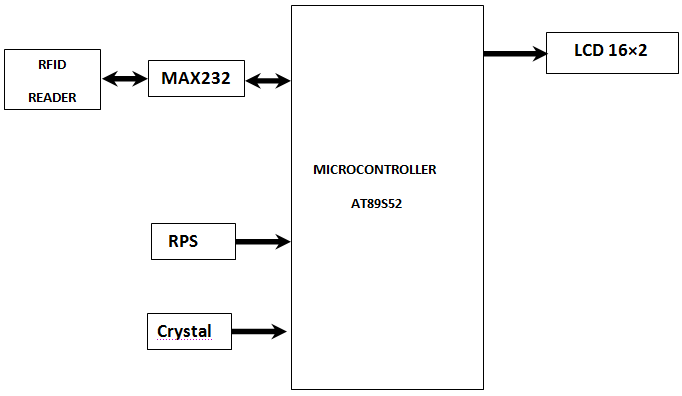
AIM: The main objective of this project is to develop an embedded system, which is used to manage the parking automation system using RFID technology.

IMPLEMENTATION: This Managing Industrial Automatic Car Parking System project is implemented on an 8051 based At89s52 developed board interfaced with RFID and LCD for display purpose.

BLOCK DIAGRAM

POWER SUPPLY:

DESCRIPTION: RFID based systems are going to revolutionize most of the market areas inventory control, supply chain tracking, equipment and personal tracking in hospitals, book tracking in libraries, employ time, attendance and access control, product tracking in product assembly.

Our embedded systems board is going to deal the parking management system for highly trfficable areas like industries, organizations and cinema theatres etc. our present project considers an organization and every car owner is having one RFID card. We will allot that particular car number to that particular owner. While he coming at the office premises and by showing his card to the RFID reader at the parking place will allot the dynamic parking space for that owner. While his leaving also the procedure is same.

The operation of this total process will be appear on the LCD which we connect to our microcontroller. The communication between the RFID andd our microcontroller is established by max232.

SOFTWARE:

Embedded ‘C’
RIDE to write code
ISP to burn the chip

HARDWARE:

At89s52 based our own developed board
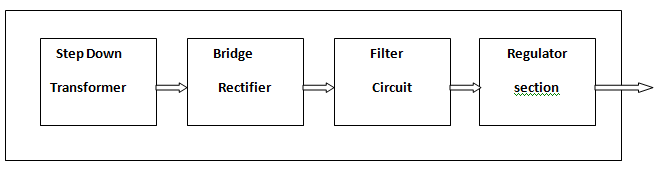
Power Supply
RFID module
LCD

MBA Project on Working Capital Management

INTRODUCTION

Many finance managers, who are quite at home and competent in dealing with long term decisions, such as capital investments experience difficulties when they have to scout for funds to meet the day to day working needs. With bank finance getting increasingly scare, regulated and expensive the emphasis has shifted to closer attention to internal generation of funds and the development of the enterprises ability to raise funds in the market.

WORKING CAPITAL MANAGEMENT AND POLICY

Working capital can be defined as the amount at funds, which a Company must have to finance tits day-to-day operations. It can also be regarded as that proportion of the companies’ total capital, which is employed in “current liabilities” which are short term assets that are normally expected to get converted into cash within a year. Current liabilities are short term liabilities maturing for the payment within a short period say one year, and they partly support the investment in current assets. In other words they serve as a source of working capital.

Net working capital is defined as the difference between current assets And current liabilities, and represents the extent to which current assets are financed by long-term funds.

Working capital management is the process of administration of current assets and current liabilities within the policy guidelines of the company.

Working capital policy is concerned with basic policy decisions regarding. The target levels each category of current assets.

The methods of financing the current assets

Current assets in many cases constitute more than half of the total Assets employed In business and therefore, it is essential to evolve an appropriate working capital policy to suit the specific needs of the firm an manage its working capital accordingly. Current liabilities that are specifically financing current assets come under the preview of working capital policy.

These are distinct from current liabilities which are consequences of past long term financing decisions, such as current maturates of long term debt or those in nature of temporary financing of capital projects which will be subsequently funded by long term sources off finance.

The aim in working capital management and policy is to maintain a proper balance between the magnitude of working capital and the general scale of operations of the company and to determine, with reference therefore, the appropriate levels of components of current assets to be maintained and the pattern of financing them.

IMPORTANCE OF WORKING CAPITAL MANAGEMENT

The importance of working capital management can be. Traced to the following main considerations.

a) Current assets constitute the dominant segment of the total assets employed in most business and, therefore, require more intense and careful managerial attention.

b) The investment in current assets and level of current liabilities are very sensitive to changes in sale and the funds requirements shifts rapidly, demanding quick short-term decisions to sustain smooth operations.

C) Through profitability and proper selection of investments are essential for the long fun prosperity of the business, its short-term survival depends on its liquidity or ability to meet short-term obligations fully and promptly. The precondition for liquidity is efficient management of the elements of working capital and the ability to raise sufficient short and long-term finance. The finance managers of companies will have to devote considerable time and energy in arranging short term financing obtaining favorable credit terms from the suppliers of goods and services, deciding on credit policies for credit sales, keeping n chech on the funds blocked in inventories and monitoring and directing the movement of cash in the business.

OBJECTIVES OF THE STUDY:

• The objective of the study is to know the short term financial position of the Cement Company with Working Capital Management.
• To, identify the limitations in management of the Cement Company and suggestions to overcome those limitations.
• To provide a conceptual frame work and theoretical perception about the performance of Cement Company.
• To provide credit facilities to the customers
• To pay wages and salaries to the employees working in the organization.
• To know the day-to-day expenses.

METHODOLOGY:

For, the purpose of the study, the data collected from primary and Secondary has sanitized edited and presented in the form of tables and statements. The analysis of the data has been made with the help of certain mathematical techniques lie percentages etc. Where ever feasible and appropriate graphs and diagrams are used.

The collection of data is done through two principles sources viz

1. Primary Data
2. Secondary Data

PRIMARY DATA

It is the information collected directly without any reference. In the study, it mainly interviews with concerned officers and staff either individually or collectively. Some of the information had been verified or supplemented with personal observation, the data collected through conducting personal interview with the officer of the Cement Company.

SECONDARY DATA

When an investigator uses the data which is already been collected by other, that data is called secondary data. Such as pamphlets annual reports, return and internal records.

The data includes:

1. Collection of required data from annual report of Cement Company.
2. Reference from text book and journals relating to financial management.
3. Articles published in business dailies like economic times, Business world, and etc.

LIMITATIONS OF THE STUDY:

The limitations of present study are as follows:

1. Due to the time constraint the study is confined to the assessment of working capital management only.
2. Data collected for 5 years which is limited.
3. The study is confined to the secondary source of data and figures are taken from the annual reports and suggestions of various accountants.
4. The data which is used in this project are taken from the annual reports, published at the end of the year.
5. The study is limited to the period of 5 Years.