Seminar Report on Routing Protocols in Mobile Ad Hoc Network

Introduction to Routing Protocols in Mobile Ad Hoc Network  Seminar Topic:

AD HOC network is basically a wireless network for a group meeting without a central administration. There is no need a based station in Ad Hoc network, hence it is easy to build it where ever necessary. Although it doesn’t use a central base station, it needs to follow a set of rules for information transfer. These are constructed under a name Routing protocol. 

AD HOC networks can be formulated with many routing protocols but these are categorized into i) Table driven router protocol ii) On-demand routing. In the case of table driven router protocol each node need to maintain one or more tables to store routing information whereas in the case of on demand routing the route is created when desired by the source node and maintains the path by router maintenance. 

In Destination Sequenced Distance Vector (DSDV) each node knows only the information (distance) about the other node in which they are directly connected. And the distance of the node which is not directly connected are initialized to infinity. Each node updates its directly connected neighbor when changes occur in the network by least cost distance vector. This occurs until the convergence occurs. 

In DSR router protocol full series of path between the source and the destination node is to be needed. Route discovery and route maintenance are the procedures used.  Awareness of the existence of the alternate path helps to use in case of the link failure. 

In the case of zone router protocol is the hybrid protocol combination of the proactive and reactive protocols and local topology can be used for route maintenance.  Short routes can be discovered using the topology.

Based on the goal of the ad hoc network needed the best one protocol can be adopted from the different router protocol stated.

Download Seminar Report on Routing Protocols in Mobile Ad Hoc Network .
AODV Routing Protocol for Video Application Implementation and Design

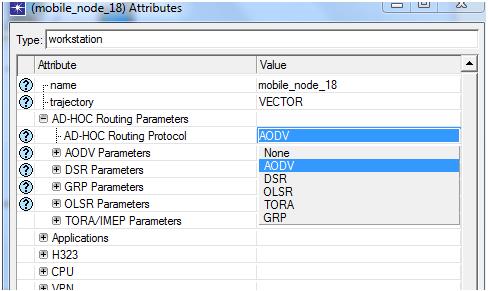
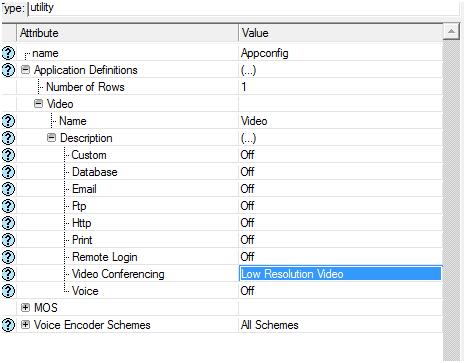
Similar simulation setup can be created for voice the applications and the routing protocol chosen in this context is AODV. Low resolution video is selected across the application configuration and the routing protocol used is AODV and the corresponding screenshot is as given below

AODV Routing Protocol for Video

Routing protocol for video applications is selected as AODV and the corresponding screenshot is as shown below

AODV Routing Protocol for Video Application

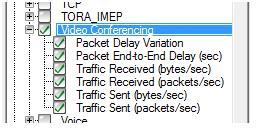
Now the performance metrics are chosen for video application and the corresponding screenshot is as given below

AODV Routing Protocol for Video Application Implementation and Design

The following performance metrics can be used for evaluating the QoS of video application

  • Packet delay variation
  • Packet end to end delay
  • Traffic received bytes per sec
  • Traffic received packets per sec
  • Traffic sent bytes per sec
  • Traffic sent packets per sec

As with mobile nodes, similar performance metrics can be used for the rest of the scenarios in video applications as well. We only have to change the routing protocols to DSR and TORA.

Similarly run the results for evaluation against the simulation time after you create all required protocols.

Introduction to Jitter Data Communication

Introduction to Jitter Data Communication:

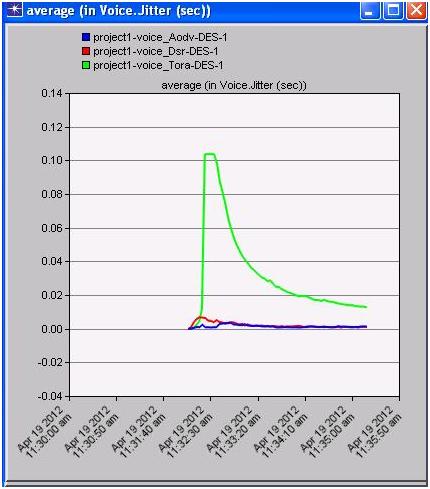
In general jitter can be defined as the variation in time for the packet arrival due to congestion over the voice over IP networks. This variation should be low enough for a better quality of service across the voice application and this value is compared for the three scenarios like AODV, DSR and TORA and the resultant graph is as shown below

jitter in data communication

It can be observed from the above graph the average jitter is more across the hybrid routing protocol like TORA and it is minimum with the case of AODV routing protocol. It can be evaluated that due to the complex nature of hybrid routing protocols and high routing process implemented across the TORA the overall jitter value has increased.

It can also be observed that jitter value has increased a lot at the initial stages of simulation for TORA routing protocol and later it was reduced due to the proactive nature of the protocol. When the case with AODV and DSR are considered the overall jitter value is constant and low enough when compared to TORA. When the three routing protocols are considered the overall jitter value is less with AODV routing protocol.

From this analysis it is clear that, to improve the quality of service across the voice applications AODV routing protocol is suggestible.

What is MOS Value

Introduction to MOS Value:

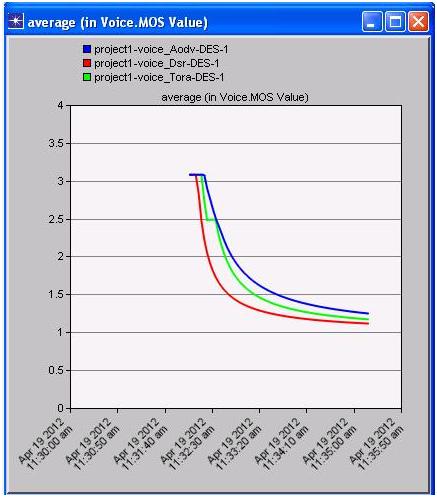
MOS value indicates the overall quality of the voice line and in general this value ranges from 0 to 5, where 0 indicates poor quality and 5 indicates excellent quality of voice. This particular value is calculated for the three scenarios and the corresponding comparison graph is as shown below

mos value

From the above graph it is clear that, the average MOS value is more when the routing protocol is AODV. The average MOS value is more at the beginning of the simulation and later it was reduced for all the three scenarios due to the wireless LAN server behavior.

But when the average values are considered the quality of the voice line is more with the case of AODV and it is reduced with the case of DSR. From the overall analysis it is clear that, to enhance the MOS value of the voice application AODV is best suited routing protocol. 

Packet Delay Variation in VOIP

Introduction to Packet Delay Variation in VOIP:

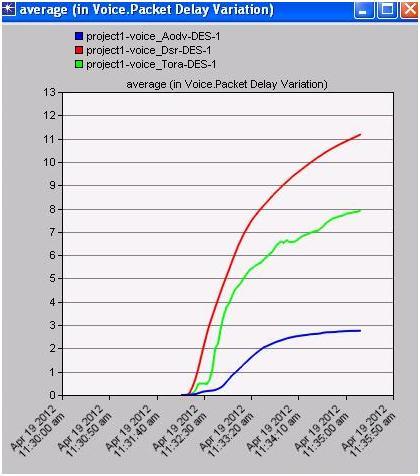
Packet delay variation indicates the overall difference in the packet arrival rate. In general the packet delay variation should be low enough for a better quality of service for the voice applications and the actual comparison graph is as shown below.

packet delay in voip

From the above graph it is clear that, the overall packet delay variation is less when the routing protocol is AODV. The average packet delay variation is more with the case of DSR routing protocol and this is due to the issue that DSR imposes more routing overhead across the peer nodes.

Even when the routing protocol is TORA the packet delay variation is more. Thus from the overall analysis it is clear that, when the routing protocol is AODV the overall packet delay variation is reduced and thus the quality of the voice application is enhanced. 

Packet End To End Delay in Voice

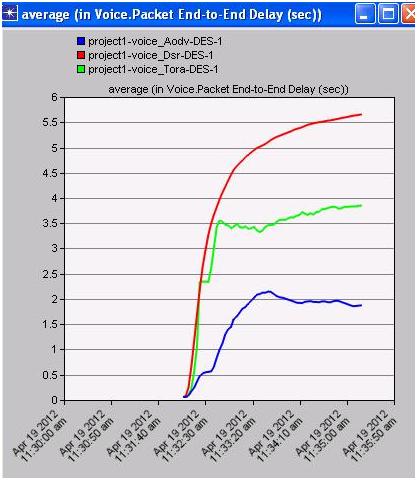
Packet end to end delay should be always less for a better quality of service. In general voice quality is enhanced when the end to end packet delay is reduced and the actual comparison graph is as shown below

packet end to end voice

It can be observed from the above graph that the overall packet end to end delay is more with the case of DSR routing protocol. In general the behavior of DSR will impose more packet delay overhead across the wireless LAN server. When the case with AODV routing protocol is considered the overall end to end packet delay is reduced and thus from the overall analysis it can be concluded that again AODV is the best routing protocol to enhance the quality of voice application. 

Thus when all the performance metrics are considered for voice application it can be observed that, the overall quality of the voice application can be enhanced when the routing protocol is AODV. The hybrid nature of the TORA routing protocol has affected few metrics of voice and the overall contribution is good. DSR is not suited for voice applications and the overall quality has reduced due to this routing protocol.


Seminar for Computer Science on Packet Delay Variation

Introduction to  Packet Delay Variation:

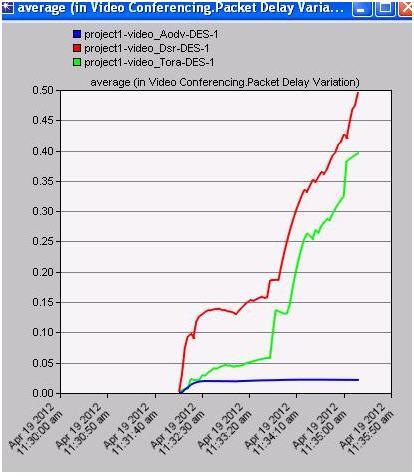
Packet delay variation indicates the overall delay imposed in the packet arrival times. This value should be less to improve the quality of the video applications. The actual comparison graph is as shown below.

packet delay

It can be observed from the above graph that the overall packet delay variation is more with the case of DSR routing protocol. As discussed in the previous section, the overall routing overhead on the wireless LAN video server will be more due to the routing nature of DSR routing protocol and thus the packet delay variation has increased.

It can also be observed that the packet delay variation is also more with TORA routing protocol and this is due to the complex routing process followed by the hybrid routing protocols. AODV is the best routing protocol that can be considered in this context and also the overall packet delay variation is low and constant.

This indicates that the quality of the video application can be enhanced if the routing protocol across the MANETs is AODV and thus always the reactive nature of the routing protocols will improve the performance of the video applications and also the required quality. 

Technical Seminar Ideas For CSE Packet End To End Delay In Video Conferencing

Introduction to  Packet End To End Delay In Video Conferencing  Technical Seminar Topic:

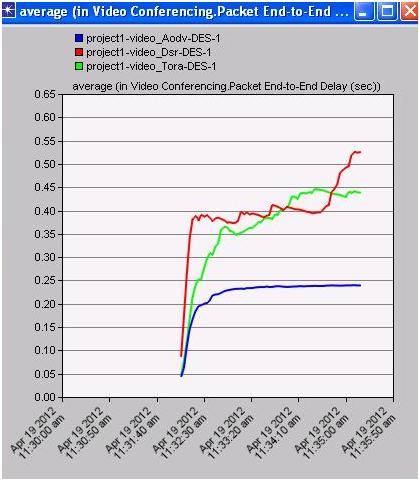
Packet end to end delay indicates the overall delay at the end to end communication process. This delay should be less enough to improve the quality of the video application and the actual comparison graph is as shown below.

packet end to end

It can be observed from the above graph that the overall end to end packet delay is less with AODV routing protocol. When the case with DSR and TORA are considered the end to end packet delay is very high and this is due to the internal routing behavior of the protocols and thus the quality of the video applications is reduced. The end to end packet delay is very less with AODV routing protocol and thus the quality of the video application can be enhanced in this case. 

From the overall analysis of the video results it is clear that, AODV routing protocol can be used across the MANETs to improve the quality of service across the video applications. When the case with DSR routing protocol is considered the overall packet delay variation and end to end packet delay is more and even it is same with the TORA. Thus AODV is always the best suited routing protocol for both the voice and video application quality of service for MANETS. 

Seminar on Mobile Ad hoc Network

Introduction to Seminar on Mobile Ad hoc Network:

With the increase in demand towards wireless networks there are many models introduced in this context. The key among them are MANETs (Mobile Adhoc Networks) and WSN (Wireless Sensor Networks) and the level of wireless operations are sophisticated across these networks. The range of application usage across the MANETs also has increased.

The main issue with the usage of applications across the MANETs is to provide the required levels of quality of service to the applications as the MANETS are infrastructure less networks. When it comes to the case of voice and video applications, the range of quality of service requirement is more and it is always important to provide the same across the wireless networks like MANETs. In general the voice and video application suffers with packet delays and streaming quality.

The main aim of this project is to improve the quality of service for the voice and video applications across the MANETs. In general the overall behaviour of any wireless networks mainly depends on the corresponding routing protocols and the key routing process implemented. The behavior of the applications and the corresponding quality of service requirements also depends on these routing protocols.

To improve the overall quality of the video and voice applications across MANETs, a total of 6 scenarios are created in this project. A MANET with 20 mobile nodes and a wireless LAN server is created in this project using OPNET Modeler tool. The actual simulation procedure followed in this context is explained in the previous chapters. Three scenarios are created for IP telephony voice application against three routing protocols like AODV, DSR and TORA and similar scenarios are created for video applications. The key performance metrics for voice application like Jitter, MOS, packet delay variation and packet end to end delay are used to evaluate the QoS requirements and for the video application the performance metrics like packet delay variation and packet end to end delay are used. All the six scenarios are run to achieve the results. From the overall analysis of the results it is clear that the quality of service of both the voice and video applications can be enhanced using the AODV routing protocol.

The reactive nature of this protocol is useful in providing the ample quality of service requirements for voice and video applications and thus implementing the AODV routing protocol will enhance the overall quality of the applications across the wireless networks like MANETs. 

E-Book Reader Project Class Diagram

Introduction to E-Book Reader Project :

E-book is also called electronic-book and it is look like form of a tablet pc, where e-book has more battery backup and easy to carry and possible for internet connection using Wi-Fi.

E-book reader  contains seven classes .Those are Register, home screen, registration form, user, Admin, Database, Guest and  book .Enter to the home screen must have login and id and password  otherwise enter the guest screen. If the user needs a membership to logon to use, he/she needs to fill the registration form where resister form contains name, user name, password, email-id and phone. After filling the form user enter the tools.

The tool is display the user information and user enquiries like which kind of books need to view, add, search, edit and navigation here the database is stored all the information required for  views and  user information and location to be stored. The book class contains the book name, author name, year of publishing, ISBN and numbers of books are in store. Where the guest class is contains the   display the books, search the book and Fill the register form. Where Admin class contained the all the operation of the editing like add user, delete users and add/delete books.

 When design part of e-book 2 type of classes used those are admin and book shelf. The admin class contains the Add/delete and search to books any users. Book shelf containing the operations like update, modification, add, delete by admin and user.

Download E-Book Reader Project Class Diagram .