Challenges of the Non-Performing Management

The NPAs management includes two concepts, which are Prevention and remedy.

Preventive Management:

This contains credit assessment and borrowers rating, earlier than loans commitment. The relationship manager and credit in the bank must be capable to involve on this. Though the information from records of internal or external from agencies such as Credit Information Bureaus (Limited) it is probable avoid likely NPAs.

Remedial Management:

There are various techniques in management to treat issues of NPAs (Pravakar Mohanty, 2006).

 NPAs Analysis by segments:

The NPAs required to be analyzed by the priority sector and non-priority sectors, large corporate, agriculture, retail borrowers, small industries industry-wise analysis and state-wise analysis. Research study of seven banks NPAs involved by Pricewaterhouse Cooper’s illustrates that NPAs 23% are in the sector of priority, If 77% of NPAs fit in to non-priority sector. The classification of industry recommended that, Iron and steel, Textiles, Engineering, Chemicals and metals of non-ferrous report for 55% of NPAs. Main part of the NPAs is before small borrowers are from the large borrowers. That analysis by every bank can help in managing NPAs and preventing loss of debt.

 Prevention of slippage

Assets of Standard performance should not be permitted to fall into NPAs. Work should be done to for NPAs up gradation into standard assets. 

Impact of Non-Performing Assets on the Functioning Of Banks MBA Seminar Idea

The efficiency of any of the bank cannot be obtained only from the balance sheet size but also it is calculated by assets return level in the bank. For banks the NPAs will not create interest income but simultaneously banks are very much necessary in order to provide terms for NPAs with their profits that are existing in current. Being the NPAs have harmful impact on the arrival on assets are in this methods.

  • Banks interest income can fall down and accounted on the basis of receipt.
  • Profitability of Banks is caused harmfully due to offering of doubtful debts and ensuing contain it as terrible debts.
  • ROI (Return on investments) is decreased.
  • The adequacy ratios of capital are termed as NPAs and are following into its estimation.
  • Maximizes the capital price.
  • Variance of liability and assets will expand.
  • EVA (The economic value addition) by banks get trouble for the reason that EVA is similar to the profit of net functioning less capital cost and
  • It margins funds recycling.

Factors for Non Performing Assets

Introduction to Factors for Non Performing Assets:

There are many factors that contribute to the non performing asset (NPA). Few of them are discussed below.

  • Distributing variety of funds in order to expand the business. Funds could also be distributed for expanding the modern techniques, for taking latest projects and also for helping in relevant considerations.
  • The factors such as time and investment should be considered during the implementation stage (Mr. P.K. Kaul, 2008).
  • Economic inequalities, short amount of power, increasing prices are some factors which makes more no of dues.
  • There are also some other factors like natural disasters, external links with other countries leads to permanent termination of non payment dues.
  • Failure condition of business, improper management, use of irrelevant technologies, technical and hardware problems in machinery.
  • Insufficient contracts with customers.
  • Modifications in government policies, controlling techniques for pollution, improper credit decision makings, adopting outdates systems, lending sectors in priority wise (Mandira Sarma, 2007).
  • Delay in releasing of funds and subsidies from the corresponding banks.
  • Tapping off the funds, frauds and arguments with managing directors.
  • No written policies for finalization and rehabilitation by BIFR. BIFR refers to the board of industrial and reconstruction.
  • No limitations for portfolio concentration and poor analysis and description of industry.
  • Crucial financial barriers and excessive trust on corresponding banks.
  • No divisions of assets and no standards of loan.
  • Lack of coordination between no of banks which are for commercial use, and misusing the funds (Kesar Dass B, 2003).

Procedure for Granting Loans and Credits MBA Reference Material

The bank will issue the loans to the private as well as the legal individuals. The loan is the type of funds which are been offered by the banks with certain procedures of paying the money within a specific time. Firstly the customers need to submit their loan application to the particular bank which should include the entire details of the loan amount such as the required loan amount.

The purpose of applying the loan, the documents which are mentioned in the application checklist must be provided including the supportive collateral documents in order to prove the capability of the applicant to repay the loan amount.

The managers will provide the required assistance and support to understand the entire loan procedure to the customers and then they will cross check the entire documents provided by the customers particularly and then if all the documents are sufficient and supportive then the loan will be issued to the particular individual with an agreement copy which includes the payment modes and interest to be paid to the bank. 

MBA Reference Material Criteria for Giving Credits and Its Required Qualifications

In order to obtain the credits in the form of loan there are four main criteria steps involved they are capital, capacity, character as well as collateral. The first three steps are related to the borrowers, whereas the final step is related to the evaluation of the property.

Capital

The capital is referred to as the aspect which is related to know whether the applicant is having the essential standards of paying the loan amount in time or not.
Capacity
The capacity is referred to as the aspect which is related to analyze whether the application is capable of repaying the loan amount.
Character
The capacity refers to analyze the capability of the individual in repaying his loan amount, whereas the character refers to analyze the past history of the individual in paying his previous loan credits.
Collateral
The collateral process is one of the significant aspects in getting the loan amount. The valuation of the capital, the capacity as well as the character is particular and related to the borrower. The collateral aspect is referred to as the process of analyzing the properties and guarantees of the applicant opting for the loan.

The requirements and qualification in order to obtain the loan from a bank differs from bank to bank and the type of loan. As there are different types of loans such as personal loans, home loans, mortgage loans, educational loans, car loans, business loans and many more. As the loans vary in their nature, the qualifications required to obtain them will even vary. There are general requirements to obtain the loans such as the individual profile of the applicant, documents related to the type of loans, the collateral properties documents, previous transactions within any type of bank, previous loans status etc. 

MBA Seminar Idea on Different Types of Credits and Loans

Overdrafts

The overdraft is the process of borrowing the credit based on the bank account. The overdrafts are provided within the existing account and by the time when the balance is zero there is even a possibility to spend the time up to certain extent.

Credit Cards

The credit card is the process of borrowing the money in the monthly basis. The credit cards are been accepted all over the world for the payments of the goods as well as services in several places. If the payments are made in time then the interest will not be charged on the credit cards. These credit cards are even useful to each and every individual in many aspects in any country. The loans are possible only when the payments of credit card bills are paid on time.

Personal loans

The banks will provide the personal loans to the customers for the particular reasons provided by them car loans, credit loans and many more. The interests will be charged according to the amount received and the payment modes vary from banks to banks.

Credit Union loans

The credit unions will even offer the loans to the customers. But there will a registration process for getting loan from the credit unions. The credit unions are a type of community or else the work location in which the loans are offered to the employees. There is a necessity of saving an initial amount before opting for a loan. The credit union loans will fulfill the short term as well as the long term needs.

Hire purchase

These hire purchases are the offered through the shops or else the garages which will be helpful to purchase particular items. The items which are related to this hire purchase are too expensive such as the cars, electronic equipments as well as the furniture.  The items which are purchased cannot be owned until the total installments are paid. In some situations the final payment is known as the balloon payment that is referred to as the huge payment than that of all the previous payments. The storage process of the existing loan is referred to as the credit intermediary. They will work as the agents to the finance company. These hire purchase sales are not so flexible.

Credit sale agreements

This credit sale agreements are same as the hire purchase agreements in which the items are been purchased in the installment basis. The main difference among the credit sale agreement and the hire purchase agreement is that the goods can be purchased on the credit sale agreement. Even these credit sale purchases are not flexible.

Top-up mortgages

The top up mortgage is more applicable to the home owners as they can purchase the high payment products such as the cars and houses. In this mortgage loan process the higher payments are released as loans. If the customer doesn’t pay the mortgage loan in time then his purchased items like the cars or houses may be at risk.

Money Lending

The money lenders are the other companies or else the persons will lend money to the other persons by charging some interest rates. These loans are basically for small amounts. The interest rate for borrowing money from the money lenders is too high which will reproduce the high costs of gathering the repayments as well as there are high chances of the loans which are been repaid. The repayment process will be a weekly collection process. Before borrowing the cash form the money lenders their authorization should be identified. 

Financial Institutions Contributions

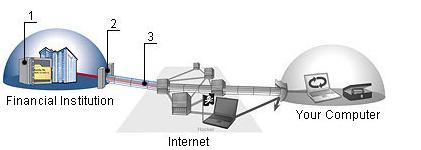
The data of the customers is been protected by making use of the efficient and stylish security systems.

Financial Institutions Contributions

The financial institution will provide the following contributions

  • The secure data storage process is been offered within a corporate environment which is varied and it needs a difficult information security management
  • In order to protect the data from the hackers, the user id’s, passwords, security codes are been provided to each and every customer
  • Within the process of the data transfer, it will process the data in a secure way without any security issues.

 Different types of credits and loans

There are several numbers of credits and loans in the banks. They are as follows

  • They overdrafts
  • The credit cards
  • The personal Loans
  • The credit Union Loans
  • The hire purchase
  • The Credit Sale agreements
  • The money Lending Loans

Key Customers of Financial Institutions

The major key suppliers of the funds within the financial institutions are the individuals, businesses as well as the governments. The groups of individuals are the actual suppliers of the funds to the financial institutions. The firms will even invest their money within these financial institutions and even some times when necessary they will even borrow the money from these financial institutions. The different types of the financial institutions are the commercial banks, the, mutual funds, security firms, the insurance companies as well as the pension funds.

Financial institutions have dramatically expanded their retail customer base with over 20 percentage annual growth rates for the last five years. Unfortunately for these institutions, customer loyalty has not kept pace with growth in the underlying customer base. In fact, in the last four years banks have seen loyalty levels drop by almost 40 percentage points. While most institutions claim to care about excellent customer experience and promise as much in their marketing campaigns (Alok Kshirsagar & Renny Thomas, 2011)

Commercial Banks

The commercial banks will gain all their funds by means of allowing the deposits from the investors. The investors of the commercial banks are the individuals, the firms as well as the government companies which are ready to invest more and more cash and having huge amounts with them.

Mutual Funds

The mutual funds will trade their entire shares to the individuals and will group these funds and will invest them in the securities. The mutual funds are of three types such as the money market mutual funds group which will receive the funds from the independent investors in order to invest them within the money market securities which are been granted by different types of firms as well as the financial institutions. The second one is the bond mutual funds group that will get the funds from the investors in order to invest them within the bonds and finally the stock mutual funds group that will get the funds from the investors to invest them in the stocks. The mutual funds are possessed and controlled by the investment companies.

Securities Firms

The investment banks, investment companies as well as the brokerage firms will come under the securities firms. These securities firms will provide their support as the financial mediators in different aspects. They will play an investment banking role by offering the placing securities such as the stocks and the debt securities which are been granted by the firms or else the government agencies.

Insurance Companies

Several types of insurance policies are offered to the customers by the different insurance companies which include the life insurance, property insurance, health insurance as well as the liability insurance. They will get the periodic payments from the policy holders and group payments.

Pension Funds

The pension funds are the type of funds that are received from the employer or else the employees of a particular company, in order to benefit them the companies will offer these pension funds to their employees. These funds are been invested in the debt securities which are granted by the firms or else the government agencies as well as the in the equity securities that is been granted by the firms.

The additional financial institutions will provide their support in the form of the significant intermediaries or mediators.

Deposit Type Institutions

The deposit types of financial institutions are transacted in the form of daily basis. These deposit type institutions will include the commercial banks, savings and loan associations, the mutual saving banks as well as the credit unions. In order to lend the money to the borrowers these institutions will collect the deposits from the savers. This money will earn more interest to the saver who saved their money in the savings account.

Non-Deposit Institutions

The companies included in the non deposit institutions are the insurance companies, investment companies, the mortgage companies as well as the finance companies. These non deposit companies will get the financial services from the established companies.

Problematic Financial Businesses

The problematic financial businesses will include the companies such as the pawnshops, the payday loans, rent to own centers as well as the check cashing outlets. These companies will offer the financial services with high prices.

These financial institutions are capable of helping the individuals in managing his financial wants and needs. 

Ms Dissertation Topic on Banking Financial Institutions

Introduction to Banking Financial Institutions on Ms Dissertation Topic:

The financial institutions are having the following objectives:

  • Receiving the deposits as well as the other type of refundable funds from the individuals
  • Managing the tasks and functions of the intermediary within the process of the settling the payment operations
  • Managing the operations which include the foreign exchange legislations
  • Managing and operating the insurance trades
  • Promoting the payments of the safeties as well as the securing valuables
  • Managing and controlling the operations related to the capitalization
  • Extending the agreements and activities related to them
  • Performing the credit operations
  • Performing the operations related to the capital markets by making use of the intermediation companies
  • Offering and delivering the payment services
  • Making the transactions on behalf of the third party
  • Taking part in the stocks as well as the debentures and even the services related to it
  • Controlling the administration as well as the management of the group of securities
  • Making the sales and the purchase of the foreign currency by using the travelers cheques
  • Taking part within the capital funds of the company 


Seminar on Banking and Finance

Introduction to Seminar on Banking and Finance:

This literature’s synoptic analysis fetches towards the front insights into the NPL determinants across the countries. There is a believed analysis that the lending policy of bank can have significant pressure on the non-performing loans. Several issues have been examined critically by him relating to the terms of Indian bank’s credit.

It was being analyzed in this framework that the ‘on the illegal activity the element of power does not show any attitude. The default is not an irrational decision on the whole. “Lazy banking’ has been conceptualized by Mohan in the year 2003, while significantly reflecting on lending policy as well as investment portfolio of bank.

The perspective of Indian alluding towards the theory of lazy banking’ owing to Mohan (2003) and ‘credit culture’ owing to Reddy (2004) consists of an international viewpoint because in the banking literature a huge number of studies accept that the lending policy of bank is the most significant driver of non-performing loans.