Questionnaire to Customers Willing to Buy Nano Car

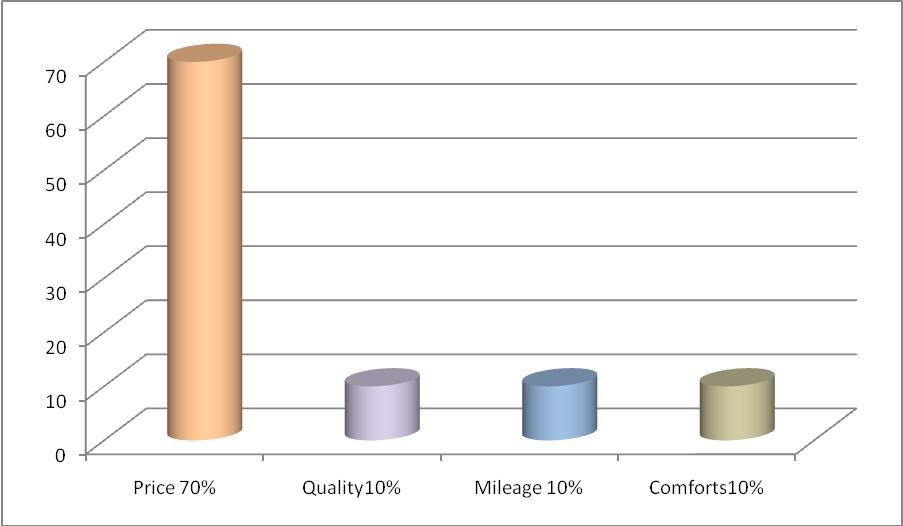
What are the factors considered by you to buy a Tata Nano car?

A)    Price B) Quality C) Mileage C) Comforts

factors considered by you

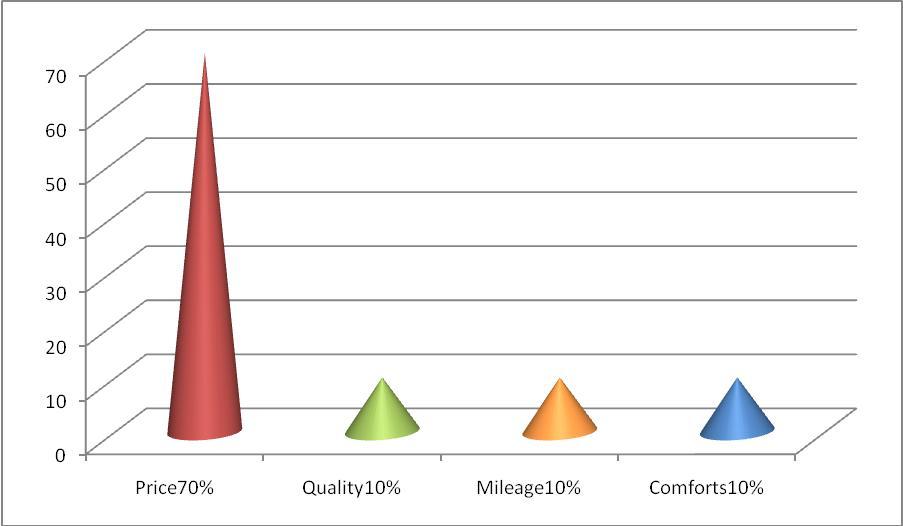
For the above question, among the total number of participants from, 70% of the participants answered that they buy Tata Nano Car for its price, 10% of them answered that they buy Nano for its quality, 10% of the participants stated that they buy Nano for its mileage and finally 10% of the participants stated that they buy Nano for its comforts.

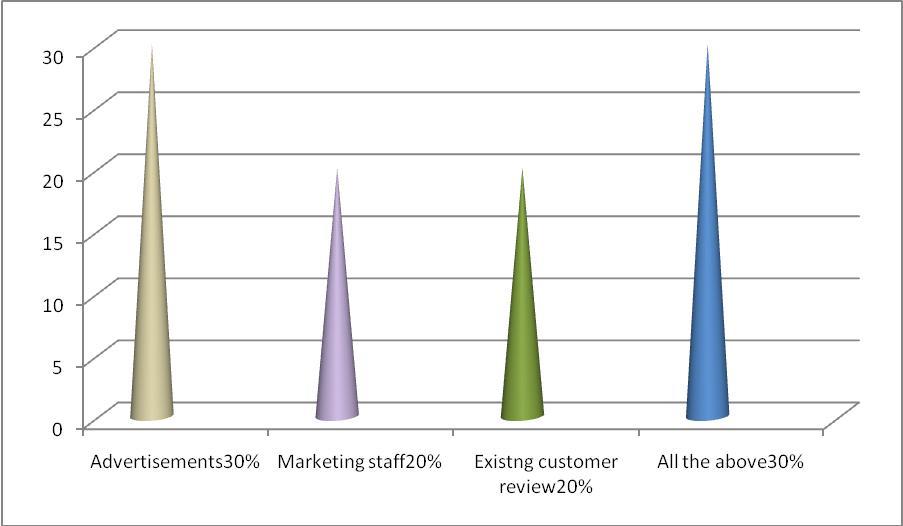
Which marketing source will initiate you to purchase a Nano car?

A)    Advertisements  B) Marketing staff C) feedback and review of existing customers D) All the above

marketing source will initiate

For the above question, among the total number of participants from, 30% answered that advertisements will initiate them to buy the Nano, 20% of them stated that marketing staff of Tata will initiate them to buy Nano, 20% of them stated that existing customers of Nano will initiate them to buy the Nano and finally 30% of the participants stated all the above three reasons.

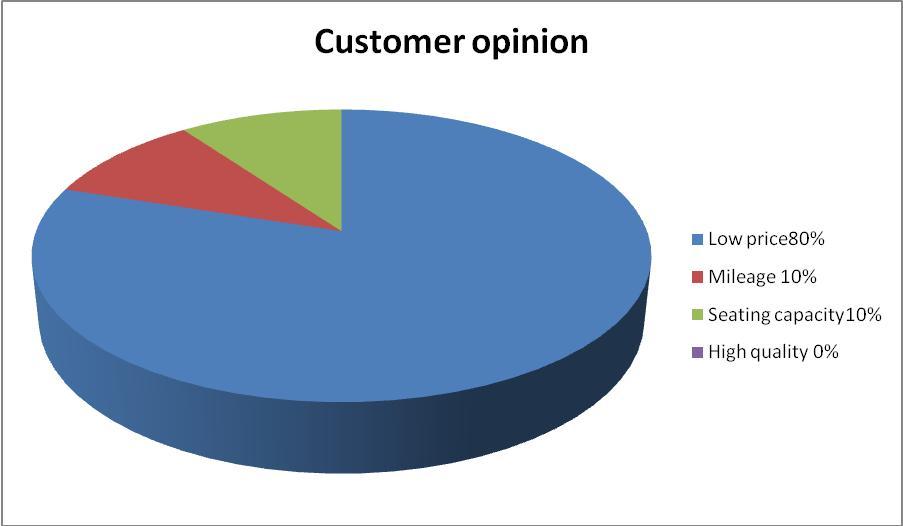
What type of features are you expecting in a Nano car?

A)    Low price B) Good Mileage C) Good seating capacity D) High quality 

features are you expecting

For the above question, among the total number of participants , 80% answered that they prefer low price feature from Nano, 10% of the participants stated that they will prefer mileage and 10% of them they will prefer seating capacity and finally 0% of them stated that they will prefer all these three features from Nano. 

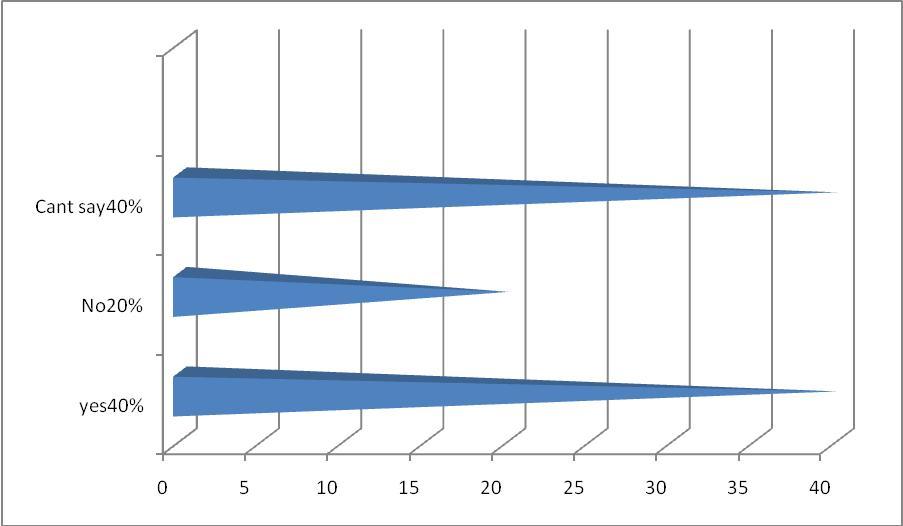
Do you think a Tata Nano car is suitable for you?

A)    Yes B) No C) cant say

Tata Nano car is suitable

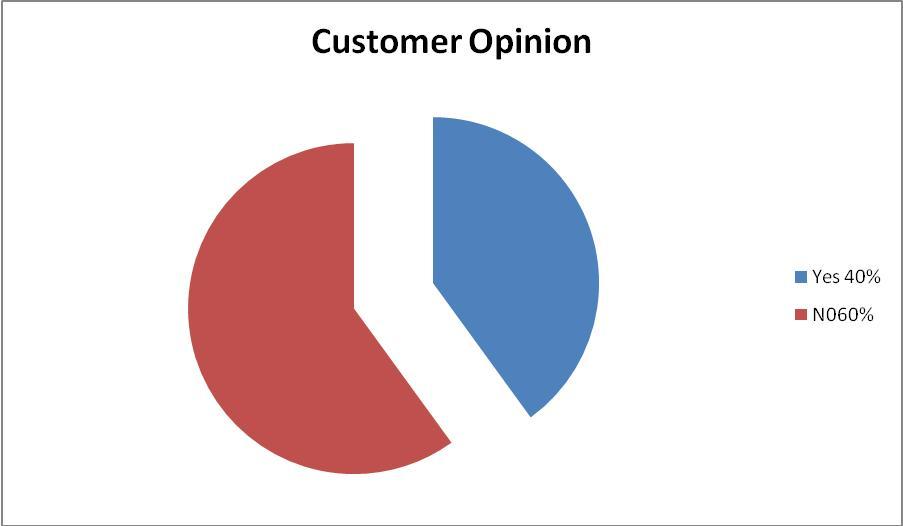
For this question, among the total participants, 40% answered that Nano is suitable to them and 20% of them stated that Nano is not suitable to them and finally 40% of the participants stated that they cannot specify their answer to this question.

When are to going to buy Nano car?

A)    Very soon  B) Soon C) Should think

going to buy Nano car

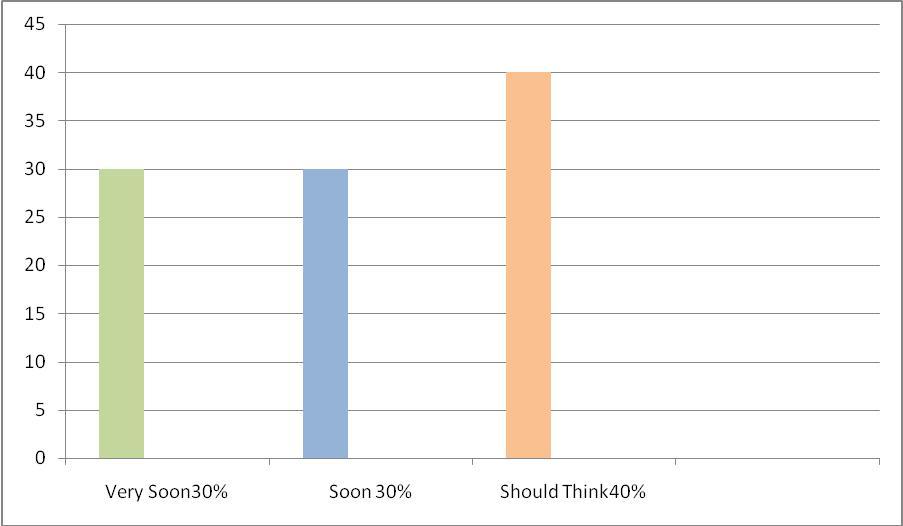
For this question among the total number of participants 30% of them answered that they will buy Nano car very soon, 30% of them answered that they will buy Nano car soon and finally 40% of the participants stated that they will take a decision later on this aspect.

Indian Economy- Macro Factors Affecting Indian Banking

Major changes in FY 2006-07

  • Normal monsoon is experienced by Rabi season.
  • Whole Price Index (WPI) increased up to 5.43% in the December 16th weekend; in the primary commodities the higher price increase will be same. In the coming weeks higher price remains high because of lower base effect.
  • In FY07 there will be robust economic growth. In the FY07 GDP increased up to 8%; Agriculture services and industry raised up to 1.7%, 10.7% and 10.5% correspondingly
  • Cash Reserve Ratio (CRR) have raise of 50 bps to monitor Rs. 135bn from the system. The Cash Reserve Ratio surprise with the hike rate of 50 bps but RBI’s intention will reflect on the controlling of credit off-take and liquidity management by increasing and reversing repo rate will not obtained the expected and good results because of which RBI utilizes CRR rate hike – a latest instrument for the liquidity control.
  • Index of Industrial Production (IIP) development drops in October 2006. In the manufacturing sector because of the bad performance, which outline of 80% of the Index of Industrial Production index directs to a blip in its vigorous growth trend for the last 9 months. When compared to the last year the mining and electricity grew faster at 4% and 9.7% Vs 0.1% and 7.7% respectively.
  • In YTD basis in the December 2006, rupee has value against dollar and yen but reduces its value continuously when compared to Euro and Pound. Actually from April 2006 to October 2006 the rupee has increased its value up to 1.8%.

In the year November 2006 exports picks up its growth back. As Bop is the base in H1FY06 exports has increased up to 23% and imports at 25.3%. this has been resulted in the trade balance of US$3bn. Growth of net invisibles by 17.6% to US$23.5bn and capital inflows at us$20.3bn (approximately 49%) abalance payment is brought to US$8.6bn (approximately 33%). 

Banking System and Types of Banks in India

Learning objectives:

The meaning of bank:

              The table at which the dealer in money is working is called as bench or banca in Italian. The savings and cheque accounts are offered, loans are made as well as other financial services are given, mostly profits are made from the difference among interest paid on deposits along with charged for loans,  in addition fees for accepting bills and also other services by the bank, so therefore the bank is considered as a financial institution.  The Reserve Bank Act and Banks (shareholdings) Act are the other pertinent legislation. Extensive range of powers is given to the Reserve Bank ofAustraliawhich is a central bank over the banking sector through the Reserve Bank Act. 

Banking system of India:

       In the period of British rule itself, growth is observed in the banking sector of India. The East India Company of British introduced three major banks during the first half of 19th century such as Bank of Madras in 1843, Bank of Bengal in 1809 and Bank of Bombay in 1840. The Imperial Bank formed by merging these three banks after that the SBI took hold of this bank in the year 1955. The initial bank which is completely owned by theIndia is Allahabad Bank. In the path of RBI which is set up in the year 1935, the banks like Canara Bank, Punjab National Bank, Indian Bank and Bank of India came into existence. 

The government undertook six main private sector banks in the year 1980 and nationalization of fourteen main banks taken place in the year 1969. Below some categories are given where the Indian commercial banking system is divided.  

Types of Banks:

Central Bank:

The Government owned totally the Reserve Bank ofIndiawhich is the central bank. The Central Government governs the RBI by appointing a central board which is headed by the Governor. For functioning of all banks that operate inside the country, RBI provides guiding principles. 

Public Sector Banks:

The fourteenth main bank is the United Bank of Indiawhich is one of the Indian Public Sector Banks, in the year 1969 on July 19th is nationalized. By the incorporation of four banks such as Hooghly Bank Ltd established in 1932, Bengal Central Bank Ltd established in 1918, Comilla Banking Corporation Ltd established in 1914 and Comilla Union Bank Ltd established in 1922, the United Bank of India Ltd is shaped in the year 1950 which is the precursor of United Bank ofIndia (Public Sector Banks).

  • State Bank Group is named for the State Bank ofIndiaand its associate banks
  • Twenty nationalized banks
  • Public sector banks sponsor the regional rural banks mostly

History of Banking in India MBA Project

History of Banking in India:

The economy will not be healthy without a solid and effective banking system inIndia. The technology as well as the internal and external factors imposed challenges must be reached by the Indian banking sector in addition to being hassle free. For the credit of Indian banking system, many outstanding achievements are added since past three decades and its accomplishments are wide and more striking.  InIndia, this bank is not only impounded to cosmopolitans or metropolitans but also even arrived at the remote corners of the country. All the above mentioned reasons formed as the main causes for the development process inIndia.

When the 14 main private Indian banks are nationalized, the rich dividends are remunerated for Indian bank by the government’s regular policy from 1969 itself.  In the year 1786 inIndiathe first bank was introduced which is the traditional bank. The Indian banking system expedition from the year 1786 to till date is divided into three discrete phases. They are:

  • From the year 1786 to 1969, the Indian banks early phase.
  • Indian bank’s nationalization and till 1991 earlier to Indian banking sector reforms.
  • After 1991, the banking sector ofIndia’s new phase with the arrival of Indian Financial and Banking sector Reforms.

           The Bengal Bank which later became the State Bank ofIndia

Phase I:

      In 1786 the General Bank ofIndiais established. The follower banks that came into existence are the Bengal Bank and Hindustan Bank. Like self-governing units, the Bank of Madras in 1843, Bank of Bengal in 1809 and the Bank of Bombay in 1840 are launched by the East India Company and these banks are named as presidency banks.  In the year 1920 all the three banks are merged later on like private shareholders banks, the Imperial Bank of India is formed which is mainly of European shareholders. 

After the establishment of Allahabad bank in the year 1865, Punjab National Bank Ltd is launched with headquarters atLahorein the year 1894 by the Indians for the first time. The establishment of the banks such as Bank of Baroda, Bank of Mysore, Bank of India, Indian Bank, Central Bank ofIndiaand Canara Bank took place in between the years 1906 and 1913.  In the year 1935 the Reserve Bank ofIndiais launched.

Regarding the banks, public has less confidence in those days which resulted in slow deposit mobilization.  When compared, the postal department presented savings bank facility which is safer. Besides on a large scale, traders have taken more funds. 

Phase II:

      After theIndependence, several steps have been taken by the government in the Indian Banking sector Reform. Mainly in semi urban and rural areas the wide banking facilities are provided with the help of Imperial Bank ofIndiaafter its nationalization in the year 1955. Across the country to lever theUnionand State Governments banking transactions as well as to operate like a RBI principal agent, the state Bank of India is fashioned.  In the year 1980 seven more banks are nationalized in the nationalization Indian Banking sector reform’s second phase. Therefore under the government ownership nearly 80 percent of the banking segment is taken.

In order to regulate the Banking Institutions in the country, some of the below given steps are considered by the government:

  • Enactment of Banking Regulation Act in 1949.
  • Nationalization of State Bank ofIndiain 1955.
  • Nationalization of SBI subsidiaries in 1959.
  • Insurance cover extended to deposits in 1961.
  • Nationalization of 14 major banks in 1969.
  • Creation of credit guarantee corporation in 1971.
  • Creation of regional rural banks in 1975.
  • Nationalization of seven banks with deposits over 200 crore in 1980.

InIndia, the public sector bank branches grown in deposits to around 800 percent and progressed by 11,000 percent after nationalization.  

Phase III:

In the banking sector in case of reforms measure, several facilitates as well as products have been introduced in this phase. A committee for the banking practices liberalization is established on the name of M Narasimham in the year 1991.

With the ATM stations and foreign banks, the country became inundated. For offering satisfactory services to customers many efforts are made, therefore net and phone banking is initiated.  These results turned the total system to convenient and hasty. Than money much importance is given to time.  

A great deal of resilience is exposed by the Indian financial system. The East Asian countries are suffering from crisis which is caused due to external macroeconomics shock. All this is because of foreign reserves are high, banks and its customers having limited foreign exchange exposure, flexible exchange rate regime and the capital accounts are not completely convertible. 

Sample Questionnaire to Customers Using Cars

What is the major reason, which initiated you to buy a Nano car?

A)    Low price b) Good Mileage C) Good features D) All the above

 major reason, which initiated

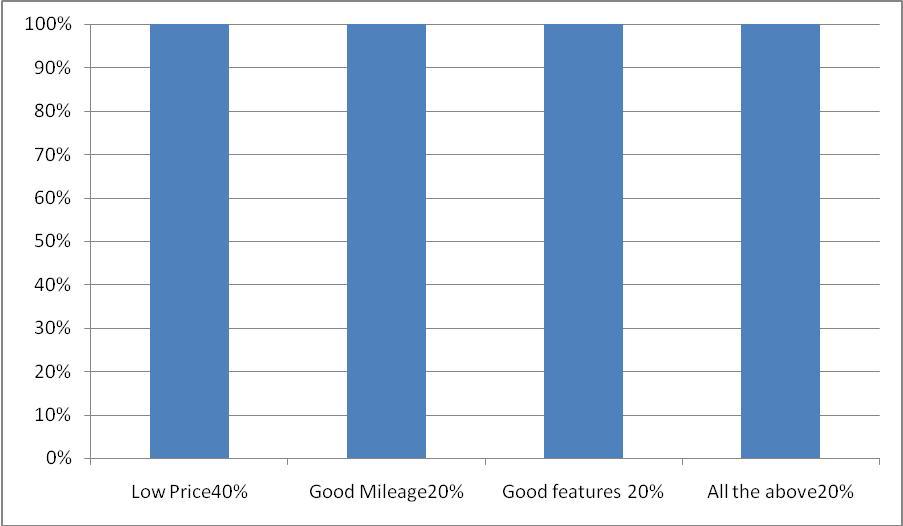
For the above question, among the total number of participants, 40% of the participants answered that they prefer Nano because of its low price, 20% of the participants stated that they prefer Nano because of Good mileage, 20% of the participants stated that they prefer Nano because of its good features and finally 20% of the participants stated that they prefer Nano for all the above three reasons.

Why do you think the Tata Nano car is the best choice for you after using it?

A)    Price B) Quality C) Mileage C) Comforts

Tata Nano car is the best choice

For the above question, among the total number of participants, 70% of the participants answered that Tata Nano Car is best for its price, 10% of them answered that Nano is best for its quality, 10% of the participants stated that Nano is best in mileage and finally 10% of the participants stated that Nano is better for its comforts.

 What type of problems you have faced while driving Nano car?

A)    Technical  B) Engine C) Low seating space D) All of the above E) No problmes

 problems you have faced while

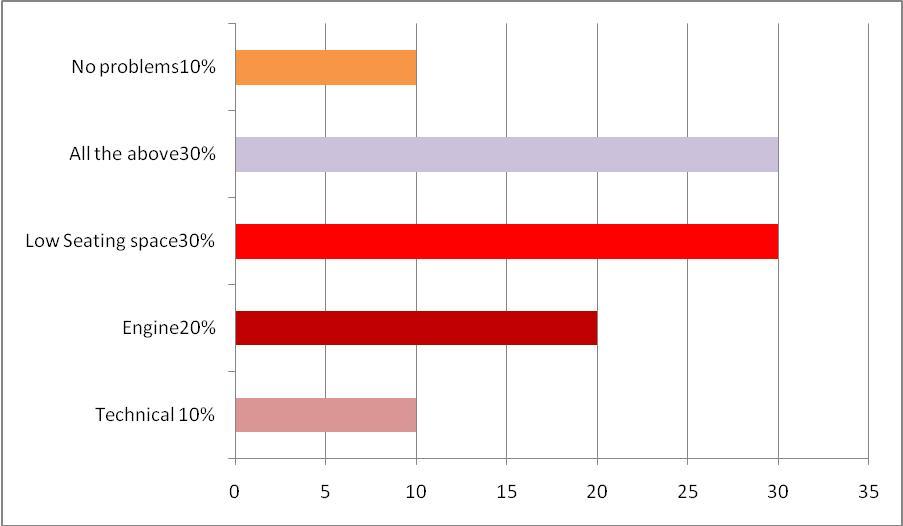
For the above question, among the total number of participants, 10% of the participants answered that they have faced technical problems, 20% of the participants stated that they faced engine problems 30% of the participants stated that they faced problem with seating capacity, 30% of the participants stated that they faced all the above mentioned problems and finally 10% of them stated that they did not faced any problems with Nano.

Do you like the all the features offered in Tata Nano car?

A)    Yes B) No C) Cant say

 features offered in Tata Nano

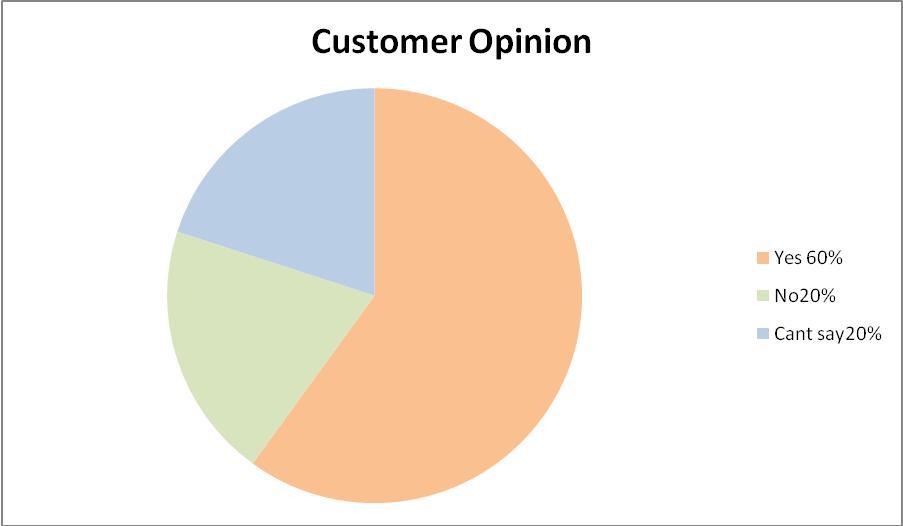
For the above question, among the total number of participants, 60% of the participants answered that they liked all the features of Nano, 20% of the participants state that they did not like all the features of Nano and finally 20% of the participants stated that they cannot specify their answer for this question.

Is Tata Motors Company successful in fulfilling the needs of its low economy customers by Nano?

Yes B) No C) Cant say

 Tata Motors Company successful

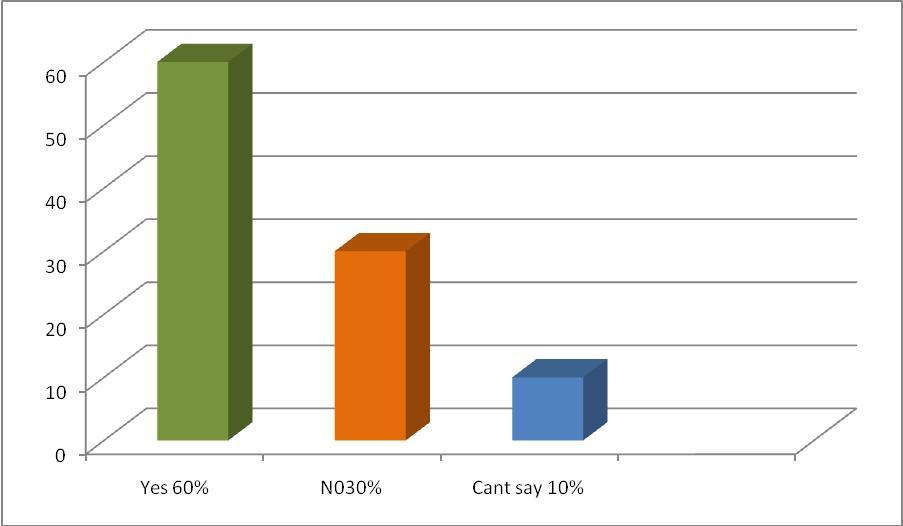
For this question, among the total participants 60% of them stated that Tata is successful in fulfilling the needs of low income customers, 30% stated that Tata does not fulfilled the needs of the low income customers and finally 10% of the participants answered that they cannot specify their answer to this question.

After using Nano car what was your review on it?

A)    Excellent B) Good C) bad

 Nano car what was your review

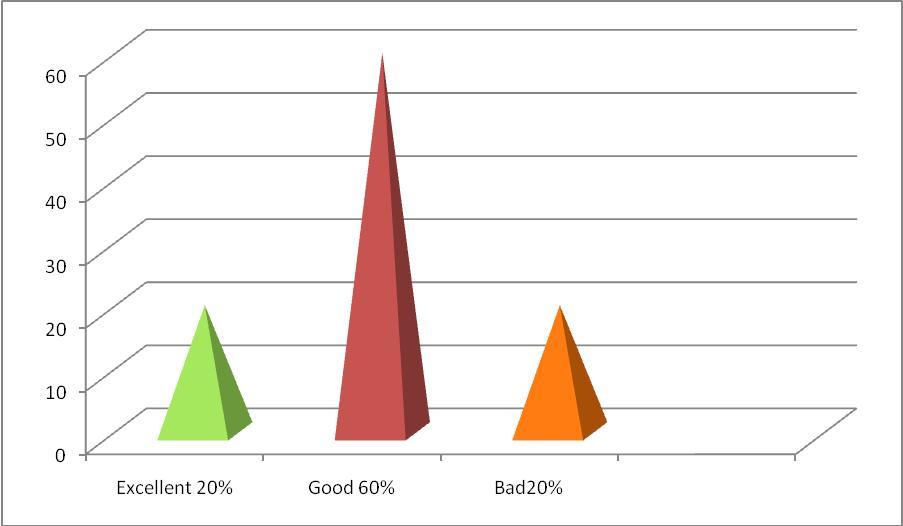
For the above question, among the total number of participants, 20% of the participants answered that they Nano is excellent, 60% of the participants stated that Nano is good and alternately 20% of them stated that Nano is bad.

Do you wish to promote the Tata Nano car to others?

A)    Yes B) No

 Tata Nano car to others

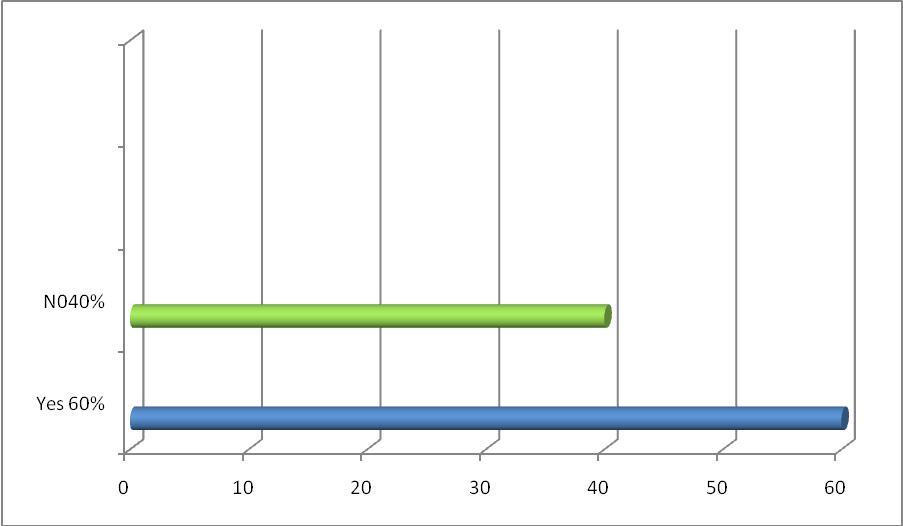
For the above question, among the total number of participants, 60% answered that they will refer Nano to other customers and alternately 40% of them answered that they will not refer Nano to the other customers.

Is the Nano car comfortable for you and your family?

A)    Yes B) No

 Nano car comfortable

For the above question, among the total number of participants, 40% answered that Nano is comfortable to their family and alternately 60% of them answered that Nano is not comfortable to their family.

What is the actual marketing source that initiated you to buy a Nano car?

A)    Advertisements  B) Marketing staff C) All the above

 actual marketing source

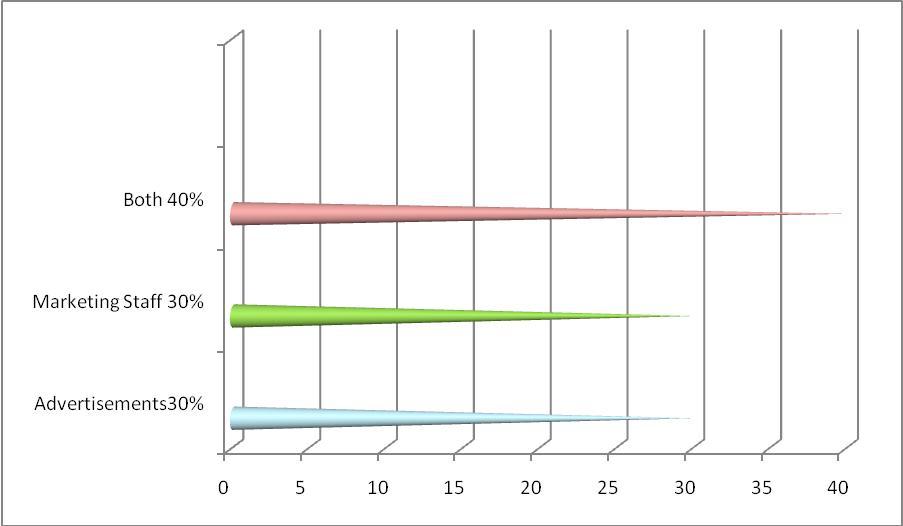
For the above question, among the total number of participants, 30% answered that advertisements given by Tata Company initiated them to buy Nano car, 30% of them answered that marketing staff has initiated them to buy the Nano car and finally 40% of the participants stated that both resources initiated them to buy Nano.

The Panzer-Rosse Test for Assessing Completion in Banking Literature Review

The Panzer-Rosse Test for Assessing Completion in Banking:

Up on the competition measurement, literature can be splitted into analysis that will take structural approach that in turn will take non structural-approach. The structural approach is based up on the SCP (structure-conduct-performance) model. The SCP theory considered a casual relationship going on from the market structure to the behavior of firms pricing.

It consists of two theories. They are:

  1. Influence conduct is known as structure.
  2. Conduct is supposed to influence performance.

This implies the banking power can be produced by concentrating the banking industry that consent to lower deposit rates in banks and lending rates are increased and this can gain monopolistic profits. 

The two techniques which are utilized broadly which follows non-structural approach to measure empirically the competitive behavior degree in the market, termed contestability are been developed by Lau (1982), Breshanan (1982), Rosse and Panzar and (1987). The Breshanan model uses the idea of the firms which are profitably running in stable and a general market equilibrium model. The firms in profit will choose the quantity and price such that to maintain marginal revenue to be equal to the marginal cost.

This will perfectly meets the demand price in the competition or with the marginal revenue of the industry under collusion. The technique suggested by Lau (1982) and Breshanan (1982) need to estimate the model with the simultaneous equation based up on the industry data which is an aggregate, where the degree of market power is represented by a parameter is included. In Shaffer (1993), Haaf (2002), Alexander (1988) and Bikker investigation, test is done in this technique of Empirical implementation. 

In the Panzar-Rosse (PR) the future possibilities are: in this model, this investigates the relationship among change in input price factor and the revenue acquired by a particular bank. The Panzer-Rosse model will place on the suggestion that banks make use of various pricing strategies for changing the input cost based on the market structure in where the model is functioned.  To approach this model there will be benefit of utilizing the data of specific-bank and therefore it captures the single characteristics of various banks.

This static analysis which is comparative needs the evaluation of a revenue function in a reduced form. For a particular firm, the total revenue equilibrium is given by equilibrium quantity times the equilibrium price. Together equally based upon demand, cost and conduct; consequently all the demand and cost must be included in the revenue functions, through a particular concentration towards the factor prices. In the time period “t” and for the “ith” term, the revenue equation in the reduced form is given by specification: 

                   Rit  =  f(wit, zit, yit, εt )                                                      

Where                              

                   wit   →  vector of factor price,

                   zit    →   the variables that shift the cost function,

                   yit    →   the variable that shift the demand function,

                   εt     →    is the error term.

In this case, the derivative is ∂Rit/∂Witk which is of total revenue with respect to the price of kth input, the PR and H-test (statistic) in then represented as: 

H = ∑[(∂ Rit/∂ Witk) * (Witk/ Rit)]                                                             

In the reduced form of revenue, H is the sum of elasticities regarding to all the factor prices. Otherwise, in banks percentage change is measured by the statistic. In banks equilibrium revenue is produced by 1 percent change in all the input prices of banks. Consequently, factor prices and particular data from firm is essential for H statistic for computation. In advance cost information is not required, even though the introduction of variables affecting demand or cost is required. 

When related to the market study, PR test has clear-cut understanding. In the equilibrium revenue, percentage variation is represented by H and this result in increase of unit percentage in the price by the firm which uses all the factors. In an collusive environment, PR points out assuming maximum profit, when the input prices are increased then the marginal cost will increase and equilibrium output and revenues are decreased.  For monopoly, a homogeneous conjectural difference oligopoly or a perfectly colluding oligopoly, H<0.  Shaffer (1982) has proven that the H =1 for operating a natural monopolist in a market which is perfectly contestable and also in a firm where the maximum sales subject to break even constraints.

Under a competition which is perfect, marginal revenue and the marginal cost will increase with increase in input prices by the equal amount and therefore H=1. Monopolistic competition is considered when the value of H is between 1 and 0, in revenues proportional increase becomes less due to increase in input prices. In a monopolistic competitive market which is symmetric, 0<H<1. It is worth highlighting that not only H sign is important, but magnitude is also equally important. As explained in Haff and Bikker (2000), the approach includes four conditions. 

They are: 

  1. At the long run equilibrium, banks are operated.
  2. By the participant’s action of the other market, performance of the bank is influenced.
  3. The cost structure is homogeneous and
  4. Compare to the unity, price elasticity of demand is greater. 

From the standpoint of econometric, the rejection of H≤0 rules which is out of monopoly model, rejection of H≤1 excluded by the three models and rejection of H≤0 and H=1 hypothesis but should not consider the H≤1 then it mean that only competition model which is of monopolistic is consistent with the data. The relevant summary of cross-country and country specific studies is illustrated in below table: 

During the year 1996-2004, degree of competition is evaluated in the Indian banking industry utilizing data on the scheduled commercial banks and PR approach is employed. 

Author(s) Countries Years Outcome*
Developed Economies      
Shaffer (1982) New York(United

States)

1979 MC
Nathan and Neave (1989) Canada 1982-84 1982: PC; 1983-84:

MC

Molyneux et al. (1994) Germany, United

Kingdom,France,Italy,

andSpain

1986-89 Italy: M;UK,France,

Spain: MC;Germany:

MC (except 1987: PC)

Corrorese (1998) Italy 1988-96 MC (except 1992 and

1994: PC)

Bikker and Groenveld (2000) 15 EU countries 1989-96 MC (exceptBelgium

andGreece: PC)

De Bandt and Davis (2000) France,Germany,Italy,

and United States

1992-96 Large banks: MC;

small banks: M (except

Italy: MC)

Bikker and Haaf (2002) 23 countries Various ranges

(up to 1998)

MC (for overall

sample)

Emerging Economies      
Gelos and Roldos (2002) Argentina,Brazil,Chile,

CzechRepublic,Mexico,

Hungary,Poland, and

Turkey

1994-99 MC
Philippatos and Yildrim (2002) 15 Central and Eastern

European countries

1993-2000 MC (except large

banks: PC)

Belaisch (2003) Brazil 1997-2000 MC (except foreign

banks)

Levy-Yeyati and Micco (2003) Argentina,Brazil,Chile,

Colombia,Costa Rica, El

Salvador, andPeru

1993-2002 MC

* M — monopoly; MC — monopolistic competition; PC — perfect competition

Table: Application of the Panzar-Rosse Methodology to Banking Studies

An Overview of Indian Banking Sector Literature Review

Indian Banking Sector – An Overview

Through a huge number of banks, the system of Indian banking is expressed by means of combined ownership. The sector of commercial banking consists of 33 foreign banks, 40 private sector banks, and 27 public sector banks where majority ownership is included by the government. In 2003-04, whole assets of bank add up to a small amount exceeding 70 percent of GDP (Gross Domestic Product). In 2003-04, while the foreign and private banks apprehend 25 percent, the public sector banks comprise of about 75 of the banking system assets. Through contrast, the share of the public sector banks of entire banking system assets has been a little above 90 percent, during the year 1991. In the year 1992, in prior to the introduction of financial sector development, the government sector in each and every sphere of economic action has a principal role, and towards the requirements of development which is planned the system of Indian financial has effectively accommodated.

The rule for an administered interest rate has been resulted in financial intermediation of low-quality and high-cost, and the preemption of a huge amount of bank deposits result in the form of reserves. The existence of the interest rates structure that has been found difficult and it is taking place from the concerns of both social and economic, regarding the supply of acknowledgment credit towards definite sectors which resulted in cross subsidization, where the larger rates stimulating to non-concessional borrowers were involved. On deposits and lending, through specified regulatory instructions, the administered interest rates system was distinguished which in further leads to interest rates in large quantity.

Therefore, among the commercial banks lending rates and deposits rates the spreads have been increased, and in the credit risk the administered lending rates does not make any issue. During the banking system operations, the lack of prudential norms, accountability, and transparency also results in the expanding of non-performing assets trouble. The bank’s functional autonomy and operational independence has been confined by the inflexibility in management structures and licensing of branches which has increased the overhead costs on the expenditure front.

During this period, the financial environment by means of underdeveloped and segmented financial markets was distinguished. Therefore, this has resulted in the incompetent allocation of scarce resources and distortion of interest rates.  In relation to exposure norms, provisioning, asset classification, income recognition, and capital adequacy, the execution of prudential norms has been found. The economy of world has also observed most important variations like ‘corresponding with the movement towards financial services and global iteration’, even though these reforms were employed .

For the purpose of present reform process, on banking sector reforms a second government-appointed committee has provided the blueprint, against such conditions.

During the reform period, the noteworthy and critical reforms in the financial system have incorporated the following: 

  • Permitting the banks to select their lending rates and deposit, by liberalizing the interest rate rule.
  • Establishing micro-prudential measures like income recognition, provisioning norms for loans, accounting norms, capital adequacy requirements, asset classification, and exposure norms.
  • Authorizing higher disclosure to make sure of larger transparency in the balance sheets.
  •  Introducing competition by allowing the establishment of new foreign banks and also permitting more liberal entry of foreign banks.
  • Assuming a consultative method so as to originate policy through measures that are being ushered by the participants of market to supply lead time useful to the market players in order to create required adjustments.
  • Reducing the statutory reserve necessities to the present levels of 25 for statutory liquidity ratios and 5 percent for cash ratios.
  • Expanding the public sector banks ownership in order to increase their capital up to 49 percent from the market by means of enabling the state-owned banks. Since the end of March 2004, seventeen state-owned banks has increased about 82 billion rupees and accessed the capital market. 

            As a result of the reforms, in the system of banking the share of entire assets of public sector banks was decreased to 75 percent from 90 percent between the year 1991 and 2004. The concentration ratio of five-bank asset has turned down to 0.43 in 2003-04 and to 0.44 in 1995-96, from 0.51 percent in the year 1991-92. Still it showed a turn down to 0.41 percent in 2003-04 and 0.48 in 1995-96, from 0.68 in the year 1991-92.    

Table:

Year/bank group*                       1990-91 1996-97 2003-04
SOB Pvt. Forgn. SOB Pvt. Forgn. SOB Pvt. Forgn.
No. of banks 28 25 23 27 34 42 27 30 33
Total assets 2929 119 154 5563 606 561 14714 3673 1363
Total deposits 2087 94 85 4493 498 373 12268 2685 798
Total credit 1306 50 51 2202 281 265 6327 1709 605
Credit-deposit ratio (%) 63 52 60 49 56 71 52 64 76
Share (percent)                  
Total assets 92 4 4 83 9 8 75 19 6
Total deposits 92 4 4 84 9 7 74 16 10
Total credit 93 4 3 80 10 10 73 20 7
Total income 246 11 15 536 74 76 1376 332 130
of which: interest income 239 9 13 465 64 62 1095 255 90
Total expenditure 241 11 13 540 61 56 1211 297 108
Of which: interest expenses 183 6 9 309 31.7 32 657 175 43
Net profit 5 0.3 2 71 13 20 165 35 22

 *SOB- State-owned Banks; Pvt-Private Sector banks; Forgn- Foreign Banks

                   In the private sector, the new banks entry diminished the concentration of asset which further might have made the competition stronger. The basic idea is that efficiency is improved through competition. However, this may not true always. One argument is that the excessive risk-taking may be directed by means of increased competition. To achieve economies of scope and scale in order that the concentration increased may directs to the improvements of efficiency, an argument was made by others that consolidation or concentration is required. 

In the system of Indian banking, the degree of competition is estimated. InIndia, the banking sector was made as an interesting case study by several factors. At first, through the objective of profitability, productivity, and enhancing efficiency,Indiaexperience liberalization of the banking sector, during the 1990s. Secondly, the banking sector experience a significant transformation that is being driven by the requirement for making a competitive economy, productive, and market-driven so as to maintain accentuate growth and larger investment levels.

Thirdly, in markets that are emerging the studies of competition relate to countries through a subsequent consolidation and history of banking crises. Concentration enlarged because of consolidation, and the tested studies in these countries, whether this resulted in increase in the power of institutions or increase in the competition. It is quiet fascinating to observe in the Indian context, whether penetration of foreign and private banks and diversification of public sector banks consists of any impact on competition.

SBI an Evaluation of Performance Compare To Other Indian Banks MBA Project

Research methodology : 

Research methodology is a methodology for collecting all types of information & data pertaining to the subject in question. The main objective is to study all the issues involved and conduct situational analysis. Research Methodology consists of sampling procedures, the overall research design, and fieldwork done and finally the analysis procedure. By means of both primary and secondary data, sample survey is conducted in the research methodology. With the help of questionnaires as well as personal observation books and magazines, the primary data is collected. Journals are referred as secondary data.

Styles of research:

Research style is defined as a master plan identifying the procedure and method for the purpose of analyzing and collecting the information required. The research style is found to be descriptive. Various types of fact-finding inquire and surveys were included by descriptive research. Wherever the data is brought together by the questionnaire, the design of descriptive research is used. Through various customers of two banks i.e. ICICI Bank and State Bank ofIndia, the information is collected.

In Banks, in order to seek frank and fair responses on service quality, thirty bank officials and seventy five respondents of bank from both SBI and ICICI banks were individually contacted. The model of service quality has been utilized that is developed byBerry(1998). The model’s major assumption is that the quality of service is defined to be a multi-dimensional theory. During any setting, these dimensions supply to the estimation of quality of service.  

        In this method, the statements are performance based and one-dimensional that includes the ‘SERVQUAL’ model statements which can be used as a measurement. Fewer than five dimensions 21 statements have been grouped. In the perceptions, in order to guess the variations and range, Likert’s 5-point scale has been utilized for its appropriateness so as to determine the service quality perceptions. The scale 1-5 signifies ‘1’ as strongly disagrees and ‘5’ as strongly agree.   

The research problem and style chosen:

    Scope and objectives of the Study:

       SBI Bank has been obtained as public sector banks representative unit and ICICI Bank has been obtained as private banks representative units. Survey has been accomplished on 100 people who are the banks common people. Persons and professors from self-employed category, doctors and professors, etc, have been surveyed.  

Objectives:

  • To compare and analyze the customers perceptions in both public banks like SBI bank and private banks like ICICI bank.
  • To learn the strategies that are implemented by SBI bank, this further can guide to its advanced performance.
  • To determine the customers perceptions in bank about the quality of service.
  • To recognize the areas which require development, such that these bank’s service quality is improved.
  • To determine the strategies those are being implemented by ICICI bank so as to attain more market share. 

Hypothesis:

The hypothesis of the study is:

H0 – Among the customer satisfaction and quality perceptions of private and public sector banks, there is no major difference.

H1 – Among the customer satisfaction and quality perceptions of private and public sector banks, there is a major difference. 

 Research Question:

Following are the research questions for this project 

  1. What is the role of Indian banking sector across the financial growth ofIndia?
  2. What are the existing banking systems inIndiaand how they are affecting the economy?
  3. How SBI can be compared with the other competitive banks and how does it perform when compared with ICICI and PNB? 

Methods of Analysis:

    RESEARCH DESIGN:

In order to get the insight into the problem, the secondary data is investigated for research initialization. The current system short comings must be explored through secondary data examining which is the aim of the study.  The secondary data analysis is validated with the help of primary data. Moreover the areas that call for improvement are unrevealed.  

DEVELOPING THE RESEARCH PLAN:

By means of self administration, data is composed for this research project. The method like direct personal interview is employed because of time limitation and other constraints.  Less time is consumed, easy for interpreting as well as tabulating and produces definite along with point to point information, so the structured questionnaire is framed besides the direct answers are preferred by the people for representation. The types of questions in questionnaires include close ended as well as open ended are utilized.   

SAMPLING PLAN:

It is essential from the universe to get the samples in order to recognize its characteristics because to study the entire universe there is no possibility.  

  • Sample Technique:  Simple Random Sampling technique is used.
  • Sampling Units: Different professionals such as Lawyers, Chartered Accountants, Andhra Pradesh House Wives, Tax Consultants, Business Man and Professionals.
  • Contact Method: Personal Interview. 
  • Research Instrument: Structured Questionnaire. 

SAMPLE SIZE:

            For this project, 200 persons are involved in my sample size. There is need to collect the sample size of 200 persons because in the available time period there is no probability to bind the entire universe. 

Data Sources:

          By using the personal contact approach and questionnaire primary data can be collected. In ICICI and SBI banks mutually the bank officials and bank customers, the fair and frank responses were attained on service quality by the respondents to approach personally in sequence. ICICI and SBI banks fact sheets and public reports are secondary data, from internet this secondary data is collected. Mean and mean differences are designed which is used to analysis the data.

MBA Student Dissertation Experience

Content

Synopsis

Acknowledgements

Chapter 1: Introduction

Chapter 2: Literature Review

2.1: theory

2.2: Results of various empirical researches

Chapter 3: about the SBI and comparison of other Indian banks, calculating ratios.

 Chapter 4 : methodology

4.1: styles of research

4.2: the research problem and style chosen

4.3: hypothesis

4.4: research question

4.5: methods of analysis

4.6: data sources

Chapter 5: analysis and findings

5.1: critical appraisal of literature

5.2: analysis of data

5.3: findings from analysis

Chapter 6: discussions

6.1: interpretation of results and answer to the research questions

6.2: evaluation of answer with existing theory and previous empirical research

Chapter 7: conclusions

7.1: conclusion evaluation of hypothesis

7.2: limitations of the current research

7.3: recommendations for the further work. 

Appendices

References

Bibliography.  

This is the format he just gave me today. It is quite similar to the previous format but we need to do all dissertations as per this format. he is saying  what we have done so far  will come in chapter 3.need  to calculate some ratios and  show the comparison of other Indian banks with SBI as well.

I am sending you some files which my lecturer mails me regarding dissertation, it will help you doing my dissertation.

You will get your second installment on Tuesday. As u know that I have to submit dissertation on coming Saturday, if you send me all complete dissertation by Friday morning so I can finish other work like plagiarism check, printing and binding etc….

And finally don’t do dissertation of my other friend coz lecturer is not happy with his literature review he may get some more time I’ll let u know about him.

Once again please does my dissertation exactly in the same format as my lecturer ask me to do? Please its all about my future so do your BEST.

Thank You.

MBA Project Dissertation Structure

Dissertation structure

Chapter 1.0 Introduction

1.1  Rational

1.2  relevance for MBA

1.3   purpose and aims

Chapter 2.0: Theory (Books etc) 2 to 3 pages.

         2.2 Empirical research (Papers, Journals etc) 17 to 18 pages.

Chapter 3.0: Description (General description about topic & relevant areas) 6 to 7 pages.

Chapter 4.0: Methodology {Research Design}   (4 to 6 pages)

          4.1:        different styles of researches positives or phenomenal etc.

          4.2:       research problem in simple English.

          4.3:       Hypothesis

                        What you expect before you test?

                        Example: post Northern crisis UK commercial banks are now safer.

          4.4:       Research question: Research question must start with “IS, Are or what”, it should not start from “how”.

                       Example:  Are the UK commercial banks are safe after Northern rock crisis?

           4.5:      Sources of Data:

                        Primary data, like Interviews questionnaires if any.

                        Secondary Data, Published data like annual reports, journals papers etc.

Chapter 5.0:      (6 to 8 pages)

         5.1 Interruption (appreciation) of findings.

         5.2 Evaluation of answers.

             5.3 Evaluation of hypothesis (2 pages)

Chapter 6.0:    Conclusion

             6.1: reflection on work (how could I done it better) ½ page

              6.2: Limitations ½ page

Chapter 7.0:    Recommendations 3 pages.