Research Findings and Analysis from the interviews with managers and from the qualitative study

RESEARCH FINDINGS AND ANALYSIS 

This section presents the data collected from the participants who are involved in the case study through semi-structured interviews. The gathered data is analyzed and interpreted and presented as findings. The findings are organised under three categories, namely from the interviewed managers, from  the responding employees and the participating customers. These findings are collated to provide answers to the research questions in the light of analysis. The analysis is carried out by comparing the findings with the relevant themes identified in the literature review section.

Findings from the qualitative study

All the findings are presented as the opinions of the managers, customers and employees with the use of primary data collection techniques by employing qualitative techniques. The findings of the qualitative study facilitate provide answers to research questions which meet the research objectives in order to solve the research problem. The secondary data in the form of web reports is used if necessary to supplement the primary qualitative data.

Findings from the interviews with managers

The findings from the interviews with managers mainly focus on the role of management in identifying the shortcomings in the communication styles of part-time international employees who are students and improving the communication of employees who are part-time international students.

Case Study, Data Collection methods and Research Design Implemented of MBA Case Study

Research Design Implemented

The research design includes the conceptual framework of the research process which involves the data collection process and the sampling techniques employed for the conduct of the research. It is the blueprint of the procedure which contains the tools employed for data collection process and data analysis. The research design encompasses the kind of research strategy employed for the conduct of research upon which the data collection methods and the sample size and techniques are based. The research design in this particular dissertation involves the use of case study research strategy where the data is collected from the participants belonging to Sainsbury which includes the customers, employees and the managers of Sainsbury. The data is collected using semi-structured interviews. The interviews are useful as they allow probing questions for further information.

Case Study

A case study is an in-depth empirical investigation of a situation to understand and answer the how and why questions pertaining to a particular phenomenon. It refers to gathering information about a particular individual or a group in order to gain a holistic view about the subject of study .A case study approach is a holistic approach to observe the situation and gather valuable insights from the participants in the situation to explore phenomena.

A case study approach does not attempt at proving a generalised truth nor does it attempt at establishing a cause effect relationship but it attempts at empirical investigation of a phenomena.  A case study approach is particularly chosen when there does not exist much prevalent theory about the situation. It is used to explore a phenomenon based on the real life context. A case study employs the use of qualitative analysis in gathering the data.

A case study analysis proceeds on the lines of studying the situation to pose further questions for the research. In the statistical methods, the study is focussed on the distribution of variables while in the case study, it attempts in defining a variety of variables related to the subject of study. A case study is a consideration of the characteristics of participants, the cultural norms, the demographic analysis and the nature of the context which serve as useful inputs for answering the research problem to come up with plausible conclusions.

            The research design in the case study includes the collection of data and analysing it to meet the research objectives through concerned data collection methods and techniques. The research design takes the following aspects in consideration: to devise the relevant questions upon which the study proceeds, to identify what data is relevant, to have a clear idea of what data is  to be collected and finally to analyse the given data according the research problem. (CR, 2004)

Data Collection methods

The practice of data collection proceeds in the lines of the identified research questions whose answers can potentially solve the research problem. The data collection process revolves around these research questions taking the case of Sainsbury in this study. In general, primary or secondary data pertaining to these research questions can be used as a mode of data collection process.

Primary source of Information

The information gathered directly from the respondents is considered as a primary source of information. In most qualitative analysis, primary information is gathered mostly in the form of in depth interviews or semi-structured interviews.  Semi structured questionnaires include open ended questions and call for a subjective information while structured questionnaires tend to be close ended and seek for objective responses based on, for example, Likert scale measures. However, in this case-study, primary information is gathered through semi-structured interviews to gather in-depth insights about the issues relevant to the research objectives.

The open ended questions are designed in such a way that additional questions may arise depending upon the responses of the participants. The interviews with the managers generally include questions related to improving the style of communication of the part-time international students while the interviews with the customers contain questions about the satisfaction levels of customers and their problems with regard to the communication style of part-time international students. The interviews with the international students generally contain their demographic data, background, their approach and style of communication.

        The semi-structured interviews are conducted with three managers, three customers and three part-time international service employees in order to collect the required information so as to present them as findings. The interview is preceded by a note of confidentiality and is conducted on a one to one basis for the three managers, three part-time international service employees and three customers. Every interview lasted for about 45 minutes. The interviews was conducted on 27th and28th  August during the afternoon. 

Secondary source of information

The secondary source of information aims at gathering information which, although relevant,  is not directly related to the topic of the research. It takes information from survey reports, annual company reports and documents useful to the case. Secondary sources of information are less time consuming to access, however the choice of such sources depends on their relevance to the research questions.

Research Sample

The data collection method starts with the activity of sampling. The sampling is based on non-probability sampling techniques. In this research, interviews are carried out with three managers, three local customers and four employees, representing small convenience samples of each category, which allows the researcher to gain in depth information about the topic. The data gathered from the interviews is interpreted and collated to answer the research questions. 

Sampling technique

The sampling technique enables to choose the sample type for the intended data collection process. Sampling is about selecting a small set of respondents who represent the entire population. There are two types of sampling strategies namely probability sampling and non-probability sampling. The participants may represent a cross section of population or may be a set of target groups which are chosen by researcher according to his/her discretion. Non probabilistic sampling is that type of sampling where the researcher has minimal control of whom being selected for the research. The sampling technique used here is non-probabilistic purposive sampling. 

Qualitative Vs Quantitative Approaches in customer-employee interaction

Qualitative vs Quantitative approaches

A qualitative approach to research is based on non-statistical techniques, such as narrative analysis. The qualitative research methodology is applied when the nature of the research problem contains an understanding of intangible elements like attitudes, values, perceptions, satisfaction levels etc. The approach of qualitative analysis proceeds mostly by collecting data through participant observation, in depth interviews, etc. The research strategies that generally come under qualitative analysis includes case studies, focus group study, ethnographic study etc. 

Qualitative analysis complies with an interpretivist research philosophy and an inductive research approach. The data collected from qualitative analysis is subjective in nature where the data collected represent the opinions or insights of people about a particular idea (Peter, 2006). The data collection methods involved in qualitative analysis are flexible and loosely structured.

Moreover, qualitative data collection methods enable for further investigation as the questionnaires used in the collection of qualitative data analysis are in-depth or semi structured.. Qualitative analysis is a time consuming process. The researcher needs to ensure that he/she do not involves themselves emotionally in order to reduce  bias due to the closeness of the researcher to the respondents. Qualitative analysis proceeds in the direction of exploring a phenomena rather than testing a hypothesis.

            Quantitative methods employ statistical techniques to measure or quantify the data in order to establish certain causal relationships between the variables identified in the research problem. The variables are identified and quantified to establish relationships in the quantitative analysis. Quantitative analysis complies with a positivist research philosophy and deductive research approach.

Quantitative data are used in testing the hypothesis using various statistical tests like t-tests, chi-square tests, F-tests etc. The data collection process is more rigid and highly structured. The quantitative analysis seeks objective opinions in the form of surveys involving structured questionnaires with close ended questions. The results obtained from the conduct of research through quantitative techniques can be directly collated to test the hypothesis. Quantitative research is generally conducted by employing large samples. The common measures involved in quantitative analysis constitute mean, median, standard deviation, correlation etc. These are helpful in establishing the relationships between the variables.

       In this dissertation a qualitative analysis is used as the nature of the research problem calls for an investigative approach which is informed by an interpretivist philosophy and an inductive approach. As the research is performed in Sainsbury, the research strategy is a case study. The case study is undertaken to gather the opinions of the participants through semi-structured interviews by circulating semi structured questionnaires.

As the research is conducted to gather information about the issues like the satisfaction levels of customers with the local employees, measures employed by the management to improve the communication efficiency of local students working as part time employees, it is rational to apply a qualitative analysis which revolves around an exploratory study taking the note of observations and insights. This data gathered through qualitative techniques is collated to answer the identified research questions and thereby analysed to answer the research problem.

MBA Project Research Approach – Inductive vs Deductive

There are two main research approaches namely inductive and deductive.  Any of these approaches are used  depending on the nature of the research problem. An inductive approach attempts to probe the research problem by gathering ideas and meanings about an aspect from the people concerned or the participants. These ideas are collated, analyzed and presented as findings to provide plausible solutions to the research problem. A deductive approach attempts to deal the research problem by formulating a hypothesis and testing this hypothesis with quantitative techniques.

In this dissertation, an inductive approach is followed as the nature of the problem demands gathering in-depth information about improving the communication abilities of international students working as service employees in Sainsbury and the insights of the customers about their satisfaction with the communication style of the international students. 

Research Methodology and Research Philosophy of MBA Dissertation

RESEARCH METHODOLOGY

Introduction

The research methodology section describes the research methodology employed to solve the research problem. After the framework for research is established in the literature review, certain gaps pertaining to the research problem are identified and these gaps are addressed by conducting a suitable research enquiry. The relevant research strategies, approaches, philosophies that are applied in the process of conducting the research are dealt with in this part. Moreover, a brief mention about the data collection methods and sampling techniques is presented in this section.

Research Philosophy

The philosophy of research serves as an underlying framework for the appropriate research methodology to be chosen. The research philosophy enables the researcher to follow a certain direction upon which the research strategies, approaches, techniques are followed. Factors like the nature of the research problem, the philosophical stand of the researcher, the context of study determines the kind of research philosophy to be chosen. There are two general research philosophies, namely positivism and interpretivism.

Positivists believe in pure scientifical methods for the conduct of research. Their approach to studying phenomena concludes with a set of laws and generalisations and the validity of these laws and generalisations are tested by employing suitable scientific methods. The view of positivists is objective and they concentrate on the external phenomena.  Positivists work with quantitative techniques. They claim that the participants in the research usually do not consider any values attached to their opinion in responding to a survey or a questionnaire. In a sense, they don’t attempt an in-depth understanding of human nature or behaviour like the interpretivists.

A positivist generally looks for facts and not the meanings in the gathering of data from the opinions of the respondents. The phenomena constructed with the positivist philosophy takes the form of simple elements in the course of its construction. Positivism attempts at choosing a large sample for the conduct of research and  devise methods of operationalisation that are generally used for testing the formulated hypothesis.

Interpretivism assumes that reality originates in the mental construct of human beings and they believe that reality is not an absolute truth based on fundamental laws. They believe that reality has multiple dimensions according to the context, attitudes, behaviours and cultural differences of the human beings. Interpretivism attempts to follow an inductive approach in understanding the reality. Interpretivism attempts to make the sense of the expressed opinions through the meanings attached to an opinion rather than facts.

Interpretivism proceeds by consolidating the information from the meanings observed and from the situations analyzed in order to gain deep understanding of the phenomena researched. The limitations of interpretivism are that the researcher should be in proximity with the participants to further probe questions in order to gain deeper understanding of the situation. In terms of reliability, as different people attach different meanings to the observed phenomena, generalisation of the research findings is difficult.

However, in the ongoing dissertation, the research favours an interpretivist appraoch as the researcher attempts to find the solutions from the opinions of the respondents in an inductive manner. As the research revolves around the case of  Sainsbury to take note of the opinions gathered from the respondents through semi-structured interviews, the use of interpretivism as a research philosophy is justified. 

Summary about Rapport and Communication Barriers

SUMMARY

The section identified key concepts and theories related to communication such as rapport, communication barriers, and the role of management in improving employee communication. These findings helped the author build a conceptual framework and informed the research design and the wording of questions used in primary data collection .Although the section indicates that some studies were carried out in relation to the above topics, there is not enough research about communication challenges of Sainsbury employees who are international students, compared to local employees, students or otherwise. Helping international students who are part time staff to improve their communication skills is a priority task that every Sainsbury manager needs to take on board.  This research aims to address this lack of information while attempting to answer the following research questions:

  • What communication strategies can managers implement to improve the performance of international students who are part-time employees in a supermarket?
  • How do customer satisfaction levels from engaging with local supermarket staff compare with those resulting from engaging with employees who are part-time international students?
  • What are the major barriers in the communication style of supermarket employees who are part-time international students?

Questionnaire to Outsourcing Companies

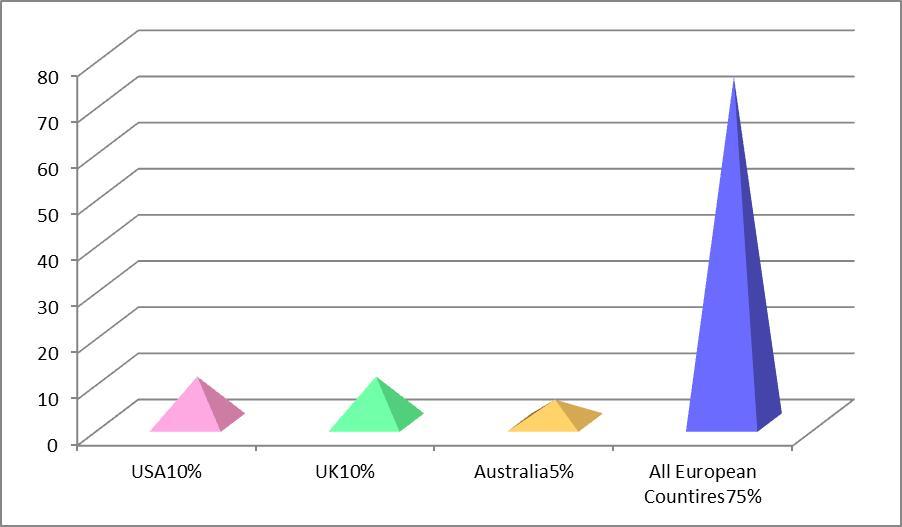
Which countries you prefer more to outsource your company services and why?
Which countries you prefer more to outsource

For the above question, within the total number of participants from Infosys, 10% of the participants stated that their company would prefer the USA to outsource their products and services and 10% the UK, 5% of Other participants answered that their company will prefer Australia and finally, 75% stated that their company will prefer all the European countries.

Is your company facing any problems with your local employees while performing global outsourcing process?

Is your company facing any problems with your local employees

For the above question, within the total number of participants from Infosys, 40% stated that their company is facing problems with their employees while performing the global outsourcing process and 60% of the participants stated that their company is not facing any problems with their employees while performing the global outsourcing process.

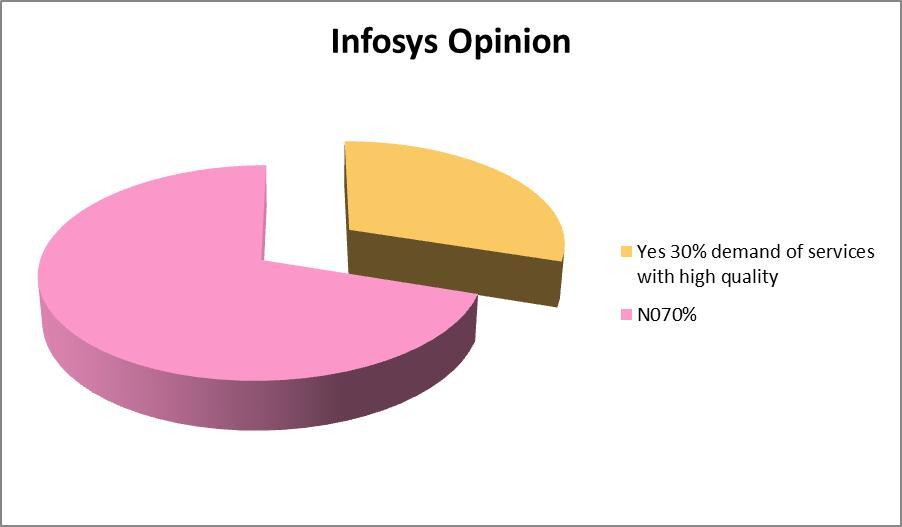
Is your company facing any problems with your customers, if yes specify them?
Is your company facing any problems

For the above question, within the total number of participants from Infosys, 30% stated that their company is facing problems with their customers for high quality of services while performing the global outsourcing process and 70% of the participants stated that their company is not facing any problems with their customers while performing the global outsourcing process.

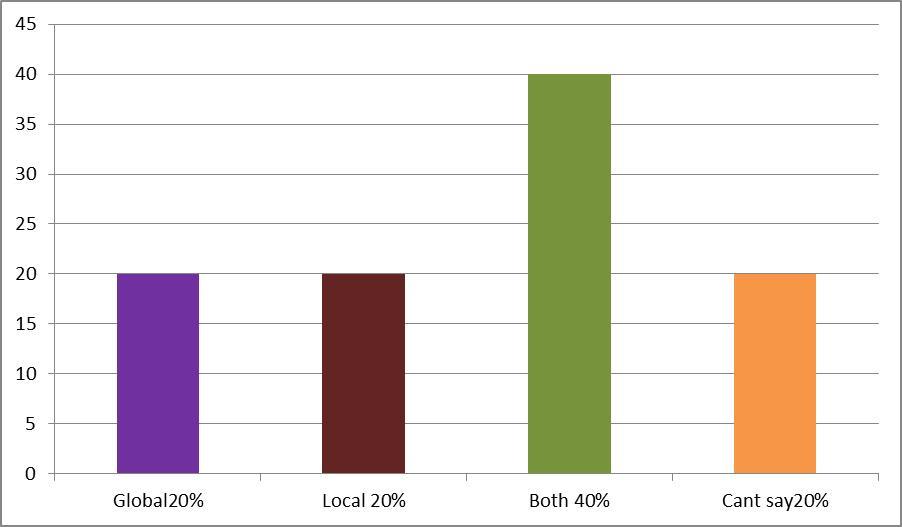
Do you think your customers prefer your local services or global outsourcing services?
Do you think your customers prefer

For the above question, within the total number of participants from Infosys, 20% stated that their customers will prefer global services, 20% stated that their customers will prefer local services, 40% stated that their customers prefer both local as well as global services and finally 20% of them stated that they cannot answer this question.

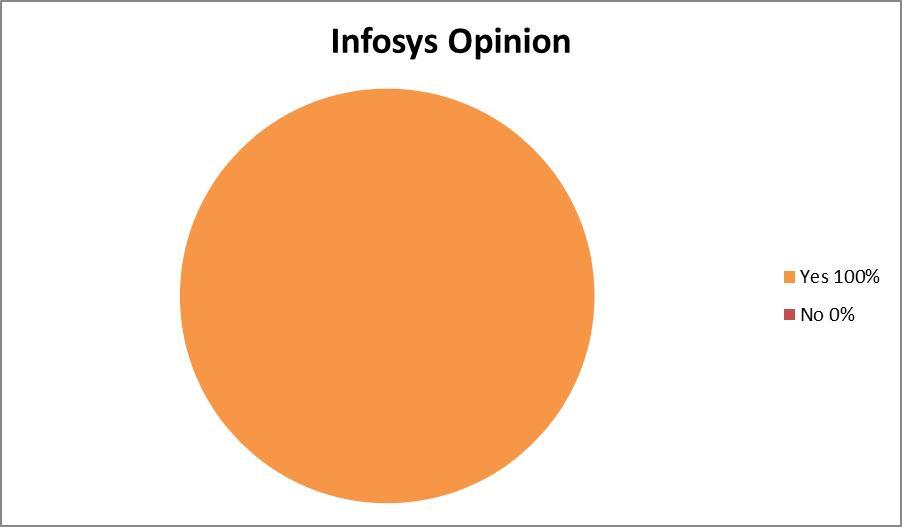
Do you think Infosys Company is giving tough competition in the global market?
Do you think Infosys Company

For this question 100% of the participants stated that their company is giving tough competition to the competitors in the marketplace. 

Do you think global outsourcing companies are more supportive in getting competitive advantages in the global markets?
Do you think global outsourcing companies

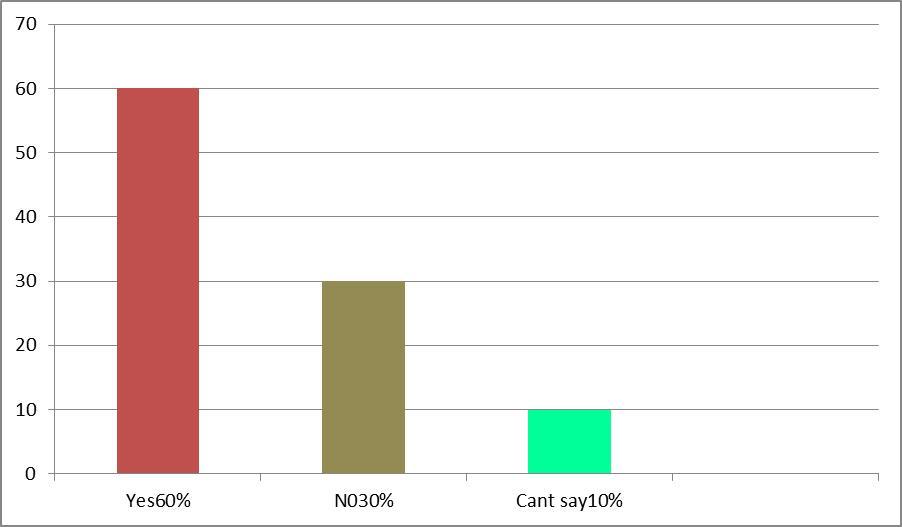
For the above question, within the total number of participants from Infosys, 60% stated that global outsourcing companies are supportive, 30% of the of the participants stated that global outsourcing companies are not supportive and finally 10% of them stated that they cannot state their answer to this question.

What type of global outsourcing strategies is your company following in order to manage the internal and external changes that take place in the process?
What type of global outsourcing strategies


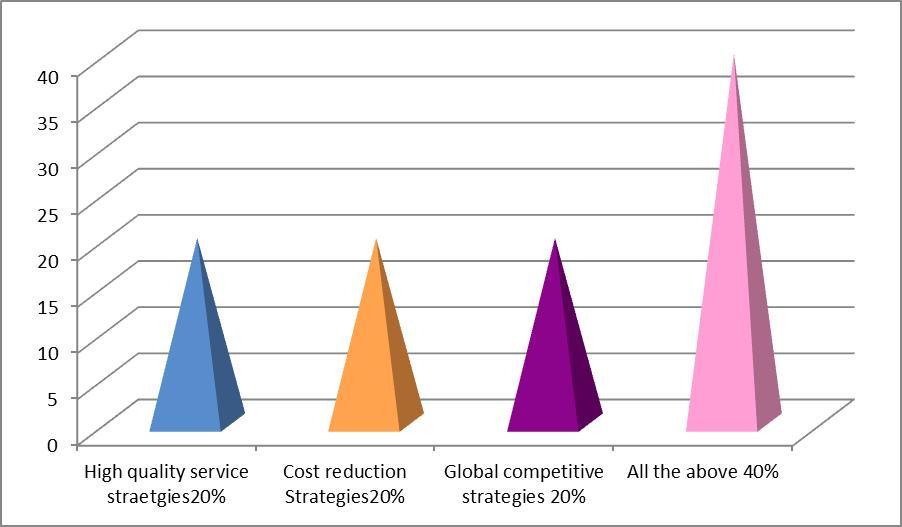
For the above question, within the total number of participants from Infosys, 20% of the participants stated that their company is following high quality service strategies, 20% of them stated that their company is following cost reduction strategies, 20% of them stated that their company is following global competitive strategies and finally 40% stated all the above strategies are used in their company.

On behalf of Infosys Company what views you wish to suggest to global outsourcing companies that outsources Infosys products and services?
On behalf of Infosys Company


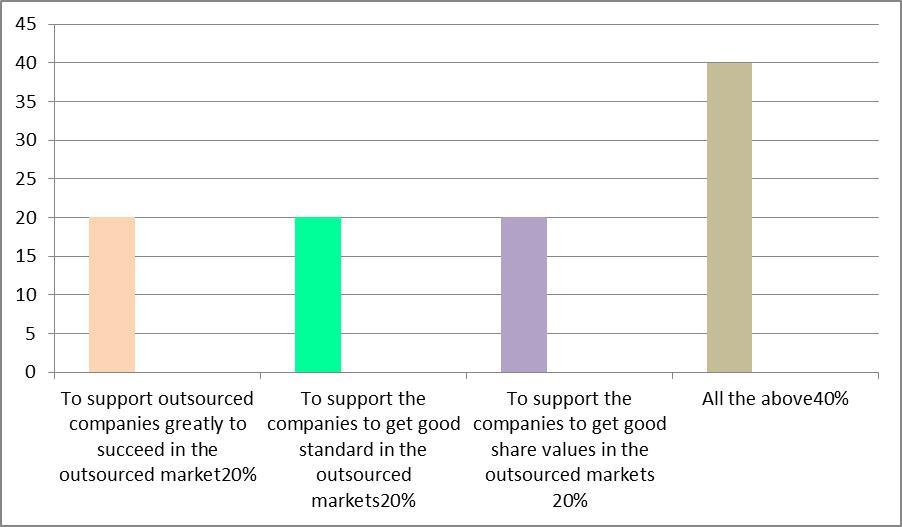
For the above question, within the total number of participants from Infosys, 20% of the participants stated that the outsourcing companies should support the outsourced companies greatly to succeed in the outsourced market, 20% of the participants stated that they should support the outsourcing companies to get good standards in the outsourced market, 20% of them stated that the companies should support then in getting good share values and finally 40% of them stated all the above reasons. 



Leader Member Exchange Theory

The leader-member exchange theory has a special relevance for the understanding of communication issues in Sainsbury’s.  According to leader-member exchange theory, a supervisor may have a biased relationship with the subordinate in the group compared to an out of group member. This is due to the context of the relationship between them. A supervisor may show a more open behaviour and share more with a subordinate in his/her group rather than with a subordinate of a different group. Every subordinate and supervisor is set to have a different relationship.

Researchers attempted to find the antecedents of such a relationship. The research attempted to identify the casual factors that are responsible for difference in interaction levels between various pairs of supervisor and subordinate. These relationships are characterised by the perceptions and actions that shape up the relation based on their work environment. Each relationship is built up on a unique set of characteristics. The intimacy of the relationship of a pair is determined by the behaviours of the supervisor and the subordinate.

There are no specific behavioural attributes identified in perceiving the quality of relationship. Relational coordination has emerged to fill this gap. It provides scope for open thought characterised by features of shared knowledge and problem solving. When there is a scope for such open thought sharing process, the employee perceives that the manager is empathetic about the progress of employee in the organisation. 

Management of Service Employees from Three Different Perspectives

The service employees’ performance plays a crucial role in forming the perception of customers about the firm. The role of management lies in improving their employee performance by considering three perspectives namely customer-employee interface, management employee interface and employee-role interface.

Customer-employee interface

The employees’ interactions with the customers affect the perception of the customers about the firm. Customers look for certain attributes in the service encounter to form perceptions. The employee interaction with the customers is characterised by their behaviours, their self efficacy, adaptability and their discretion to exercise their problem solving abilities. All these characteristics are said to have a positive correlation with the customer’s perception about the firm. So, the manager must provide a conducive environment for the employees to exercise these attributes at the time of service encounter. Adaptability, problem solving are the behavioural attributes backed by attitudinal attribute of self efficacy. The managers play a key role in nurturing such qualities in the service employees by training them and  by empowering them.

Employee-role interface

The role ambiguity and role conflicts are the major hindrances in the performance of service employees. Empowerment and self efficacy at times may also lead to role ambiguity. As the service employees are faced with boundary spanning, they often face role ambiguity. Role ambiguity can be mitigated with training and socialisation processes. The aspects of good communication with the manager makes the employee understands better about his role.

Employee management interface

The relationship between employees and managers can be strengthened by proper coordination. This coordination can be evaluate through behaviour based evaluation involving evaluating the behavioural attributes of the employees. Such behavioural attributes include commitment, effort, adaptability etc. The behavioural evaluation should be followed by empowerment. Empowerment enables the employee to use his/her discretion in day to day basis while performing the tasks.

The positive aspect related to empowerment is that the employee can exercise his skill of adaptability and problem solving in meeting the specific requirements of the customers. However, empowerment may also lead to role ambiguity. Empowerment can be carefully directed by openly sharing the firm’s goals and objectives. In that way, the service employee who is empowered makes a decision keeping in view the larger perspective of the firm’s goals and objectives.

The Role of Management in Improving the Performance of the Service Employees

The retail sector is different from other sectors, in the way the customer evaluates the organisation, namely in the service sector the evaluation is carried out by the interaction with the lower-level employees. This is not evident in other sectors such as the manufacturing sector, IT sector etc. Within the retail sector even the lower-level employees play a key role in improving the reputation of the firm.

In this sector the service delivery process includes the end delivery of the products to the consumers. This is where the service employees play a key role in reinforcing a positive image of the firm in the view of the consumers as the final delivery of the product demands amicable interaction of the service employees with the customers.

For this interaction to be effective, proper communication is a key.  This includes leadership skills, negotiation skills, proper language, spontaneity and responsiveness. So, the role of management is to reinforce and streamline these attributes in the employees for a better interaction which results in positive business implications. Moreover, in the service sector employee, represent a considerable part of human element that requires careful management.

Relational Co-ordination

              The aspect of relational coordination is evolved from human relations. It emphasises the role  the employee listening to the manager. The aspect of relational coordination revolves around three elements namely shared goals, shared knowledge and mutual respect. This fosters easy communication between the employee and manager and it also contributes to a better employee performance. Moreover, communication is said to have three constructs namely frequency, timeliness and problem-solving. This mode of communication empowers employee to perform better.