Impact of Service Employees Communication Style on Customer Evaluation and Customer Satisfaction

Service encounter is a two-way interaction between the service provider and the customer. The customer attempts to evaluate the service received based on certain constructs like service value, surroundings and the customer’s behaviour.  

Communication style is another important determining factor in enforcing a strong sense of bond between customers and employees. The communication style is said to impact the listener’s feelings of confidence, sense of control, self esteem etc. Managers need to know which communication style has a positive impact on customers in the direction of positive service evaluation. Important factors related to the communication style are service specific, situational specific and customer related..

Yan Ma (2010) and others discuss the social interaction model centred on a customer faced with a service encounter with no prior knowledge about the service, in which case s/he may feel a sense of anxiety due to inability of choosing alternative courses of action. In such a situation, the affective component of service employee’s communication comes into picture. The affective component refers to the employee’s mode of communication which is evident from his verbal and non verbal communication. The customer deals the situation in the perspective of a person rather than looking at service as a case. The affective component can be viewed as the time spent with the customer, the explicit concern for the customer and the extent of interest shown by the service employee.

The affective component discussed here belongs to one of the communication styles. A communication style refers to the verbal or a paraverbal expression of the literal meaning of a communicator’s intention conveyed and it determines how it is interpreted, filtered, and absorbed by the listener based on the context. The communication between the individuals may be in any of the friendly, contentious, animated, attentive, dramatic, dominant, open and relaxed manners. These constructs determine the style of communication. The affective component of communication is associated with friendly, attentive and open approach while the dominant style of communication takes the characteristics of animated, contentious dramatic approach.

In general, the affective component of communication is said to have a positive impact on the perception of the service. The dominant style witnessed a less favourable evaluation of the service as it involves lack of clear cut explanation and it involves technical jargon. So, in service contexts, management should aim at developing a affective component of communication in their service employees as it involves features like warmth, empathy, humour and attentiveness.

           Although the communication style is said to have direct implications on customer satisfaction levels based on customer’s evaluation of service, it is known from certain studies that some moderators like service criticality and the service nature intervene with the communication style that affects customer satisfaction. Another noticeable variable which is known to have a significant effect in the communication style is the factor of empowerment. The empowered employees exhibit the features of high self efficacy, adaptability and problem solving skills which reflect in the accommodative communication style.

Regarding the aspect of criticality, if the situation is perceived as very critical and crucial by the consumers, their attitude is influenced markedly with the communication style. Service contexts involve critical situations where the customer perceives it to be very crucial in his view. The customers tend to form positive perceptions and disposition when dealt in an accommodative style characterised by empathy, warmth, friendliness. Likewise, the customer forms negative perceptions when the service is dealt in dominant communication style in critical situations.

           Another moderator of the communication style in connection with the service evaluation is the service nature. The nature of service may vary according to the product purchased. Moreover, service encounters that require the purchase of innovative products call for a knowledgeable, persuasive style of communication. Less innovative services call for a friendly, gregarious and accommodative style of communication which involves an affective component. The customer attains satisfaction when he receives desired quality in the service provision such as professionalism and guidance. Customer services that occur in retail outlets attempt to reinforce satisfaction levels among consumers while using a compassionate and highly affiliative style of communication. 

Cultural Differences and Misinterpretations Which Lead to Communication Barriers

Some of the cultural differences and misinterpretations which lead to communication barriers are identified by the human resource professionals while engaging with the immigrant employees are listed below.

 Status and Roles: Social hierarchy exists in some countries and this may lead to “bumps” in the communication process especially in the workplace. In some countries, women are considered less superior than males. A woman with a high position in the managerial hierarchy may experience communication blockages while relating to a man from a different culture. The result may be a communication gap because of the difficulty in adapting to the situation.

 Personal Space: It relates to the level of comfort zone while speaking to others face to face. Generally, in some countries like England, people are comfortable conversing while standing at a distance of five feet from each other while in some other countries like Germany and Japan, they rather prefer more distance.  Arabs and Latinos, on the other hand, usually prefer to get closer.

 Body Language: The physical gestures, which are the part of body language, can be interpreted in different countries. The people in some countries express “no” by shaking their heads while in some countries, they express that by raising their chin.

Religion:  People are largely influenced by the religion with respect to their life style.  For instance, usage of some words may be considered a sin in some religions while it is used freely in some other countries where there is no sin attached in usage of such word.

Personal Appearance: The personal appearance of the people varies with different countries. It has been suggested that the attire of people in the organisation should be made uniform to mitigate these differences.

Communication Barriers

The quality of the communication process is largely determined by the elements involved in such process. The more effective the elements are, the more effective is the process of communication.  identified the following components:  the media, the  channels in the communication process, the sender’s body language, the receiver’s understanding, perception, attitudes etc. The misplacement or the ineffectiveness of these elements leads to barriers in the communication process.   Four kinds of barriers in the communication process can be identified, namely the process barriers, physical barriers, semantic barriers and psychosocial barriers. 

Process barriers:

Sender barrier:  A new junior manager with a novel idea hesitates to convey his idea in the meeting, chaired by the vice-president, due to fear of criticism.

 Encoding barrier: A Welsh-speaking customer cannot absorb an English-speaking service employee to understand the special offerings of a store.

Medium barrier:  A very disgusted staff member conveys his hard feelings in a letter to the manager instead of expressing such feelings face-to-face.

Decoding barrier: An old senior manager is unsure of what a younger junior manager meant when he referred to a employee as “spaced out”.

Receiver barrier: A manager who is conveying the operational strategy of the company to the employee asks him/her to repeat the statement as she was not listening carefully to the conversation

Feedback barrier: During a strategic meeting in the organisation, employees failed to respond to the conveyed strategy by the manager making the manager wonder if proper interpretation had occurred.

Physical Barriers

There may be some physical interruptions in the process of communication which may be anything like a telephone call, distance between people, walls, and drop-in visitors. Usually physical barriers are not taken into account seriously but they can be evaded. For instance, a wall may be a hindrance while communicating in the work space and it can be re-positioned.

Semantic Barriers

 Communication barriers are evident when we use some words in some situations which may have different meanings in other. This problem is said to be semantic where the same word may be understood differently by other people. The words efficiency, potentiality, enhanced productivity may mean one thing to a manager and it may be understood differently by a staff member who may be an employee. 

 Psychosocial Barriers

Coskun identifies three important aspects of psychological and social barriers, namely fields of experience, filtering and psychological distance. The main elements of ‘fields of experience’ include perceptions, needs, background of people, values and expectations. The role of such fields appears during the encoding process of the sender and the decoding process of the receiver: they  occur on the premise of their fields of experience.

When the sender and receiver belong to the same fields of experience, the communication process is smooth without many barriers. Nevertheless, the communication becomes difficult when their fields of experiences coincide very little. Filtering refers to our emotional filters which determines what we see, hear and listen and he also points out that psychological barriers occur with respect to the psychological distance between the people rather than the physical distance 

Questionnaire to IT Company

What types of changes did your company faced when you outsourced your products and services?

 What types of changes did your company

For the above question, within the total number of participants from Infosys 25% of the participants stated that their company is facing some internal changes like employee problems and management problems with their outsourcing companies and 25% answered that their company is facing some external changes like problems and changes with shareholders and stakeholders. Finally, 50% of the participants stated that their company is facing both external as well as internal changes. 

What type of alliances if any is your global outsourcing company providing you?

 What type of alliances if any is your global

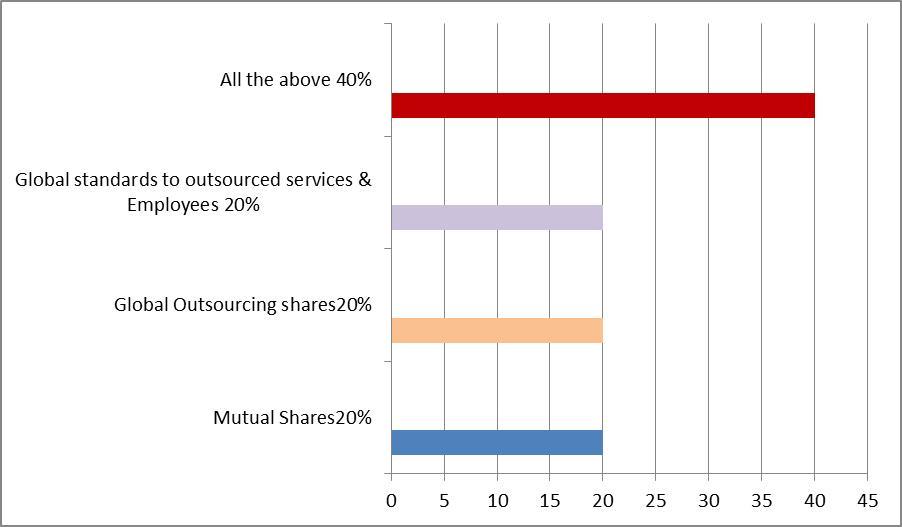
For the above question, within the total number of participants from Infosys, 20% of the participants stated that their company is getting mutual shares as benefits from their outsourcing companies and 20% answered that their company is getting global outsourcing shares as benefits, 20% stated their company is getting global standards to the outsourced services as well as employees and finally 40% stated that their company is getting all the above mentioned benefits.

Do you think globalization process has impacted your company outsourcing standards?

 Do you think globalization process has impacted

For the above question, within the total number of participants from Infosys Company 60% of the participants stated that globalization process has impacted their company, 20% stated their globalization process has not shown any impact on their company and finally 20% stated that they cannot answer to this question. 

Why change management process is important in global outsourcing process of Infosys?

 Why change management process is important

For the above question, within the total number of participants from Infosys, 30% of the participants stated that change management process is important to their company to identify the external changes that take placeand other 30% of the participants stated that change management is important to identify the external changes and finally 40% stated that change management is important to identify both external as well as internal changes.

What is the change management activities involved in your company?

 What is the change management activities

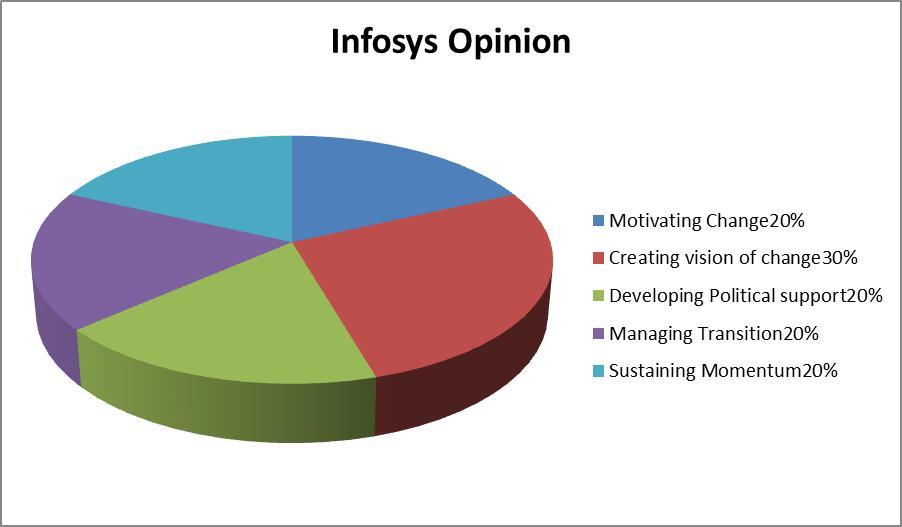
For the above question, within the total number of participants from Infosys, 20% of the participants stated that  motivating changes is the major change management activity in their company, 30% stated that creating vision of change is the major activity of change management, 20% of them stated that developing political support is the main change management activity, 20% stated that managing transition is the major change management activity of their company and finally 20% of them stated that the sustaining momentum is the major change management activity involved in their company.

What is the current situation of Infosys Company in global market? 

 What is the current situation

For the above question, within the total number of participants from Infosys, 40% stated that their company is having good competitive market in the global market and 30% stated that their company has a high market value, 20% stated both competitive standard as well as a high market value to their company and finally, 10% of them stated that they cannot specify their answer. 

Why Infosys Company is facing failures in managing change management process successfully?

 Why Infosys Company is facing

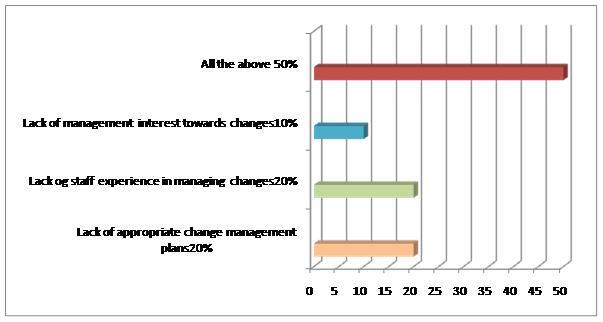
For the above question, within the total number of participants from Infosys, 20% stated that their company is facing  problems because of lack of appropriate change management plans, 20% answered that their company is facing  problems because of a lack of experienced staff in managing the changes, 10% of other participants stated that the problem is a lack of management interest towards the changes and finally 50% of the participants stated that their company is facing problems because of all the above mentioned reasons. 

Rather than outsourcing the products and services why cannot yourself expand your business activities into different countries over the world?

 Rather than outsourcing the products

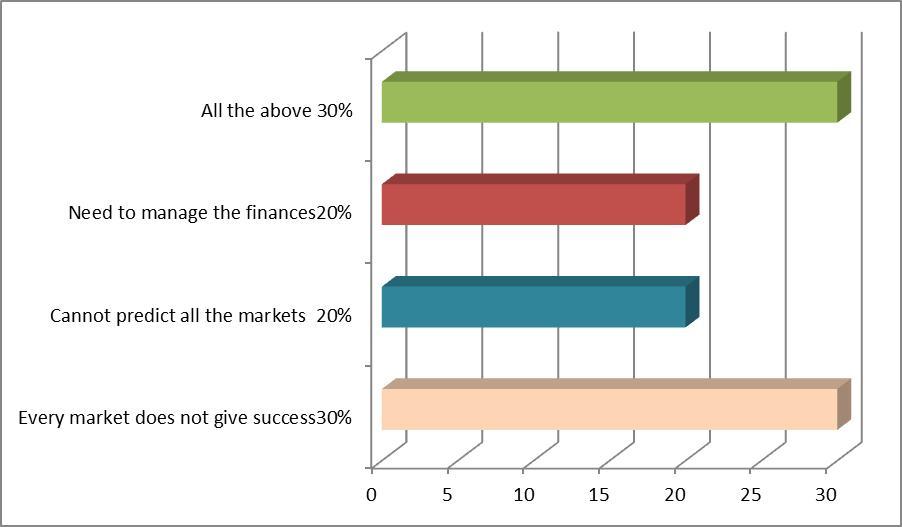
For the above question, within the total number of participants from Infosys, 30% stated that their company is still using outsourcing because every market will not give success to the company, 20% of them stated that they cannot predict all the markets, 20% of them stated that they need to manage finances and finally, 30% of the participants stated that their company is still using outsourcing process for all the above reasons. 

According to your company views is their relation between change management process and global outsourcing process?

 According to your company views

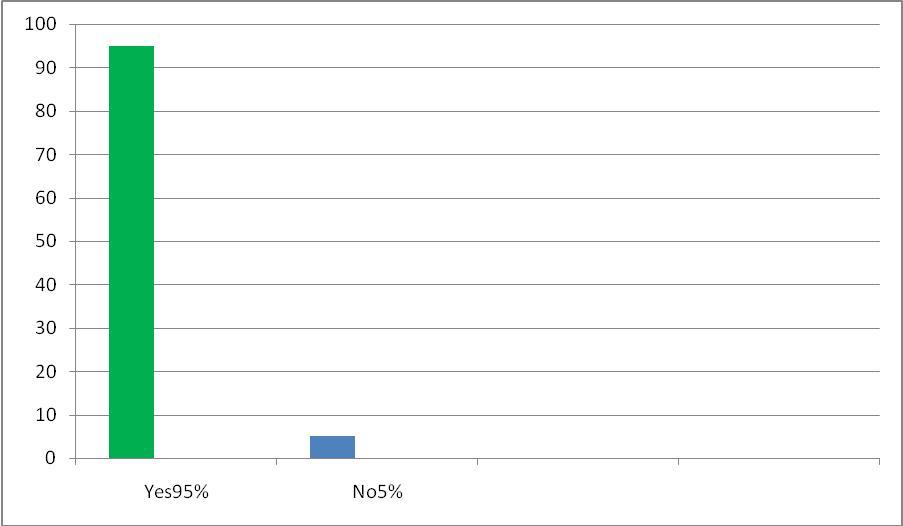
For the above question, within the total number of participants from Infosys, 95% stated that there is a relation between change management process as well as global outsourcing process and 5% of them stated that there is no relation between these two aspects.

Which continent do you prefer more to outsource your company services and why?

 Which continent do you prefer

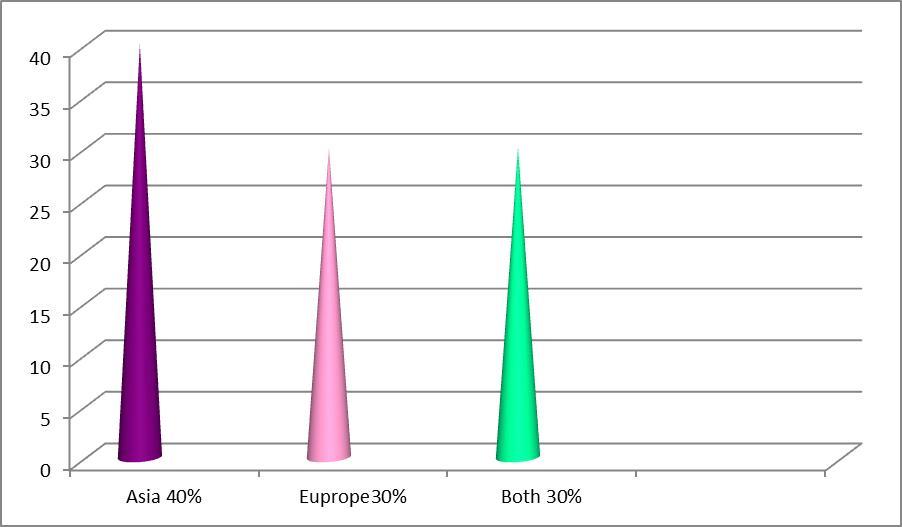
For the above question, within the total number of participants from Infosys, 40% stated that their company will prefer the Asian Continent to outsource their products and services, 30% of the other participants answered that their company will prefer Europe and finally, 30% of the participants stated that their company will prefer both Asia as well as Europe Continents to outsource their services. 

Rapport Manifested In Customer Satisfaction, Customer Loyalty and Word-Of-Mouth Communication

This section discusses the relationship of rapport, defined as personal connection and enjoyable interaction, with outcomes like customer satisfaction, customer loyalty and word-of-mouth communication.

Rapport with customer satisfaction

Rapport leads to customer satisfaction based on the formation of service relationships. The service relationships are formed by a strong rapport which leads to a state of perceived control where the customers can control and predict the factors leading to service outcomes.  Perceived control enables greater predictability among customers about the service provider which contributes to better satisfaction. It is known that close personal contacts and sharing of personal information are known to be the antecedents for better rapport between customers and service employees.

In the due course of sharing personal information, the service provider gets to know the requirements of customers and this enables the service provider to customise the products according to the needs of customers. As the needs of customers are matched through customization  the customer satisfaction is enhanced, thanks to the dimensions of rapport. Macintosh also states that due to the close personal contacts, the customer awareness is increased about the service or about the goods. This occurs as a result of repetitive business transactions. Given the frequency of visits and the awareness about the products, the customers’ perception of service increases thereby leading to the close alignment between  expectations and the service provided which in turn results in customer satisfaction.

Rapport and customer loyalty

This section discusses the connection between rapport and customer loyalty. Sound rapport between a customer and a service employee results in strengthened relations. A commitment arises from such a relationship. The effects of such commitment were discussed in the previous section about aspects of customer satisfaction. However, the depth of such commitment is a key to repeat custom which symbolises customer loyalty. The marketing literature indicates that there is a positive correlation between rapport and customer loyalty (Berry, 1995). For instance, a good rapport with a hair stylist provides such an environment where the expectations of customers can be understood and the service is delivered accordingly thus prompting repeated visit to the hair stylist, and ultimately fostering customer loyalty.

Rapport and word-of-mouth communication

It is obvious to say that when rapport is positively correlated with customer satisfaction and customer loyalty, it logically follows with positive word-of-mouth. Commercial friendships between customer and service provider enable customers to recommend the service provider to others in a positive way.  Word of mouth communication can be understood as behavioural component of loyalty. 

The Two Dimensions of Rapport

The two dimensions of rapport

The two dimensions of rapport are said to be enjoyable interaction and personal connection . The overall rapport depends on the effective resultant of these two components. The customers expect these two components in the process of building a strong rapport.

Enjoyable Interaction

The enjoyable interaction is a feeling of care and affection between two persons involved in the interaction. This evaluation of one’s exchange with another person is common to many service encounters, especially between customers and service employees. According to Lam  (2010) the enjoyable interaction component of the rapport is attained from the favourable interaction alone irrespective of the service outcome being negative or positive. As rapport is built from relationships, its effect is predominant on healthy employee customer interaction than the service outcome.

            The service delivery is generally associated with two aspects namely technical quality and functional quality . The technical quality concerns with the delivery of physical goods, service etc while the functional quality of service concerns with the way in which the service is delivered. Rapport is the element of functional quality as rapport determines how the service is delivered. Rapport is a dominant aspect among all the elements of functional delivery as it embraces all other aspects like eye-contact, gestures and language.

It can be argued that there is a noted distinction between technical quality and functional quality in the process of service delivery. But according to John  this is generally ignored. However this distinction is clearly noticed in a supermarket transaction.  For a customer may buy the electric cooker due to the informed advice of the service provider which can be understood as functional component. However, upon the usage of the cooker, the customer may feel dissatisfied with the functioning of cooker. Here the distinction is clearly observed. 

Personal Connection

The second component of rapport is the personal connection. This can be understood as a strong bond between the customer and the service employee.  The reason for this  connection is explained as ‘authentic understanding’ which is generally observed in service relationships based on personal connection. Authentic understanding is an emotional bond charged with emotional energy. The personal connection contributes for the development of service relationships between employees and customers. This phenomenon helps the service provider to make sense of what the customer thinks along the lines of what is important to the customer.  Such process of rapport building involves building personal connections, internalising values, dispositions from the view point of others.

        Understanding the means through which people are connected personally and uses the concept of psychological similarity. Psychological similarity is a state attained between people who possess similar attitudes, values and pre-dispositions. When people interpret a situation in the similar lines and in a similar sense, it is evident that psychological similarity exists between them. This state of psychological similarity tends to have a positive impact on the service relations. In the service context, there may be some repetitive business transactions between customers and service providers which give scope for extended communication.

If a customer and service provider show similar understanding about something, the conclusion is that  the customer has a similar view which is consistent with that of the service provider. Another way in which the personal connection can be established is by developing a sense of interest towards others where  the personal issues are shared and understood, be it in relation to service provision or not. The mutual sense of personal connection establishes a strong rapport between customers and service providers. It calls for a personal interest on what people are saying through intense involvement and commitment towards others.

                 The two constructs of rapport namely personal connection and enjoyable interaction have been explained in brief in the above paragraphs. Now, based on these two constructs rapport is defined in the service contexts. Rapport refers to the perception of the having an enjoyable interaction with the service provider backed by personal connection.

Concepts of Rapport

Rapport is defined in many ways depending on the context. It can be a rapport between roommates, between a psychologist and a patient, between students in educational framework, between a sales person and a customer.

The objective is to identify the form of rapport involved in the interaction between a sales person and a customer within the framework of service encounters. The relation between the interactants marked by empathy, sympathy and harmony is how rapport is defined in the sales context where the sales person and the customer are engaged . The interaction between vendor and an industrial customer in the sales context can be put as the activity of “hitting it off” and feeling comfortable with each other.

The antecedents included in this context contain trust, honesty and respect. The expected outcomes are institutional customer loyalty and enhancement of the overall quality of the relationship between customers and vendors. Rapport is defined by as the “close harmonious relationship on mutual trust”.

Rapport between Customers and Employee in Service Exchanges

This section attempts at understanding one of the main themes concerning the research problem. The major themes pertinent to the research problem are identified in this chapter and existing research is being examined. The literature review discusses the work of various researchers related to management communication. The main contributions to management communication theory and practice are presented below on the basis of various publications. This literature is useful for identifying the main concepts and theories related to managerial communication and linking these to the findings in this research. 

RAPPORT BETWEEN CUSTOMERS AND EMPLOYEE IN SERVICE EXCHANGES

Recently, personal relationships between customers and employees have been credited with contributing to better business transactions.  It may be argued that many organisations succeeded without clearly planning personal relationships between their employees and customers. As this research will prove, such planning of communication is paramount for business success. The research investigates the rapport between customers and employees in the service sector by identifying two dimensions of this rapport. The two dimensions are loyalty, and intent and positive word –of-mouth communication. The research is focused on effect of these two dimensions contributing to customer satisfaction.

                  Customer interactions with the employees of firms vary according to many factors. It is important that the outcomes with regard to the interaction with customers are assessed with great attention as these outcomes are intangible. The contribution employees add to the firm is evaluated in relation to customer satisfaction. Identified good practice in a branch, such as Sainsbury Richmond, has the potential of being disseminated through all branches and thus raising the profile and efficiency of the entire organization.

There are five factors identified that are reckoned as positive influencers in the outcomes of the service firms. These five constructs are the components of an inter-personal bond. They are familiarity, friendship, rapport, care and trust. Rapport is studied in this section as it is a key component irrespective of whether the customer visits once or whether the interaction is repetitive. Moreover, rapport is the factor which has potentially large implications.

The nature of the rapport between customers and employees and its implications are studied in detail.  Also,  evaluated service encounters as they have become salient because of the intangible nature of the service interaction. In the instance of the judgement of a service encounter, rapport is particularly important. The perception of rapport makes the consumer feel satisfied with the service encounter. Therefore, it is important that the firm is proactive in maintaining a rapport with their customers. 

Questionnaire to Infosys Company Management

Gender Specification of the participants.

Gender Specification

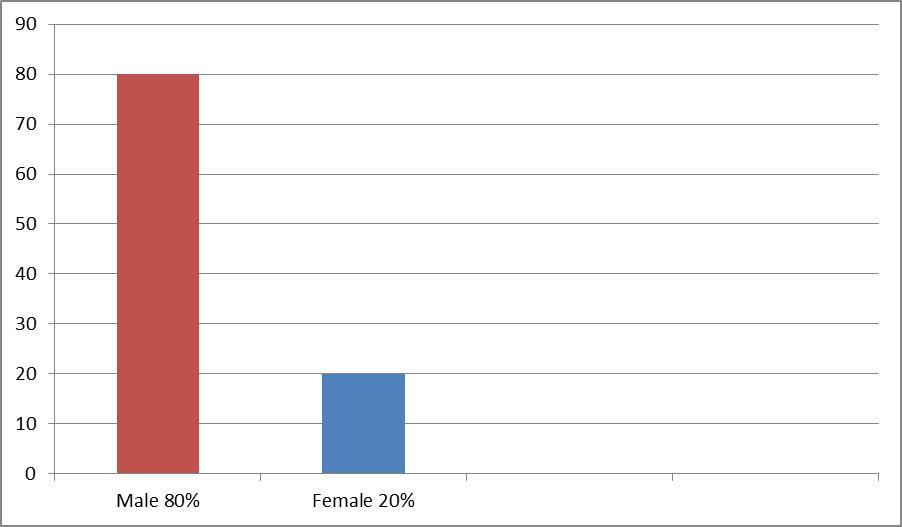
For the above question, within the total number of participants 80% of the participants involved are male and 20% of the participants involved are female. From these statistics it is clear that the majority participants took part in the research survey are male. 

Age Specification

age specifications question

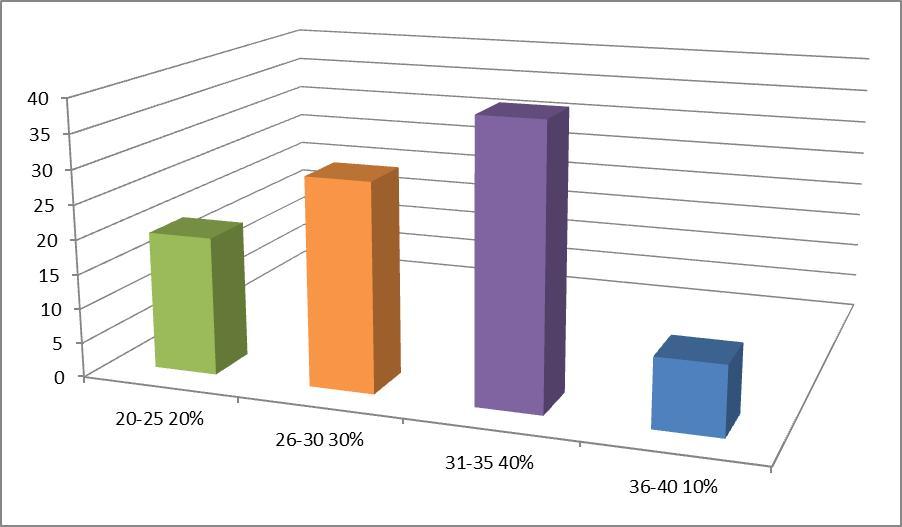
For the above question, within the total number of participants 20% of the participants involved are between the age of 20-25 and 30% of the participants are aged 26-30, 40% of the participants are aged 31-35 and finally 10% are between 36-40.  From this statistics it is clear that the majority participants took part in the research survey are aged between 20-40 years of age.

Being an international company why are you still outsourcing your products and services?

Being an international company

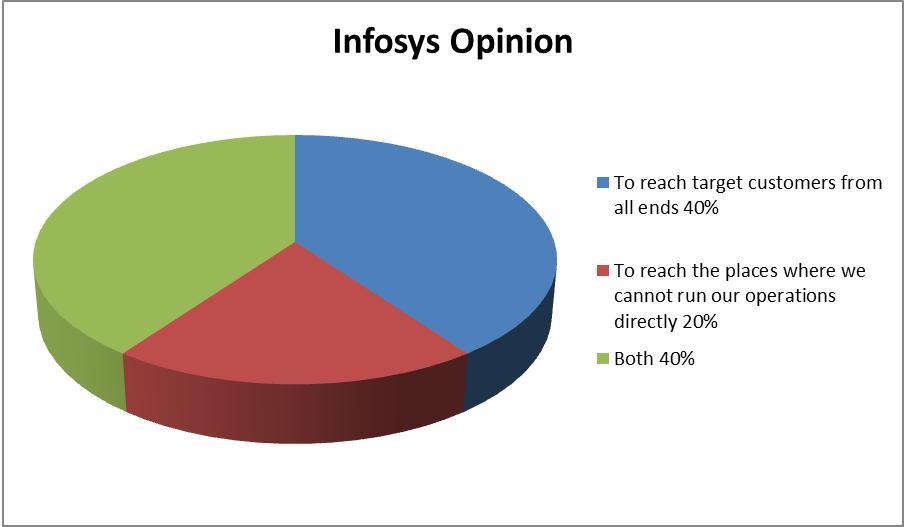
For the above question, within the total number of participants from Infosys 40% of the participants stated that Infosys is outsourcing its services in order to reach target customers from all ends of the world and alternately 20% of the participants stated that they cannot run their operations in all areas and then they are outsourcing their services and finally, 40% of the participants supported both reasons. The statistics revealed that both are the major reasons for outsourcing their services.

Whom do you think as your major competitor in the market?

Whom do you think as your major

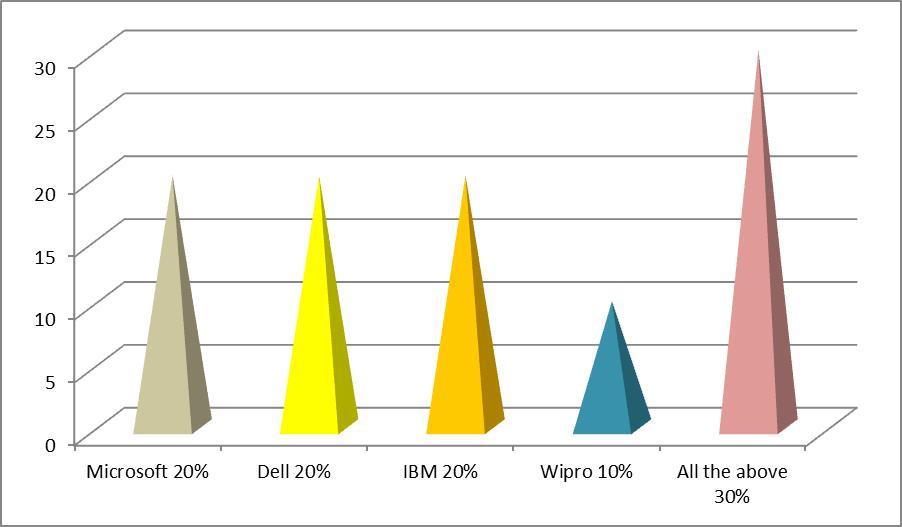
For the above question, within the total number of participants from Infosys, 20% of the participants stated that Microsoft is their major competitor, 20% of the participants stated that Dell is their major competitor, 20% of other participants stated that IBM is their competitor, 10% of the other participants stated that Wipro is their major competitor and finally 30% of the participants stated all these companies as their competitors. The statistics reveal that both are the major reasons for outsourcing their services.

Whom do you think as major outsourcing competitor in the market?

Whom do you think as major

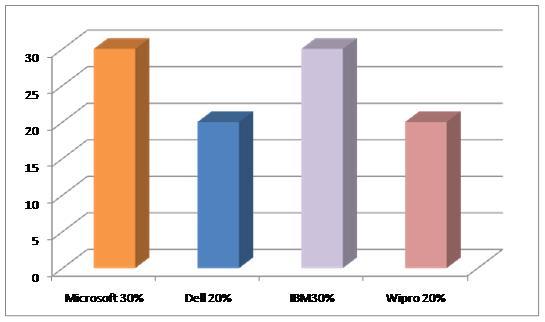
For the above question, within the total number of participants from Infosys, 30% of the participants stated that Microsoft is their major outsourcing competitor, 20% stated that Dell is their major outsourcing competitor, 30% stated that IBM is their outsourcing competitor, 20% stated that Wipro is their major outsourcing competitor. The statistics reveal that both are major reasons for outsourcing their services.

Did your company aligned change management process with global outsourcing process?

Did your company aligned

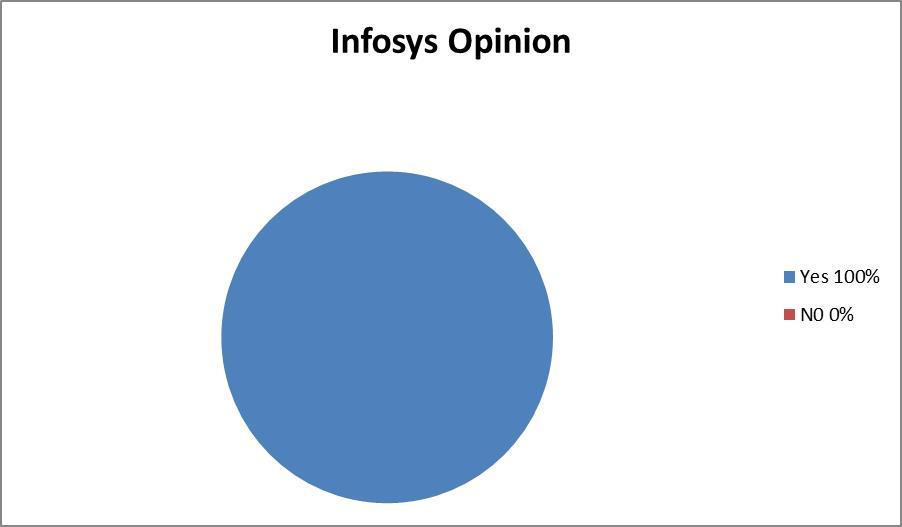
For the above question, within the total number of participants from Infosys Company 100% of the participants stated that their company is aligning change management process with their global outsourcing process and the total participants proved that Infosys is aligning its change management and global outsourcing process. 

Do you think is global outsourcing process really important for your company?

Do you think is global outsourcing

For the above question, within the total number of participants from Infosys, 80% of the participants stated that global outsourcing process is more important to their company and 20% of them stated that global outsourcing process is not too important to their company.

What are the major companies you have bonded for outsourcing your products and services?

What are the major companies

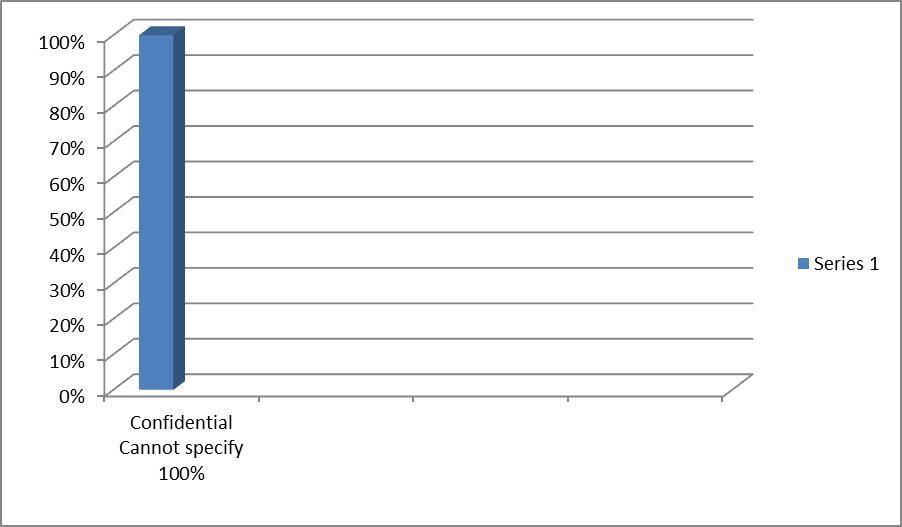
For this question 100% of the participants answered that this is a confidential answer which cannot be revealed or answered by them.

The Identification of Risks in a Project

The risks are the type of aspects that will reduce the project progress levels and in many circumstances; it even leads to the failure of the projects. By making use of the different resources available in the company, the risks are been identified and described. Many companies will try to identity the future risks of the project before starting it and some of the companies will identify them while ongoing project process and many companies will identify the risks of th project after completing it. Each risk might show the major positive or negative impact on the success of the project and the project management process.

Risk responsibilities

Every individual involved in the project process will have his or her own roles and responsibilities by which they will be capable of managing the entire risks and problems that takes place in the project. The managers and the stakeholders are the key persons who will play the major role in fulfilling the risk management responsibilities. The major responsibility of any individual involved in the project process is to manage and run the company successfully without any risks and problems. Even though the risks arise, the individual should be capable of rectifying them according to the project requirements and should fulfill their own responsibilities. There are more possibilities for the occurrence of risks and for this reason they are having many risk management responsibilities on them to run the company in a successful manner.

Obstacles and Milestones

In order to complete this research process the research haven’t faced any difficulties, within the entire research process even though if there are any future obstacles or problems the researcher will overcome them and complete the research process successfully. The major limitation of this study is that it includes the significant information on the innovation technology and change management process according to the research requirements, but it doesn’t include the entire available on these aspects which can be considered as the limitation of this research. Researcher will contact the participants through emails and phones and will gather their valuable opinion on global outsourcing and change management process.

Outcomes and Benefits

The information on impact of change management aspects on global outsourcing process of Infosys companies is explained within this research study. The major beneficiary of this research study is Infosys Company, as this study helps them to identify their global outsourcing change management problems and suggests them effective change management strategies through which they can overcome the change management problems facing in global markets. By viewing this research study, Infosys Company can use these strategies and methods to overcome the change management problems in their global outsourcing process.