
Decision of Destination in MS Project Dissertation

Decision of Destination:

Deciding the required destination is really the important task to be considered in this MS Project Dissertation and the coding used to achieve this is explained here. To decide the destination based on the time functionalities, a separate class named Destination is created and this class extends a predefined class known as TimerTask and this class is available with the java.Util package.

This class decides the destination based on the time during the execution and thus the timer object is used in this case. The actual process of deciding the destination is really a networking task and the Socket classes are used to decide the destination. A separate connection to the server is used this socket object. ServerSocket class is used for this purpose and thus once the connection to the server is established, now the destination is said to be decided and the server socket connection is set to be ready till the process is completed.

Once the connection to the server is established, now the message is chipper and sends to the receiver using the function known as receiver and now the messages are send in the form of chippers to the receivers. To ensure the secure communication, port numbers are used and thus the port based secure communication model is coded in this project. A separate set of session keys are used in this case and now the encryption and decryption algorithms can be used to distribute these keys.

The corresponding messages are encrypted and decrypted using this session keys and now the communication process can be said as successful and secure enough. The actual coding used to achieve this task is given in the Appendix section.

This Paper is written & submitted by Vamshidhar A.
Credit Card Fraud Detection Using Hidden Markov Model Project Report

Introduction to Credit Card Fraud Detection Using Hidden Markov Model Project:

Credit card based purchases are of two types they are

  1. Physical card
  2. Virtual card

Physical card based purchase: The card holder contains a card and in order to purchase a good or make any transaction the card holder should carry the card. 

Virtual card based purchase: Here the card holder need not carry the card, just a few details about the card are enough to carry out the transactions. It is generally done in online shopping.

In physical card based purchase the fraudulent transactions can be done only if the attacker was able to steal the card from cardholder and if the cardholder doesn’t notice the loss of credit card it may lead to financial loss.

At present the fraud is detected after the fraud is done that when the card holder complaints. The online purchases are more so we don’t know how the person is using the card online we just capture IP address for verification. So there an urgent need to investigate about the fraud. Fraud detection based on analysis of existing purchase data of cardholder is a promising way to reduce the rate of successful credit card frauds. As humans tend to exhibit various behavioral profiles, each cardholder can be represented by a set of patterns containing information about typical purchase category, the time since last purchase, amount paid etc. This process is known as HMM Hidden Markov Model. The details of items purchased are not known at FDS running at the bank that issues credit cards to cardholders.

The modules present in this project are as follows

  1. New card: The customer provides their contact and personal information to obtain a credit card. They can create their own login and password.
  2. Login:  With the valid usernames and passwords the users can visit the website
  3. Security information: When the user looses the card security information module arises. In order to move to the transaction section he has to answer a set of questions.
  4. Transaction: The credit card owner or authorized person can only make the transactions
  5. Verification: In this process the card number is verified to ensure that the  transaction is made by card holder itself.

 Download Credit Card Fraud Detection Using Hidden Markov Model Project Report.

DES Algorithm Seminar Topic

Encryption: 

          Once the DES algorithm is done and the corresponding keys are generated and distributed among the users successfully, now the encryption can be done using this algorithm. The process of encryption is similar to the process of decryption as explained in the above section. Any file can be used as the input for this encryption process and in general the messages that pass among the client and server are encrypted and java IO package can be used read and write the corresponding required files.

File Input Stream and File Output Stream are used as the basic classes to read and write the required files and the file streams are opened as the instance of these classes and null values are assigned to these objects before reading or writing the required files. The required files are read from the console and once the files are read, they are divided using the random functions and the corresponding BufferReader classes.

Now the DES algorithm is used in this case to generate the keys are share the keys among the users involved in the communication process. Few math functions are used in this case, to generate the random keys and a separate class known as Encryption is created to handle all this process. The main input parameter to this class is the encryption keys generated using the DES algorithm and thus once the keys are passed, the required messages are encrypted and communicate as per the requirement.

Once the encryption process is done, all the objects are closed and the corresponding exceptions are caught using the try and catch blocks. The actual coding used to achieve this encryption process is given in the Appendix section. 

This Paper is written & submitted by Vamshidhar A.
DES Data Encryption Standard Algorithm PPT

DES algorithm:

As mentioned in the above section, a DES Data Encryption Standard algorithm is used for the decryption process and the detailed coding procedure followed to implement this algorithm is explained in this section. A block level coding is done to develop the DES algorithm and to do this different blocks are created like init block, data block and encryption block and the corresponding data is assigned to these blocks as per the project requirement.

To create the required key, a separate 32 bit key block is created and then users are assigned with this key using the traditional swapping process. The main aim of this algorithm is to created the keys and then share the key among the users and to achieve this, a separate method known as keyGenerator is used and once the required key is generated using this function, the corresponding keys are assigned to the users as per the predefined conditions and requirements.

In general the keys are random numbers and a separate set of numbers are used for this process and to achieve this task, a function known as Initialperm is used and the required random numbers are generated. For any communication process among the clients and the server, the corresponding IP address are used and thus a separate IP block is maintained to store the IP address of all the nodes that participate in the communication process.

Once the required keys are generated and assigned, they are stored in a separate block known as key block and this particular key block is passed as the required input for the method known as PCI and then these keys can be used for the basic decryption and encryption process to achieve the required secure communication among the client and server.

Distribution of the bits based on the left and right are done using the math function of java and thus the random numbers are shifted as per the requirement. The key generation process is repeated for number of times to ensure the better quality of the keys and distributed and the corresponding key details are maintained in a separate table known as Etable. The actual coding used to develop this DES algorithm is given in the appendix section.

This Paper is written & submitted by Vamshidhar A.
An Activity Directory Domain Controller For the Domain Seminar Topic

In order to store data in Microsoft based systems and servers data structures are used which are called as an activity directory which deals with storing information of networks and domains, even authenticates the requests and data stores in it. 

 The directory is designed to handle large number of operations like read and write and also handles a small of operations like updates, modify etc .It is primarily used for online information and was created in the year 1996 but is first used with windows 2000. 

Active directory provides single point of management for windows based user account client’s servers and applications .The management of printers, computers, users, objects, groups, various applications etc can be done easily in a smooth fashion from a single secured centralized location. 

The special feature of ADS is security  .when a user logs into a computer which is a part of windows domain the ADS check whether the password entered by the user and determines whether the user is normal user or system administrator. All the authorized users can access active directory and its objects from any part of the network.

The security of active directory network is based on log on access, authentication and access control to data and objects kept in the directory. By using simple network authentication tool network administrator is able to handle entire network.

A special feature called single-on security mechanism is provided for users , this  features of ADS avoid the overburden of using multiple passwords for accessing different applications and services. Instead a single global security and configuration settings are maintained.

ADS is hierarchical structure and is broken down into three main categories like resources, services for end users like web servers and objects which are main functions of domain and network. The resources generally includes hardware such as printers, speakers etc. The directories can be viewed at any of the three levels; these levels include trees, forests and domains.

DOMAINS: The objects are grouped into domains and are stored in single database. These domains are identified by their DNS name structure called namespace. 

TREE: A tree is a collection of one or more domains and domain trees in contiguous namespace.

FOREST: A forest is a collection of trees that share a common catalog, logical structure and directory configurations.

For example in large organization that has many users and processes, the entire network of end users and specific computers at a set location forms a forest while the directories within the forest are called as trees. These trees hold the information about the objects such as domain controllers, program data and system data 

Active directories support easy deployment, management and increased security. It is a new support for renaming DNS names with forest names. This provides a greater support for companies that merge or restructured.

 Download An Activity Directory Domain Controller For the Domain Seminar Topic .

A Secure Chat Program Message Decryption in Java

Decryption:

Once the database connection and the corresponding coding is done, the very next step in the coding is to decrypt the message that need to be communicated across this project. A typical client server module is used in this project and thus whenever a message is communicated between the client and server, the corresponding message is decrypted always and java coding is used in this case. DES algorithm is used to do the decryption process and the corresponding code used to develop the DES algorithm is coded in a separate java class named DESalgorithm, and the corresponding instance of the class is created as object and used in this process, whenever the message decryption is required between the client and the server.

The common communication attribute considered in this case, is a file and any file can be used an input for the communication process. Java has a separate package known as Java.io.*, where the required input and output streaming methods and classes are available with this package. The most commonly used classes among this package to read and write the file content are FileInputStream and FileOutputStream. Instance of these classes are created across the coding and they are initialized to null values, before reading or writing any file to the server or client.

The file input is given from the console and the Buffered Reader class can be used to read the file and make the necessary buffering bit wise. The file can be split accordingly and a separate set of mathematical calculations are done to calculate the decryption key and this can be achieved using the Math class of Java.lang package. A random key is generated using these math functions of java and then distributed among the users as per their requirement.

This key is converted in to the binary format and then split using the string functions among the users and again string concatenation should be used to remake the key and used. Once the file decryption process is completed, the corresponding input and output streams are closed and if in case they throw any exception, all of them are caught using the try and catch blocks. The actual coding followed for the decryption process is as shown in the appendix section. 

This Paper is written & submitted by Vamshidhar A.
Java and SQL Database Coding Implementation in Final Year Project

Database coding

Database connection is always required to develop any database oriented application and in this Final Year Project, java is used as the programming language and java has some predefined set of classes, interfaces and few methods that provide the required API to connect to the database. Java has a separate package known as Java.Sql.*, which provides the required methods, classes and interfaces that can be used by the programmer to connect to the desired database.

In general a bridge is established between the database tier and the business logic tier such that the database updates are maintained on track at the programming side and vice versa. There is a separate sequence that should be used to connect to the database from the java programming side and the sequence is like, first a Connection to the database should be established and this can be done using the Connection object. Once the connection is established successfully, now the required drivers should be set and this can be done using the DriverManager object and once the drivers are ready, the required database operations can be initiated.

All these objects can be created using the default constructer provided with the package API and once these objects are created a separate instance is created to these objects for the data communication. Always a connection is established with proper authentication mechanism and as the SQL is used as the database here, the corresponding SQL username and password are passed as the URL string along with the connection object and if the set of these login credentials are valid, then only the required database connection is established.

Now the required SQL statements can initiated using the Statement object and once the statement object is created, the queries to the database can be passed using this instance of the statement object. In general few exceptions are thrown across this object creation process and they can be handled using the try and catch blocks as defined in the code, that can be seen in the Appendix section.

A separate class is created to handle the database section for this project named ConnectionDB and an instance of this class is created when required. The main purpose this database coding is to maintain the corresponding secret keys of users and the detailed coding done for the database connection is shown in the coding part given in the appendix section Database coding. 

This Paper is written & submitted by Vamshidhar A.
Computerized Paper Evolution Using Neural Network Seminar Report

Introduction to   Computerized Paper Evolution Using Neural Network Seminar Topic:

The traditional evaluation system involves students writing the answers for the questions given in the question paper. These questions are usually given by concerned lectures belonging to their  group  or  to that subject .The evaluator uses key paper to correct the answer sheets written by the students. But this traditional evaluation gets affected certain factors like presentation of the answers, partiality towards pet students etc.

Even the evaluator may not allocate right amount of time as the number of papers to correct are more in number. And a very little freedom is given to the students to express their ideas  .However this  type of evaluation consumes much time to evaluate the answers .The risk in the  traditionally evaluation system are overcome  in the computerized paper evolution system project.

The project is completely based on the adaptive real time learning through computers .The students answers  the questions  asked by the computer in a restricted manner and the answers are evaluated instantaneously. The computer  is  connected to a server called knowledge server which is in turn connected to other authenticated servers that contain valid information of various subjects required for the evaluating the  answers.

The computer paper evaluation system provides a strong platform for the effective distant education programs, competitive exams, the student also gets a chance to express his views without any restrictions etc. There is no doubt that the computer based evaluation is going make a remarkably change in the current educational system. 

 Download Computerized Paper Evolution Using Neural Network Seminar Report .

Comprehensive Training and Placement Operations Java Project

Comprehensive training and placement operations is an online application for training and placement cell of a college that can be accessed throughout the college and outside the college with a login provided. It is designed using java scripts for client side scripting, java as programming language, oracle as backend. The hardware requirements include a processor Pentium IV with a hard disk of 40GB and RAM of 256MB.

The existing system is a time delaying process. Entire data is maintained in the databases in form of excel sheets. When a person needs a record he has to search all the sheets, it doesn’t provide multi user accessibility and doesn’t have all the user privileges. So the system is not accessible by all the employees of organization.

The proposed system is an online system and it over comes all the difficulties faced in traditional old systems. In this the system allows multidivisional handling that includes various activities, allows administrator to control all the activities hence identifying the roles and accessibility of other users, accurate information can generated in a very little time. It has modules like  

  • Admin users
  • Reports
  • Normal users
  • Members

Admin users: responsible for creating, modifying and deleting a member, training and placement operations, admin can view the training and placement operations list and generate the reports. 

 Reports: all reports can be viewed, printed, exported, faxed or emailed.

Normal users: these have restricted access. They can view placements, search for different trainings, post queries etc.

Members: members can view details about training and placements, can send mails to admin etc.

 Download Comprehensive Training and Placement Operations Java Project .

Data Flow Diagrams of a Secure Chat Program in Quantum Key Distribution

Authentication:

                     If a message conveyed by the authenticity is received by the sender, then it is indicated that sender identity is assured. That means assurance for the sender identity is provided by authenticity. The authenticity requirement is converted into two more requirements on the key of secure multicast.

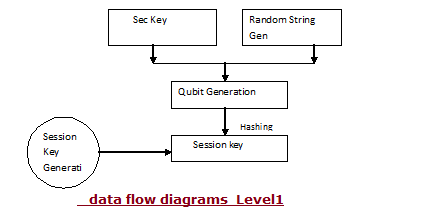
 data flow diagrams 1

The flow of the application is briefly described using the data flow diagrams represented below: Level1

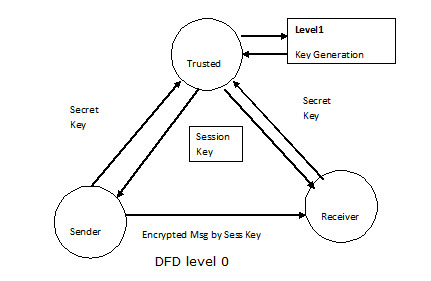
Level 0

 DFD level 0

                            Fig: DFD level 0

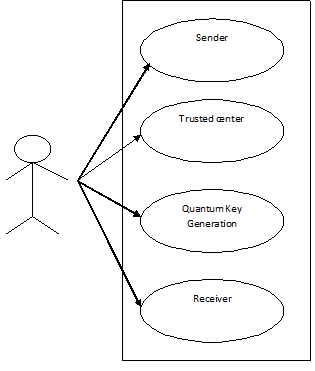
The sample use case diagrams to the application are as follows:

 Use case view of the application

                    Fig: Use case view of the application 

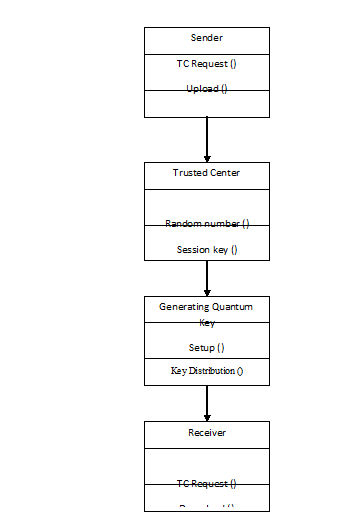
Fig: class diagram of the application

 class diagram of the application

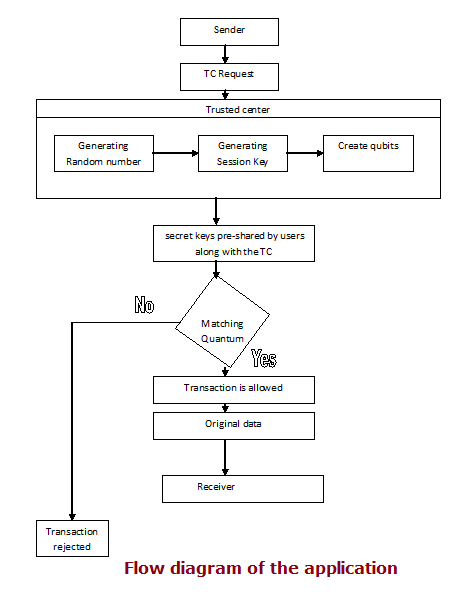
The flow diagram of the entire application is represented below:   

Fig: Flow diagram of the application

Flow diagram of the application

This Paper is written & submitted by Vamshidhar A.