Technical Seminar Presentation on Privacy Preserving Data Mining with PPT

Introduction to Technical Seminar Presentation on Privacy Preserving Data Mining:

Database privacy includes the approaches that are done statistically which includes the altering of frequency of features, and also the erasing of values that are revealed. Query-based approaches: It consists of a trusted third party which is permanent. Perturbation: This is used for adding noise to the query output. The Query monitoring involves disallowing of queries that break privacy.

This paper we deal with the technical feasibility for preserving data mining. The principle of randomization is initiated using Gaussian perturbations. And for the case of decision-tree classification we can have two effective algorithms named By Class and Local. These algorithms are based on Bayesian procedure which is used for correcting the distributions.

The method of privacy preservation includes Value-Class Membership: Here in this method the values of an attribute are divided into as set of mutually exclusive classes. Here the random distributions used are Uniform: it has uniform distribution between [-a, +a ]. And the mean value of the random variable is 0. Gaussian: Here the random variable is distributed over the normal distribution which has mean value m = 0 and a standard deviations.

The implementation of privacy which is given by a method, where we consider a measure which is based on how near are the original values of the attribute which is modified to be estimated.

In this paper we dealt with the technical feasibility for preserving data mining. The principle of randomization is initiated using Gaussian perturbations. And for the case of decision-tree classification we can have two effective algorithms named By Class and Local. 

Download  Technical Seminar Presentation on Privacy Preserving Data Mining with PPT.

Technical Seminar Presentation on 4G Technologies with PPT

Introduction to Technical Seminar Presentation on 4G Technologies:

The evolution of mobile systems started with First Generation Mobile Systems which is used for offering a single service like speech, whereas the Second Generation Mobile systems are used for offering speech with limited capability for offering data at very low rates. Whereas when we consider 3G mobile systems are expected to provide multimedia services with high quality and can operate in different environments.

4G results in high-quality transmission of video smoothly. 4G is also responsible for making immediate and visual interactions in a better and more humane in the world. 4G’s helps in taking a video with mobile and forward to other person and the other person can render the video with the help of PS3.  And also a person is capable of pushing the new photos of kids to others digital picture frame, capable of accessing the content in the digital locker box when not available in home even.

An accelerator of 4G includes the technology pull, the rate of innovation, standardization, revenue opportunities and also the developments in the wire line world. 4G wireless systems provide an efficient multimedia service with high data rates. The cellular operators will offer the customers with wide broadband multi-media services. The users will be able to get faster access to the multi-media services with lower cost and also reasonable Qos.

We can conclude that 4G provides an efficient wireless communication which can help people mostly in the wireless world. The technology is expected to launch by 2010 and all the people are looking for such a technology with can connect the total world.

Download  Technical Seminar Presentation on 4G Technologies with PPT.

Turing Machines and Complexity Technical Seminar Presentation with PPT for CSE Students

Introduction to Turing Machines and Complexity Technical Seminar Presentation:

The Turing machines are introduced by Alan Turing in the year 1936. It is a model of the computer performing mathematically, which is simple and it is used for computing the capability of the computer. This Turing machine is considered as the comprehensive, most accessible model of computation and their associated theories give us ideas for dealing with complexity issues.

The Turing machine is given by M= (Q, S,τ,δ,q0,B,F) where Q denotes the states which are finite S   denotes  a set of  input symbols, τ  represents finite state of tape symbols, where Q0  is Q is the start state, F is the set of final states.

The Turing machine helps in performing computations in a simple and efficient way so that the performance increases by saving the time in calculations. It helps us to solve the complex issues in an easy way.

The church’s hypothesis states are based on the assumption where the computable function is identified with the recursive function which is parallel called church’s hypothesis.

A Turing machine simulates RAM, while the tape is given    #0*v0#1*v1#10*v2#………I*vi#……

Where vi is the contents in binary, of the i’th word.

The union theorem states that for {fi(n)|i=1,2,……………..} is a collection of functions. Also assume that for each i and n, fi(n)<fi+1(n).  that states that there exists an  recursive S(n) such that

            DSPACE(S(n))=Ui>1 DSPACE(fi(n)).

We can conclude that the Turing machine is considered as the comprehensive, most accessible model of computation and their associated theories give us ideas for dealing with complexity issues.

Download  Turing Machines and Complexity Technical Seminar Presentation with PPT for CSE Students.

Pram Algorithm IT Technical Seminar Presentation and PPT

Introduction to Pram Algorithm IT Technical Seminar Presentation:

The paper is about algorithms which are defined for the parallel machines. In this paper we have introduced an PRAM algorithm, in this algorithm all the processors will work parallely and will communicate with one other by using common block of memory. Mostly all the applications are looking for the real time solutions. Examples include weather forecasting, surgical procedures and many more. The parallel machines are used for reducing the solution time more effectively.

The implementation of the parallel computing says that the problem should be divided or partitioned into sub problems.  Once the partition is done the processor are used for working on the sub problem and once the processors are done with , then the partitioned solutions are combined together for providing the result finally. The algorithm which we have designed for the sake of multiprocessor is named as the parallel algorithm.

The communication must exist between the processors so that the sub problems will work accordingly and then need to conform whether the sub problems has finished working with their tasks. And the parallel modes are classified as Fixed Connection and Shared Connection.

In a fixed connection graph G (V, E) where nodes denotes the processors and edges are used for representing the communication links in between the processors. In the shared connection the communication is done by writing to and reading from the common memory.

The algorithms related to merging technique involve Logarithm time algorithm: where two sorted sequences are merged with lengths m, with time O (log m) using processors. Other algorithm Odd-Even Merge: In this algorithm two sorted sequences each of length m can be merged together in O (log m).

We have discussed various algorithms for the parallel machines and also conclude that PRAM algorithm, in this algorithm all the processors will work parallely and will communicate with one other by using common block of memory.

Download  Pram Algorithm IT Technical Seminar Presentation and PPT.

Integer and Polynomial Arithmetic Technical Seminar Paper Presentation for IT Students

Introduction to Integer and Polynomial Arithmetic Technical Seminar Paper Presentation:

The most real life problem involves the computation of both integers and also polynomials. And in this paper we discuss about the methods which are involved in making the faster calculation. And also the previous algorithms can be used with modern approach for performing the computations most efficiently.

The finite power series includes the non negative integer and also the uni-variate polynomial. And most of the algorithms involved in manipulation of integer and polynomial are similar. The similar types of algorithms are involved in case of computations regarding to multiplication, division, calculation of GCD, also finding modular arithmetic and also residues.

When we consider computation of GCD, i.e. when we consider two integers a and b , then GCD is given as, GCD(a,b)=ma+nb where m and n are integer values. The algorithm for finding the GCD of two numbers using the integers m and also n is given in the paper. This algorithm is given as the Extended Euclidean Algorithm.

In the real life, most of the computation involves calculations based on integers and also polynomial also includes the computation of reciprocal to calculation of GCD in a modern approach. Techniques like Chinese remaindering and also modular polynomial arithmetic techniques are used for performing calculations fastly, the interpolation of polynomial is used for calculating polynomial arithmetic.

We can conclude that mostly the real life problem involves the computation of both integers and also polynomials. And in this paper we discuss about the methods which are involved in making the faster calculation including the comparison of all computing methods.

Download  Integer and Polynomial Arithmetic Technical Seminar Paper Presentation for IT Students.

Technical Seminar Presentation on X-Ray and CT Scan with PPT for EC Students

Introduction to Technical Seminar Presentation on X-Ray and CT Scan:

X-rays are discovered by a physicist from Germany named Will elm Konrad Rontgen in November 1895. He firstly named as ‘new kind of ray’ or called as X-rays, where x stands for unknown. They are being used for visualizing the anatomy of humans internally. Now a day X-rays have become common tool in the medical field. The simple technique such as chest radiography to a complex technique of digital subtraction depends on the usage of X-rays.

The properties of X-rays, which are responsible for usage in medical field are, their ability for producing luminescence and also its effect in case of photographic emulsions.  It has also capability for penetration of matter in various materials.

The principle of X-rays include, an energy source which is responsible for accelerating electrons ,also a free electron path, a means for focusing on the electron beam and also a device for stopping of the electrons.

The two limitations involved in usage of X-rays are, the super-imposition of the three-dimensional information onto a single plane results in making diagnosis confusing and also difficult. And the second is that, the photographic film which is used for making the radiographs will have a limited dynamic range and therefore there exists some contrast differences on the film to be distinguished by eye.

The computed tomography is used for determining the characteristics of every tissue in the parent slice which makes the transmitted radiation intensity recorded from all directions. The calculated tissue characteristics compose actually to the CT image.

We can conclude that from the development of CT technology there was a rapid development in the hardware and also in detector technology. The images give a high quality maps with X-ray linear coefficients of parent tissues.

Download  Text and Hypertext Categorization Using Support Vector Machines PPT for IT Students.

Technical Seminar Presentation on Sorting Networks with PPT for IT Students

Introduction to Technical Seminar Presentation on Sorting Networks:

The paper is about the sorting mechanism. We can define sorting as an efficient process which accepts a set of values as input which are arranged as either the increasing or decreasing order for providing as output.  We can define sorting in a notation as sequence defined  S={s1,s2,…….,sn} can be arranged as a  new sequence of  S’={s1’,s2’,…….,sn’} where si’<si+1’ for i=1,2,3,….n-1, by the sorting method.

The sorting networks are considered as the comparison a network which is used for sorting the inputs of the sequence. It consists of wires and also comparators and these sorting networks mainly implement the Parallel sorting method, where the input set is classified as one or more subsets and these subsets are sorted in parallel and then merged into an output set.

In the sorting network the comparators accept the inputs as x and y and outputs generated as x’ and y’, where x’ =min (x,y) and y’ =max (x,y) . The most important process in sorting network is merging where after classification of subsets, they are merged into a single set which is used for special purpose called Merging network.

When we consider a comparator network with n input values, sorts all 2n sequences of zeroes and ones in a network of sorting. The different types of parallel sorting techniques includes Bitonic sorting with is used for sorting either in decrease or increase monotonically. And the Bitonic sorter consists of several stages and each stage is named as Half-cleaner.

When we speak about other sorting method named transposition sorting, it is used to merge two sorted sequences to a single sorted sequence. Thus we can conclude that it is the most efficient sorting method. 

Download  Technical Seminar Presentation on Sorting Networks with PPT for IT Students.

Peer-to-peer Video Distribution Over The Internet Technical Seminar Presentation

Introduction to Peer-to-peer Video Distribution Over The Internet Technical Seminar Presentation:

The World Wide Web is a network which distributes the information, so that everyone is capable of accessing the data objects globally. The www is a network of information. It helps the people for accessing their information resources.

A technique named web caching is enabled to reduce the client response time and also helps from network traffic problem and also reduces the load on server. It helps in getting maximum number of hits, so that the performance increases.

In the architecture the peers are grouped together based on the controller and the controller is responsible for assigning the Peer ID for the peer who has joined as new in the group. The architecture involves the modules related to Peer Management i.e. it is used for managing peers. Video request Module i.e. it is used for managing the request send by the client.

The peer management involves the termination of the connection by the controller. Whenever there are no changes made to the cache then no message is sent by the peer. In case of a new peer first a join group message is sent to the controller with the help of TCP connection. And the controller will send the reply with the ACK and unique peer id.

The peer to peer communication helps to share the information directly between the terminals. The advantage with p2p communication when compared to that of client-server is, it is cost effective as it is implemented without a setup of data centre.

When we consider the protocol UDP, it is an efficient protocol for fulfilling the real-time requirements and also in reducing the band-width consumption of peer.

We can conclude that the implementation and design of the peer-peer is simple without any complexity and also a number of results have been proved that it is most efficient type of communication.

Download  Peer-to-peer Video Distribution Over The Internet Technical Seminar Presentation.

Text and Hypertext Categorization Using Support Vector Machines PPT for IT Students

Introduction to Text and Hypertext Categorization Using Support Vector Machines:

The paper is about the classification of the documents. The documents can be classified based on predefined categories. The documents can result in multiple categories and also the documents may not be in any categories.

Application of text categorization includes the categorization of the stories which are new for the sake of online retrieval. And also includes the retrieval of information from the World Wide Web, also includes the user’s search by using hypertext.

The representation of text includes, the reduction of word to level of the stem, includes the preparation of vector in feature. And also involves a removal of stop words.

The support of the vector machines for this application includes the dimensional input space which is high, and also involves the features which are irrelevant and also the document vectors to be sparsed and also categorization of problems which can be separated linearly.

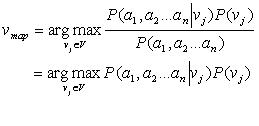
The conventional methods of classification involve the classifier of Bayes, algorithm of rocchio, including the classifier of decision tree. When we consider the Bayesian approach with a document of n attributes arranged as a1, a2….,an with total target of ‘v’ values. The approach is given by.

Text and Hypertext

The above formula can be written using Bayes theorem as,                                                             


 We can say that we can implement SVMs for categorizing the text and it is proved theoretically that the SVMs are suited  good in case of text categorization and when its performance are compared to other methods there was an consistent improvement. Hence we can conclude that SVM is an efficient approach for categorization of text.

Download  Text and Hypertext Categorization Using Support Vector Machines PPT for IT Students.

Technical Seminar Presentation on conceptual indexing with PPT for ECE Students

Introduction to Technical Seminar Presentation on conceptual indexing:

The paper is about conceptual indexing. The conceptual indexing is a methodology which uses the phrases in indexed material conceptually. The same is done automatically by parsing each phrase to one or more conceptual structures which represent the way the elements of the phrase are arranged to give a meaning.

The main key attribute of the technology includes the ability for determining, a new description which it belongs to and when the description is also not in taxonomy already. This can be done by using the algorithm MSS, which is responsible for finding the most specific subsumers of new description more efficiently. This makes the information seekers to locate all the concepts according the requests, though the request is not in taxonomy.

The building blocks of conceptual indexing includes the document handling, analysis based on lexical, phrase based analysis, also taxonomic classification and also includes browsing and retrieval.

The element of conceptual indexing includes concept extractor: which is used to identify all the words and phrases that are to be indexed and also makes a record of it, the material they are available. Concept assimilator: It is used to analyze the structure and also the meaning of the concept phrase to find the conceptual taxonomy it belongs to.  Conceptual retrieval system: It makes use of the conceptual taxonomy for making the connection between the requests and also the indexed items. Conceptual navigator: it allows the user to move easily in the taxonomy and also allows user to browse the conceptual taxonomy.

We can conclude that there is a need for intelligent information retrieval system for solving the real world problems. And can also say that the usage of rich multimedia databases is not useful when we don’t have the access to the right information at the right time.

Download  Technical Seminar Presentation on conceptual indexing with PPT for ECE Students.