Generic Database Editor Java Project Report

Introduction to Generic Database Editor Project:

Generic database editor project is implemented in java platform using HTML,CSS and java script for designing web pages. Main aim of this project is to develop a software application through which users can access multiple database from single interface called as generic database editor. In existing system there is no such interface through which databases like MYSQL,MS-ACCESS, oracle  databases can be accessing without logging out from any database. In real time scenario it is a time taking process for programmers to work on different databases and modify details.

This application will provide solution for interact with multiple database and users can also test, build PL/SQL statements, procedures, triggers and functions. Using this application we can modify, delete, view, add, and edit all database objects. This will help in providing efficient way to write scripts and queries.

Generic database editor application will be useful in software industry for programmers who work on multiple databases and even for normal users.

Features of using this application is GUI interface for different databases, flexibility, easy maintenance, easy to import and export data and alter the table structure.

System features is divided based on seven modules structure module, properties module, sql querying module, insert database module, export database module, dml operation module and search operation module.

In this project report we provide detailed explanation on project description, system features and external interface requirements. Students can find more related project reports with source code from this site

Download generic database editor java project report from this link. 
Multiple Routing Configurations for Fast IP Network Recovery Project Source Code

Introduction to Multiple Routing Configurations for Fast IP Network Recovery Project:

Multiple routing configurations for fast IP network recovery project is implemented using java swing as front end and JFRAME builder are tools used. Main aim of this project is to develop a efficient network model for reducing link failures by implementing multiple routing configurations. In present scenario internet is the common place for every communication system. Because of issues in routing protocol network link failure has became as serious issue. In this paper we propose a effective model for reducing link failure problems. MRC can be implemented by slight modifications to existing solutions. In this project we analyze result of existing system and proposed system in terms of scalability, back up path lengths, and load distribution. Using MRC congestion in traffic is reduced and also distribution of recovered traffic.

Proposed system works effectively for recovering link failures with a single mechanism for handling both node and link failures and recovery can be performed without knowing the basic root cause. By implementing MRC model additional information on routing is updated which will help to route packets when their link failure in the network.

In existing system network wide IP  re coverage method is used for  handling link failures which is a time taking process and followed by routing instability. In this process packets are dropped because of invalid routes. In order to solve this problem researches had proposed effective methods.

Students can download full project documentation, paper presentation, dfd diagrams, data flow diagrams, UML diagrams, class diagrams, system testing, implementation and more related documents with entire project source code for free download.

Download multiple routing configurations for fast IP network recovery project with source code from this link.

Monitoring the Application-Layer DDOS Attacks for Popular Websites Project Source Code

Introduction to Monitoring the Application-Layer DDos Attacks for Popular Websites Project:

Monitoring the application layer DDoS attacks for popular websites project is developed using AWT swing as front end and MYEclipse as back end database. Main aim of this project is to reduce distributed denial of services attacks on websites using an access matrix in which Markova model is proposed to describe dynamics of access matrix.

Distributed denial of service is one of the serious issues in internet which causes damage to server and also restricts development of new internet services and loss to websites. These attacks are carried out at network layer and cause issues like ICMP, SYN and UDP flooding. These attacks use large amount of bandwidth and deny services of the attacked system. Other form of DDOS attacks are like using large amount of data by pulling image files form server systems and collapse server.

In proposed model hidden Markova model is proposed for dynamics of access matrix and trace DDOS attacks. In this method we use web traffic data for analyzing for analyzing traffic. Though they are many algorithms are proposed to reduce distributed denial attacks but FAST ICA algorithm is used in this system because of its good performance and fast coverage while calculating parameters.

This application is developed using N-Tire architecture model and 2 –Tire client server model can provide best solution for rapid prototyping. Distributed application design and architecture systems are implemented in N-tire architecture because of security, availability and scalability, manageability, easy maintenance and data abstraction.

Students can download full project documentation, paper presentation, database details, project source code and project abstract, dfd diagrams, data flow diagrams, class diagrams and flow graphs.

Download Monitoring the application layer DDoS attacks for popular websites project from this link.

A Concurrency Control Protocol for Clipping Indexing Project Source Code Report

Introduction to A Concurrency Control Protocol for Clipping Indexing Project:

A concurrency control protocol for clipping indexing project is developed in java platform using MYSQL as back end database. Main aim of this project is to implementing efficient concurrency mechanism for multi dimensional databases. In present scenario usage of multi dimensional database is seen in many applications in order to provide fast querying or searching capabilities R-tree mechanism is implemented but it does not work efficiently with multi dimensional database systems because of problems in R+ trees can be indexed in multiple levels. In order to solve this problem in this paper we propose concurrency protocol for R+ tree variants with object clipping which is also called as granular locking for clipping indexing.

Using this concurrency protocol we can provide efficient operations like dead lock free, serialization and improve consistency.

This application is developed in five modules login registration module, detecting dead lock module, eliminating dead lock, query processing.

Login registration module:

Main functionality of this module is to provide security for users and allow users to register with application for using other modules. User is provided with unique username and password.

Detecting Dead Lock:

This module helps in finding out deal locks in the network and analyzes critical information.

Eliminating Dead Locks:

Using this module we can prevent is avoiding dead locks.

Query Processing:

This module helps in normal query processing.

 In this project we provide entire project documentation with UML diagram, class diagram, object diagram and state diagram, sequence diagram, database, video file and project source code for free download. Students can use video file for understanding project execution

Download concurrency control protocol for clipping indexing java project from this link.

Flexible Rollback Recovery in Dynamic Heterogeneous Grid Computing Project Source Code

Introduction to Flexible Rollback Recovery in Dynamic Heterogeneous Grid Computing Project:

Flexible rollback recovery in dynamic heterogeneous grid computing project is implemented in java platform using MYSQL as back end database. Main aim of this flexible roll back recovery project is to implement two effective mechanisms called theft induced check pointing and systematic event logging protocols. Main functionality of this protocols is to solve network problems like packet crashes in network, reduce problems in reliability and increase  efficiency in packet transmission in wireless networks. In existing wireless networks which work on grid and cluster are not reliable. Main reason for this problem is node failure and requirement of dynamic configuration over extensive runtime.

In this project we mainly deal with above mentioned protocols which work on data flow graphs, which will provide best recovery method in heterogeneous systems and multithreaded applications. In this method we can recover data even under different number of processors.

In present scenario GRID and cluster architecture is playing important role in developing parallel applications. Because of computational nodes, high storage, inter connectivity between networks and other factors maintaining reliability in these networks is a challenging task.

This project is developed in four modules login registration module, node analysis module, and node selection module and transmitting data.

Login/Registration module:

Main functionality of this module is to provide authentication mechanism for user for accessing different modules on the project. User is provided with unique username and password through this module.

Node Analysis:

There will be a cluster of node analyzing which is efficient node

Node Selection:

Using this module use can select node from the cluster.

Transmitting Data:

 Using this module we can transmit data by selecting user specified node.

Here we provide flexible roll back full project report, database, database tables, video file, and entire project source code for free download.

Download Flexible rollback recovery in dynamic heterogeneous grid computing project java project from this link.

Evaluating the Vulnerability of Network Traffic Using Joint Full Project Source Code and Report

Introduction to Evaluating the Vulnerability of Network Traffic Using Joint Project:

Evaluating the vulnerability of network traffic using joint project is a networking related project which is implemented in java platform. For every wireless communication network systems security and data integrity are the key factors for providing efficient service and reducing risks that are caused form unauthorized users. In existing wireless communication networks security at node level is very poor it is easy to hack cryptographic keys from memories. This type of attacks are normally  seen in wireless  communication systems because of unattended operations of wireless nodes and not implementing tamper resistance related hardware systems inside network. In order to solve node attacks issues in network we propose a class route vulnerability metrics by combine analyzing routing protocols and key assignment protocols. In this project we use GNAVE algorithm for illustrating node capturing attacks and compare results of GNAVE algorithm results with existing node capture strategies. In order to distinguish between existing and proposed performance we test performance using simulators.

This project is developed in five modules network module, key assignment module, adversarial module, route vulnerability module, circuit theoretical model.

Network module: This module works on client server module in which application works on two different hardware client and server. Server is a high configured hardware system which will respond for client’s requests.

Key assignment module: This module functionality is to measure security in wireless network as the function of two protocols routing protocol and key assignment protocol.

Adversarial Module:  This module helps is evaluation traffic related information in a network  and analyze weakly secured connections in a network. Using this module we can mount a node capture attack.

Students can download Evaluation the vulnerability of network traffic using joint entire final year project with bibliography, hardware and software specifications, implementation, screen shots, system design, system study and system testing documents with project source code of each module for free download.

Download  Evaluating the Vulnerability of Network Traffic Using Joint Full Project Source Code and Report.

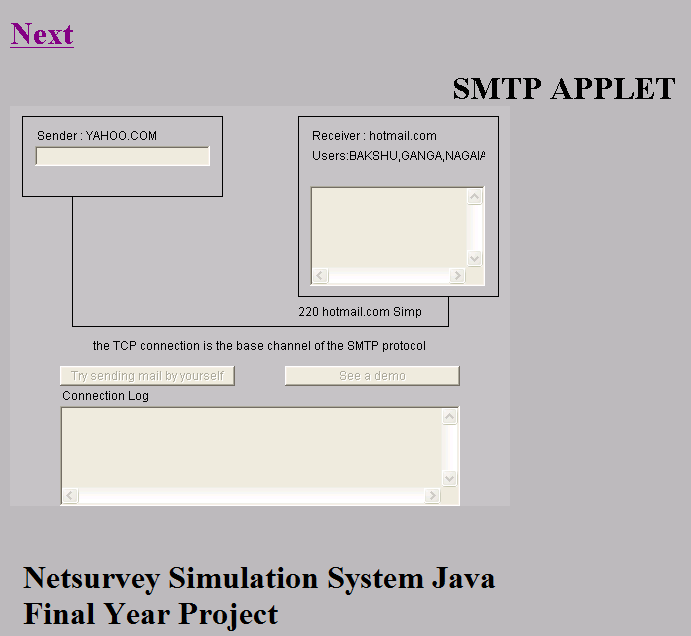
Netsurvey Simulation System Java Final Year Project

Net survey Simulation System Java Final Year Project explains about how internet users can have access permissions using protocols under restricted access. In this java application we have used different OSI layers to transfer the data from user to user without any damage ad with full secure permissions.

The main advantage of this project is to send information parallel and receive the same info any where in the world. The OSI layer commonly works with all physical to Application layer.

Netsurvey Simulation System Java Final Year Project

Java Source code of the Project below:

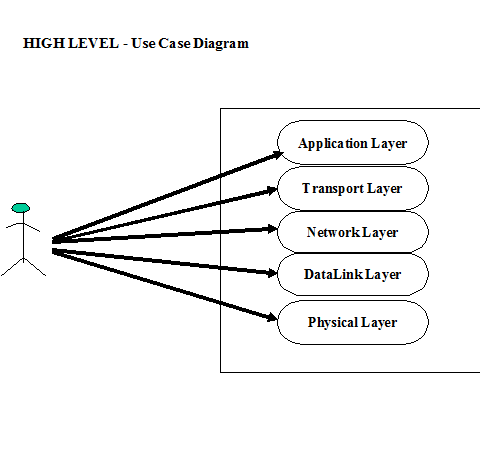
Use Case Diagram Of the Project:usecase

Resorts Management Project Abstract

Introduction to Resorts Management Project:

Resorts management project is implemented in  java platform using HTML, Java script and CSS as web technologies and MYSQL as back end database. Resort management system project main idea is to develop a online web portal for atomization of resort booking system and to create a scope for visiting tourists from different geographic locations. For every resort there will be different branches at different location so managing all these resorts information will be easy through this online application. This application will help to improve services for tourists and also improve revenue source for resorts management.

In existing system manual work is used where tourists should contact through phone and know details about availability of rooms and locations to view at that area. As the usage of internet had increased developing web portal will be helpful and atomized.

This application consists of five modules, accommodation information module, units information module, bookings information module, guests information module, facilities information module

Accommodation information module:  Using these module tourists can know detailed information about availability of rooms and different types of accommodations available in resorts with cost details.

Units Information Module: Using these module users can know details of units and reference units which are registered and it also provides unit for each location.

Bookings Information module: Using these module tourists can book rooms based on the availability of rooms and different site views packages provided at that location.

Guest Module:  Using this module guests who are planning for a trip can view different packages and importance of that location with images and have a clear picture about resorts. Guests can register with this application for any further queries.

Facilities Module:  This module provides detailed information on facilities that are provided at resorts and unique features that are available at resort. This module will be updated with latest information and features that are added to the resorts from time to time.

Download Resorts Management Project Abstract from this link.

Resource Pool Project Abstract

Introduction to Resource Pool Project:

Resource pool project is implemented in java platform using HTML, Java script and CSS as web technologies and oracle as database. Main aim of resource pool project is to provide a portal for Software Company to organize available resources efficiently by mangers, project leaders. For every software company resource planning is a important task which is maintained by human resource management department most of them use HRMS application for managing employee details. Resource pool project is also related to HRMS which is used to handle availability of resource, centralized database for allowing everyone to view data, Reduces communication gap in resource allocation, easy to track employees experience and efficiency, report generation with compare graphs.

This application consists of four modules admin module, resource management module, tracking module and reporting module.

Admin Module:  This module allows administrator to add new employee details with all his specifications to database and can also modify or delete existing employee details from database. Admin provides permissions for each user with user name and password to viewing details.

Resource Management Module: This module allows managers and project leaders to find out available resources based on platform specification and experience specification and  location they are available at. Using this module project leader can take employees or can shift available employee to other locations.

Tracking Module: This module helps project leaders and mangers to search for employees based on three criteria’s domain, visa type and status. This module will save time to find fixed employee.

Reporting Module: This module allows employees, admin, project leader and mangers to print reports about their performance.

Download Resource Pool Project Abstract from this link.

Web-Pharmaceuticals project Abstract

Introduction to Web-Pharmaceuticals project:

Web pharmaceuticals project is implemented in java platform using HTML, java script and CSS and oracle as database. Main aim of web pharmaceuticals project is to develop a online web portal which can handle products information, booking from distributors from all over the world and online payment for orders and customer support for distributors. This application will atomize the procedure of drugs supply by Pharmaceuticals Company and improve business standards and customer relationship. Using these application distributors can view detailed information of transactions and drugs information and future orders from his account.

This application consists of four modules admin module, user module, order products module, reports module.

Admin module: This module allows adding, deleting and modifying product details and updating to database. This module maintains customers, dealers, information in database. This module is sub divided in to five modules.

User Module: Users should register with application and buy products be selecting from the list. Users are provided option of DD, Check and Credit card payment.

Product Module: This module allows distributors and users to request for products they want and order products though online payment.

Report Module:   Using this module users can view transactions and order information and take print out.

For more information on this project students can download project report from below download link. 

Download Web-Pharmaceuticals project Abstract from this link.